Key Takeaways
- Babies develop at different rates — there's a wide range of "normal" for each milestone
- Tummy time is the single most important activity for motor development
- Some babies skip crawling entirely and go straight to walking — this is normal
- Talk to your pediatrician if your baby hasn't reached a milestone by the upper end of the range
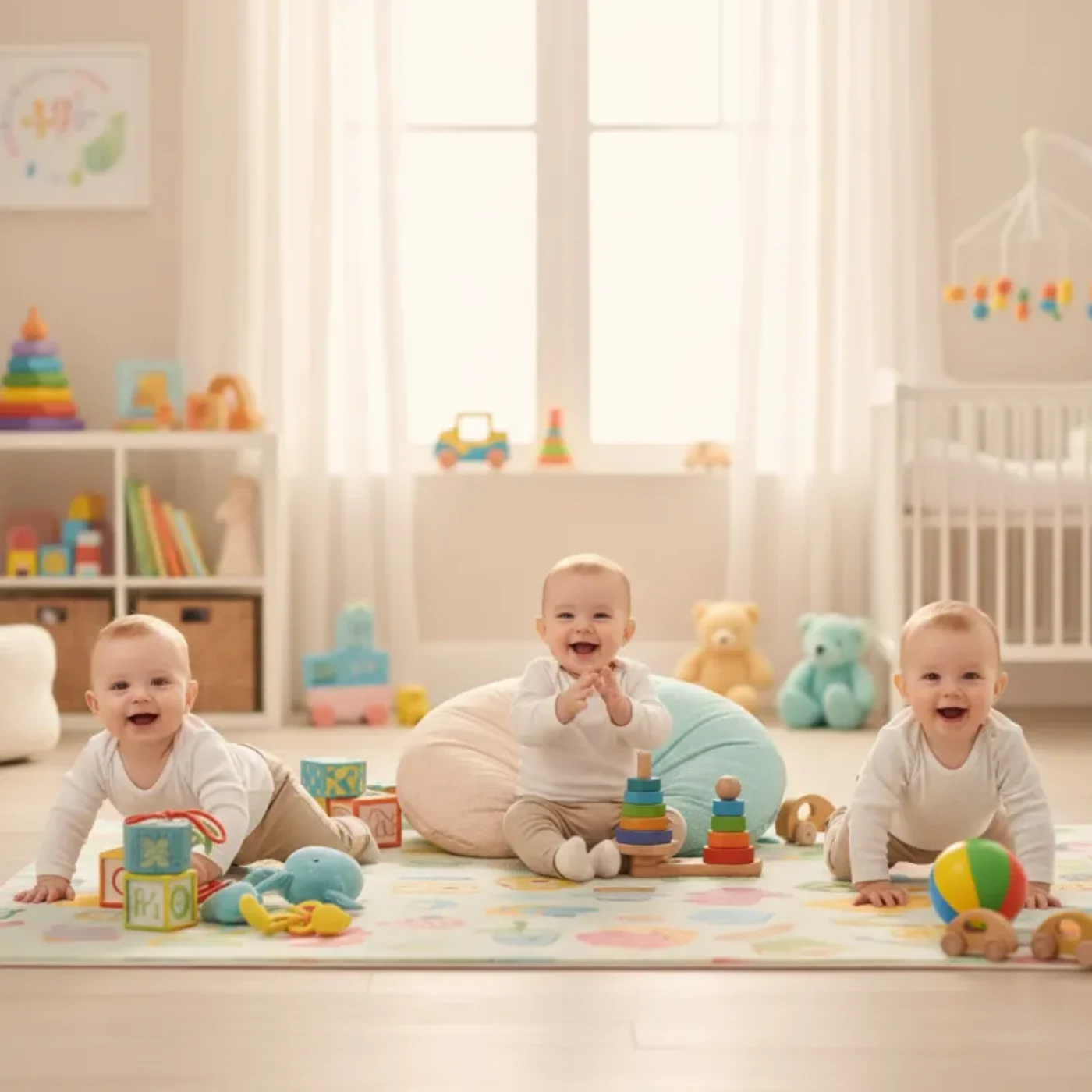
Every parent watches eagerly for that first roll, first sit, first crawl. Here's when to expect each motor milestone — and what you can do to encourage development.
Motor Milestone Timeline
| Milestone | Typical Range | Average | Concern If Not By |
|---|---|---|---|
| Head control | 1–4 months | 2 months | 4 months |
| Rolling (tummy to back) | 3–5 months | 4 months | 6 months |
| Rolling (back to tummy) | 4–6 months | 5 months | 7 months |
| Sitting with support | 4–6 months | 5 months | 7 months |
| Sitting independently | 5–7 months | 6 months | 9 months |
| Crawling | 6–10 months | 8 months | 12 months* |
| Pulling to stand | 8–12 months | 9 months | 12 months |
| Walking independently | 9–15 months | 12 months | 18 months |
*Some babies skip crawling entirely — this alone is not a concern.
See also: When Do Babies Start Talking? Speech Milestones by Age and Safe Sleep for Babies: SIDS Prevention Guide.
Rolling Over (3–6 Months)
Most babies roll tummy-to-back first (it's easier), then back-to-tummy a few weeks later.
How to encourage rolling
- Tummy time — aim for 30–60 minutes total per day by 3 months
- Place toys to the side — motivates reaching and turning
- Gentle hip guidance — help baby feel the rolling motion
Safety note
Once your baby can roll, stop swaddling and ensure the crib is free of loose items. Always place baby on their back to sleep — they'll roll on their own when ready.
Sitting Up (4–7 Months)
Sitting develops in stages: tripod sitting (leaning on hands) → sitting with minimal support → sitting independently.
How to encourage sitting
- Supported sitting practice — sit baby between your legs or use a Boppy pillow
- Core-strengthening play — reaching for toys while on tummy
- Let them topple — on a soft surface, falling over builds balance awareness
Crawling (6–10 Months)
Crawling styles vary widely — army crawl, classic hands-and-knees, bear crawl, or scooting on their bottom. All are normal.
How to encourage crawling
- Floor time — limit time in bouncers, walkers, and containers
- Place toys just out of reach — motivates forward movement
- Get on the floor with them — babies love to crawl toward a parent's face
Standing and Walking (9–15 Months)
The progression: pulling to stand → cruising (walking along furniture) → standing alone → first steps.
How to encourage walking
- Push toys — weighted push walkers (not sit-in walkers, which can delay walking)
- Barefoot time — bare feet develop better balance than shoes
- Cruise-friendly furniture — stable surfaces at the right height
Skip the shoes indoors
Babies learn to walk best barefoot. The sensory feedback from the floor helps develop balance and coordination. Save shoes for outdoors.
When to Talk to Your Doctor
Talk to your pediatrician if:
- Baby hasn't reached a milestone by the "concern" age in the chart above
- Baby consistently favors one side of the body
- Baby loses a skill they previously had
- Baby seems very stiff or very floppy
- Baby isn't bearing weight on legs by 9 months
Early intervention makes a significant difference. If something feels off, trust your instincts and ask.
Track Milestones & Get AI Developmental Insights
ParAI tracks CDC milestones and uses AI to spot patterns, suggest activities, and alert you if something needs attention. Personalized to your child's age.