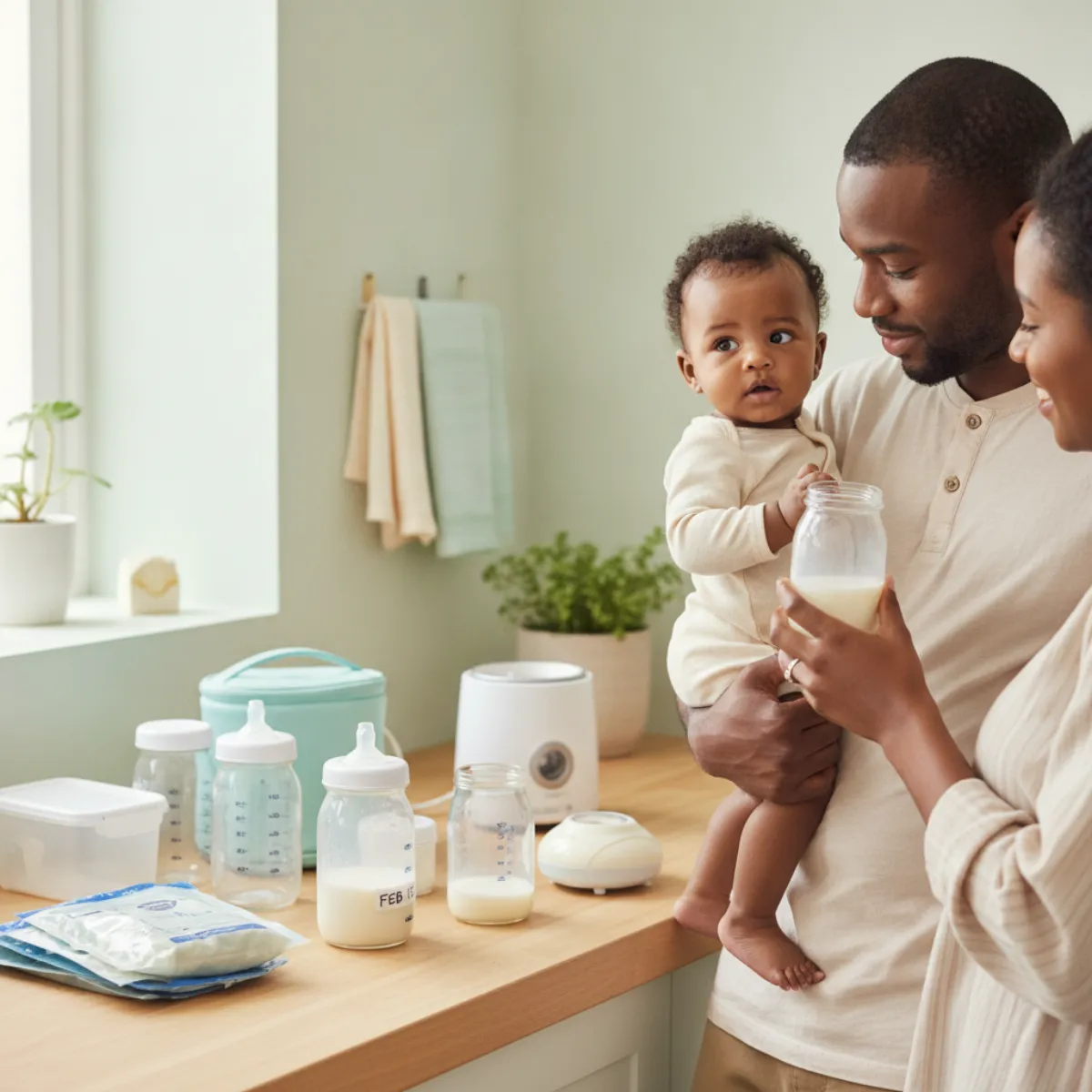
Key Takeaways
- In the US, the PUMP Act (2022) guarantees pumping breaks and a private space for most employees
- Plan to pump every 3 hours at work to maintain supply — that's typically 2–3 sessions in an 8-hour day
- Start introducing a bottle 3–4 weeks before returning to work to give baby time to learn
- Breast milk is safe at room temperature for 4 hours, refrigerated for 4 days, frozen for 6–12 months
- A gradual daycare transition (short visits increasing over 1–2 weeks) reduces stress for everyone
Going back to work while breastfeeding feels overwhelming. Between figuring out pumping logistics, building a freezer stash, and preparing your baby for bottles and daycare — there's a lot. This guide breaks it down into manageable steps, starting 4–6 weeks before your return date.
Your Legal Rights
United States
- PUMP for Nursing Mothers Act (2022): Extends protections to nearly all employees (previously only hourly workers). Employers must provide reasonable break time and a private space that is not a bathroom.
- Duration: Protected for up to 1 year after birth
- Space requirements: Private, lockable, not a bathroom, with a flat surface and electrical outlet. Must be available when needed.
European Union
- Most EU countries provide paid breastfeeding breaks (30–60 min per day) for 9–12+ months
- Bulgaria: Paid breastfeeding breaks until child is 8 months; extended maternity leave up to 2 years
Talk to HR early
Reach out to your HR department or manager 2–4 weeks before returning. Ask about pumping room location, refrigerator access, and how to schedule breaks. Having the conversation early prevents day-one scrambling.
Pumping Schedule at Work
The goal: pump approximately when your baby would normally eat. For most babies, that's every 2.5–3.5 hours.
| Baby's Age | Sessions/Day at Work | Duration Each | Expected Output |
|---|---|---|---|
| 3–4 months | 3 sessions | 15–20 min | 90–150 ml (3–5 oz) each |
| 5–6 months | 2–3 sessions | 15–20 min | 90–150 ml (3–5 oz) each |
| 7–9 months | 2 sessions | 15 min | 60–120 ml (2–4 oz) each |
| 10–12 months | 1–2 sessions | 10–15 min | 60–90 ml (2–3 oz) each |
Sample 8-Hour Workday Schedule
- 6:30am: Nurse baby before leaving
- 9:30am: Pump session #1
- 12:30pm: Pump session #2 (can combine with lunch)
- 3:30pm: Pump session #3
- 5:30pm: Nurse baby immediately at pickup
What to Bring
- Double electric pump (saves time — both sides simultaneously)
- Hands-free bra (so you can eat or work while pumping)
- Extra pump parts: flanges, valves, membranes (things break)
- Cooler bag with ice packs for milk transport
- Storage bags or bottles (pre-labeled with date)
- Nursing pads (for leaks)
- Photos or videos of baby — looking at baby helps trigger letdown
- Cleaning supplies: bottle brush, dish soap, microwave sterilizer bags (or fridge method — see below)
The fridge hack
Instead of washing pump parts between sessions, put them in a sealed bag in the fridge. The cold prevents bacterial growth. Wash thoroughly once you're home. This saves 15+ minutes per day. (CDC says this is acceptable for healthy, full-term babies.)
Milk Storage Guidelines
| Location | Temperature | Duration |
|---|---|---|
| Room temperature | Up to 25°C (77°F) | 4 hours |
| Cooler with ice packs | ~15°C (59°F) | 24 hours |
| Refrigerator | 4°C (39°F) | 4 days (optimal), up to 8 days (acceptable) |
| Freezer (compartment) | -18°C (0°F) | 6 months (optimal), up to 12 months (acceptable) |
| Deep freezer | -20°C (-4°F) | 12 months |
Source: CDC Breastmilk Storage Guidelines (2024). Always store in the back of the fridge/freezer, not in the door.
Maintaining Supply
- Don't skip sessions: Even if you're busy, pump on schedule. Supply is demand-driven — less pumping = less milk.
- Power pump once daily: 20 min pump → 10 min rest → 10 min pump → 10 min rest → 10 min pump. Mimics cluster feeding and boosts supply.
- Nurse on demand at home: Evenings, mornings, and weekends — nurse directly as much as possible. This maintains the supply signal better than pumping alone.
- Stay hydrated: Keep water at your desk. Aim for 3+ liters per day while pumping.
- Check flange size: Wrong flange size is the #1 cause of low pump output. Your nipple should move freely in the tunnel without rubbing the sides.
The Daycare Transition
2–4 Weeks Before
- Start introducing a bottle (have someone other than the nursing parent offer it)
- Practice the daycare schedule — feeding, nap times, wake times
- Visit the daycare with your baby for short periods
- Provide clear written instructions for feeding (amount, pace-feeding technique, how to warm milk)
The First Week
- Day 1–2: Short stay (2–3 hours), you remain nearby
- Day 3–4: Half day, you leave and return
- Day 5: Full day trial
Send a comfort item
Send a worn t-shirt or muslin that smells like you. The familiar scent helps baby feel safe in the new environment. Some daycare providers place it near baby during naps.
What Daycare Needs From You
- Labeled bottles with date and baby's name
- Amount per bottle (typically 60–120ml / 2–4oz for breastfed babies — smaller, more frequent feeds)
- Pace-feeding instructions (hold bottle horizontally, frequent pauses)
- How to warm milk (warm water bath, never microwave)
- Your schedule and contact info
Handling Bottle Refusal
Many breastfed babies resist bottles. If yours does:
- Start early: Introduce a bottle at 3–4 weeks (after breastfeeding is established)
- Have someone else offer it: Baby can smell mom and prefers the source
- Try different nipples: Some babies prefer one brand over another
- Try different positions: Not the breastfeeding hold — try facing out, walking, or in a bouncer
- Offer when calm but hungry: Not starving (screaming) but mildly hungry
- Be patient: It can take 1–2 weeks of daily practice. Most babies figure it out.
For more detailed strategies, see Baby Won't Take a Bottle: Tips That Work.
FAQ
How far in advance should I start building a freezer stash?
2–4 weeks is plenty. You only need 1–2 days' worth stored (360–600ml / 12–20oz). After that, you pump today what baby eats tomorrow. A massive freezer stash isn't necessary and over-pumping can cause oversupply issues.
My output is dropping after a few weeks back at work. What can I do?
Common causes: wrong flange size, pump wearing out, skipping sessions, stress, dehydration. Try: power pumping for 3 days, check flange fit, replace pump membranes/valves (they wear out monthly), and add a session.
Can I combine fresh and refrigerated milk?
Yes — chill the fresh milk first (30 min in fridge), then combine. Don't add warm milk to cold milk. You can combine all milk pumped within the same day.
When can I drop pumping sessions at work?
As baby starts eating more solids (7–9 months), you can gradually drop to 2 sessions, then 1. Most moms drop the work pump entirely by 10–12 months while continuing to nurse mornings and evenings.
Track Feedings in Seconds with Natural Language
Just type "150ml bottle at 3pm" and ParAI logs it instantly. No forms, no tapping through menus. Plus AI insights on feeding patterns and schedules.


Disclaimer: This article is for informational purposes only and does not replace professional medical advice. Always consult your pediatrician for concerns about your baby's health or development.