Key Takeaways
- Most airlines allow babies to fly from 2 weeks old — but waiting until 2–3 months is recommended for immune system maturity
- Feed during takeoff and landing to prevent ear pain from pressure changes
- For road trips, stop every 1.5–2 hours — babies shouldn't stay in car seats longer than 2 hours at a stretch
- Bring more diapers and outfits than you think you need (the rule: pack double what you expect)
- Expect sleep disruption for 2–3 days after arrival; return to your routine immediately and it resolves faster
Traveling with a baby doesn't have to be terrifying. It takes more planning than pre-baby trips, but millions of families do it successfully every day. Whether you're flying across the country or driving to grandma's house, here's what actually helps — from real parents who've done it.
When Is It Safe to Travel?
- Flying: Most airlines allow babies from 2 weeks (some from 7 days). Pediatricians generally recommend waiting until 2–3 months when the immune system is stronger and initial vaccinations are done.
- Driving: Safe from birth — just follow car seat safety guidelines and limit time in the seat.
- International travel: Apply for passport early (can take 6–8 weeks). Some countries require additional documentation for infants.
Check vaccinations before flying
Your pediatrician may want baby to have their 2-month vaccines before flying, especially during flu/RSV season. Airports and planes expose babies to more germs than normal daily life.
Flying with a Baby
Booking Tips
- Book early: Request a bulkhead or bassinet seat on long-haul flights
- Choose off-peak: Tuesday/Wednesday flights are less crowded
- Time wisely: Red-eye flights work well if baby sleeps; nap-time flights for shorter trips
- Aisle seat: Easier to get up for diaper changes and walking a fussy baby
- Lap infant: Under 2, babies can fly free on your lap (domestically). Consider buying a seat for long flights — it's safer and gives you space.
At the Airport
- Baby carriers > strollers through security (less to fold/unfold)
- Breast milk, formula, and baby food are exempt from the 100ml liquids rule
- Arrive early (60–90 min extra) for diaper changes and unexpected feeds
- Use family/priority boarding — gives you time to settle
During the Flight
- Takeoff & landing: Feed (breast, bottle, or pacifier) to help equalize ear pressure. The sucking/swallowing motion opens the Eustachian tubes.
- Fussy baby: Walk the aisle, bounce gently, use white noise on your phone (low volume, near ear)
- Diaper changes: Most planes have a fold-down changing table in the bathroom. Bring a portable changing pad.
- New toys: Bring 2–3 new small toys baby hasn't seen — novelty buys time
Don't apologize in advance
You don't owe anyone an apology for traveling with your baby. Babies on planes are normal. Most passengers are far more understanding than anxious parents expect.
Road Trips
Car Seat Safety
- Max 2 hours at a stretch: Babies shouldn't be in car seats continuously for more than 2 hours. Their airway can become compromised in the semi-upright position.
- Stop every 1.5–2 hours: Get baby out, feed, change, and let them stretch for 15–20 minutes
- Never leave baby sleeping in the car seat once you arrive — transfer to a flat sleep surface
- Rear-facing only: Car seat should remain rear-facing until at least age 2 (ideally until they outgrow the seat's limits)
Timing Your Drive
- Nap time: Start during a nap window — baby sleeps the first stretch
- After bedtime: For long drives, leaving at 7pm means baby sleeps most of the drive
- Early morning: Leave at 5–6am, baby sleeps the first 1–2 hours
Entertaiment
- Mirror on headrest (so you can see baby and baby can see themselves)
- Clip-on toys that attach to the car seat handle
- Songs, nursery rhymes, and audiobooks
- Rotating toys — swap every 30 minutes to maintain novelty
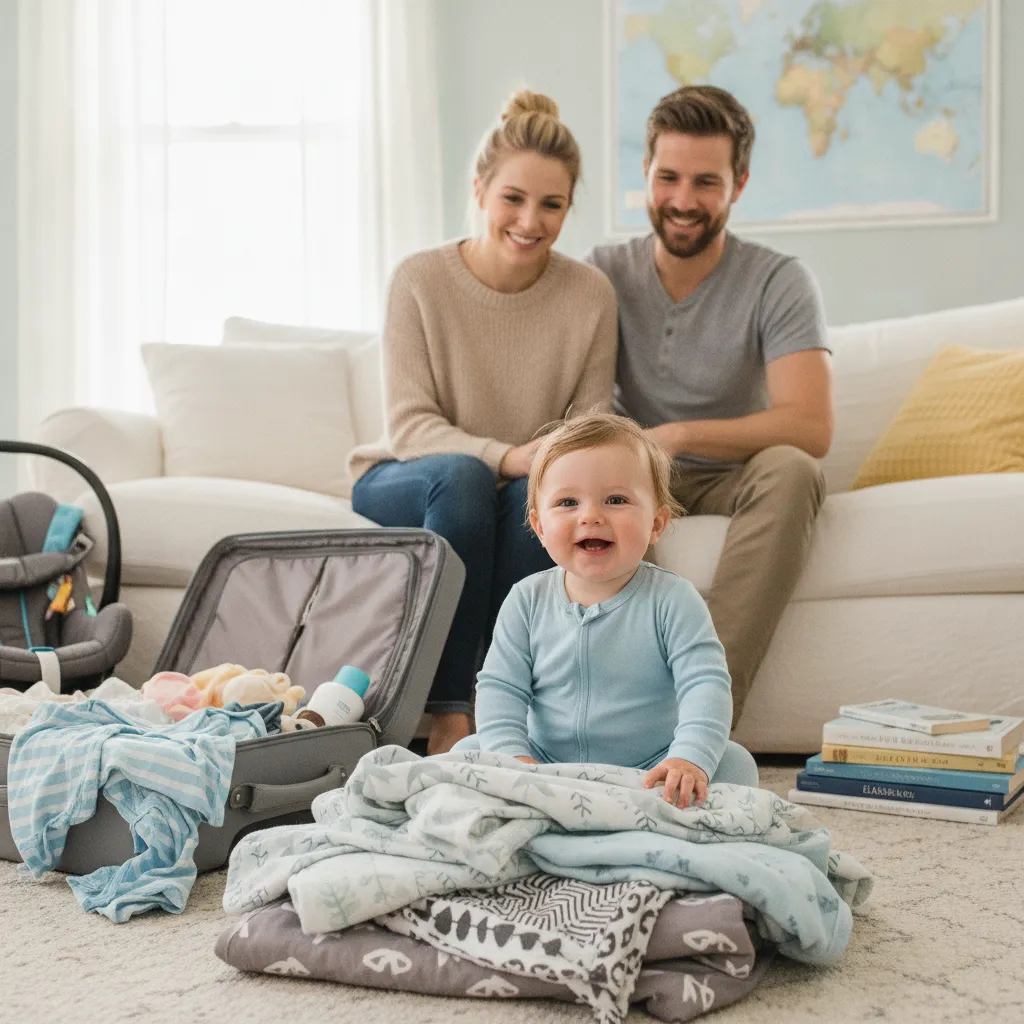
Packing Checklist
| Category | Items | Quantity |
|---|---|---|
| Diapers | Diapers + wipes | 1 per hour of travel + 10 extra per day |
| Clothing | Outfits + pajamas | 2 per day + 2 extra (blowouts happen) |
| Feeding | Bottles, formula, snacks, bibs | Double what you estimate |
| Sleep | Sleep sack, white noise device, blackout covers | 1 set (familiar items from home) |
| Health | Thermometer, infant Tylenol, saline drops, sunscreen | Small travel kit |
| Entertainment | 2–3 new toys, board books, pacifiers | Rotate, don't bring all at once |
| Documents | Passport, health insurance card, vaccination records | Copies + originals |
Sleep While Traveling
- Bring familiar sleep items: Sleep sack, white noise machine, and a crib sheet that smells like home
- Recreate the sleep environment: Portable blackout shades (suction or Velcro), same white noise, same routine
- Travel crib: Pack 'n Play, Lotus, or SlumberPod for light-blocking in shared rooms
- Expect regression: Sleep will be disrupted for 2–3 days. This is normal. Stick to your routine as closely as possible and baby will readjust.
- On return: Go back to your normal schedule immediately on the first night home — don't "ease in"
The first night rule
The first night in a new place is usually the hardest. Expect extra wakings and be flexible. By night 2–3, most babies adjust. Keep the routine identical to home.
Feeding on the Go
- Breastfeeding: Easiest option for travel — no bottles to wash, always the right temperature. Feed on demand regardless of schedule disruption.
- Formula: Pre-measured powder in dispensers + bottled water. Ready-to-feed is heavier but more convenient for planes.
- Solids (6+ months): Pouches are the easiest travel food. Banana, avocado, and bread also travel well.
- Water: Offer water in a sippy cup (6+ months) more frequently — travel dehydrates babies too.
Handling Time Zone Changes
1–3 Hour Difference
Most babies adapt within 1–2 days. On arrival, switch to local time immediately. Get outside in morning sunlight — it resets circadian rhythm faster than anything.
4+ Hour Difference
- Gradual shift: Move schedule by 30 minutes per day for 2–3 days before departure
- Or cold turkey: Switch to local time on arrival and accept 2–3 rough days
- Light exposure: Bright light in morning, dim in evening (follows destination time)
- Short trips (under 3 days): Keep baby on home time — adjusting twice is harder than not adjusting at all
FAQ
Do babies need ear protection on planes?
Not for ear pressure — feeding/sucking handles that. For noise, baby earmuffs (like Baby Banz) are helpful if you're concerned about engine noise, but most babies tolerate it fine without them.
What if my baby screams the entire flight?
It happens rarely, but if it does: stay calm, cycle through feeding/changing/soothing, walk the aisle. Most fellow passengers are sympathetic. You'll never see them again. And it will end — the flight will land.
Is it safe for my baby to sleep in a car seat during a road trip?
Yes, for up to 2 hours at a stretch in a properly installed, rear-facing car seat. The concern is extended time (4+ hours straight) when the airway can become slightly compressed. Take regular breaks.
Should I bring my own car seat on the plane?
If you bought a seat for baby, yes — it's the safest option and uses the same rear-facing car seat they know. Check the car seat at the gate for free if you're doing lap infant. Never use a car seat that's been gate-checked if it was dropped — inspect it first.
Track Your Baby's Day with ParAI
ParAI helps you log feedings, sleep, diapers, and health — then gives you AI-powered insights personalized to your baby. Ask questions, spot patterns, and get guidance based on your baby's actual data.


Disclaimer: This article is for informational purposes only and does not replace professional medical advice. Always consult your pediatrician for concerns about your baby's health or development.