Key Takeaways
- Separation anxiety is a normal developmental milestone, not a behavior problem
- It typically starts around 6–8 months and peaks between 10–18 months
- It means your baby has formed a strong, healthy attachment to you
- Short, confident goodbyes work better than sneaking away or prolonged departures
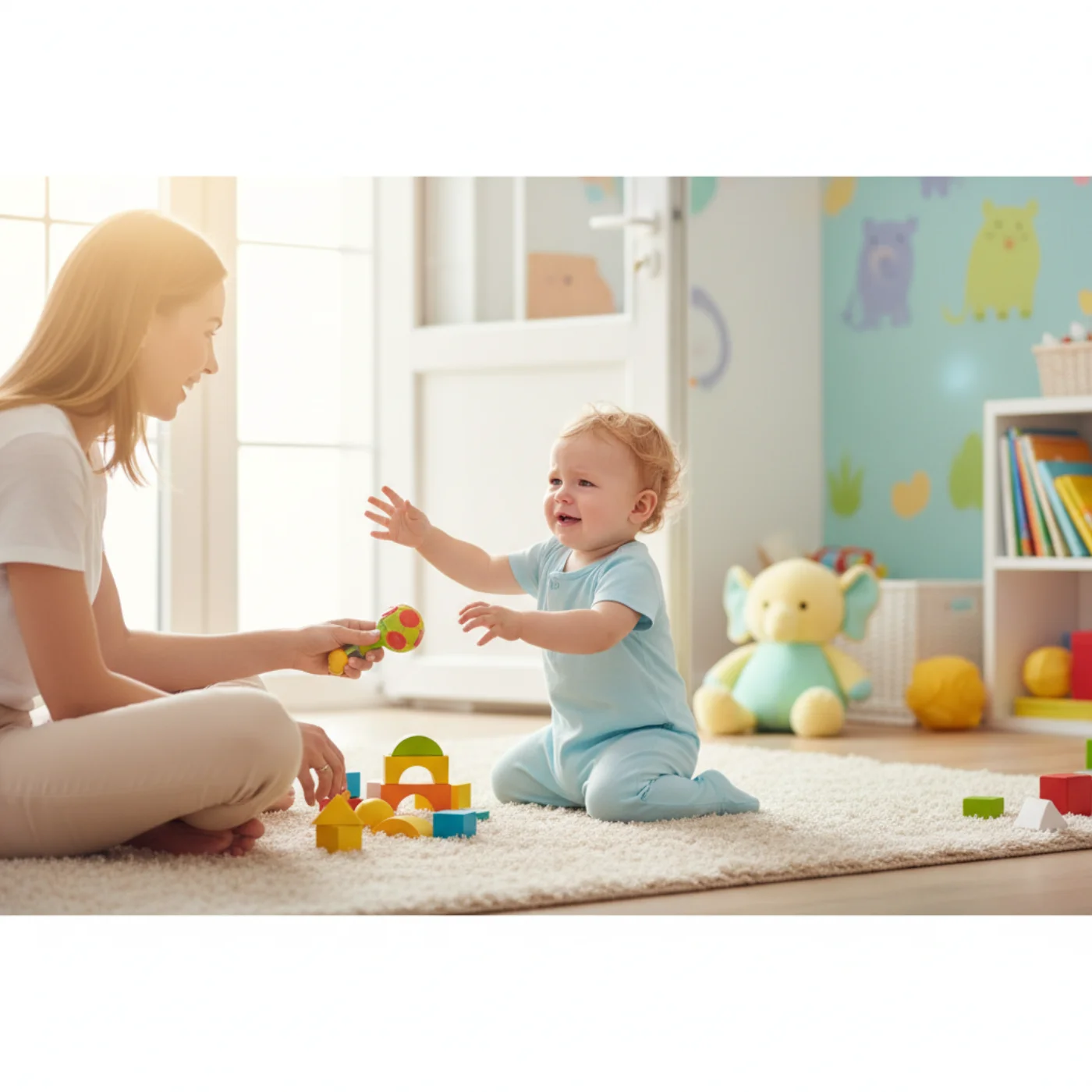
One day your baby happily goes to anyone. The next, they scream the moment you leave the room — even to use the bathroom. If your baby has suddenly become your shadow, congratulations: they've hit a major cognitive milestone. It doesn't feel like a celebration, but it actually is.
What Is Separation Anxiety?
Separation anxiety happens when your baby understands that you exist even when they can't see you (a concept called object permanence) but doesn't yet understand that you'll come back. To them, you leaving the room feels the same as you disappearing forever.
See also: Toddler Hitting and Biting: Why It Happens and How to Stop It and Postpartum Depression vs Baby Blues: Signs, Treatment & When to Get Help.
This is actually a sign of healthy brain development and secure attachment. Your baby has learned that you are their safe person — and they want to keep you close.
When It Starts and Peaks
| Age | Phase | What's Happening |
|---|---|---|
| 4–6 months | Early signs | May fuss when handed to unfamiliar people |
| 6–8 months | Onset | Object permanence develops. Cries when parent leaves the room |
| 8–10 months | Intensifying | Stranger anxiety peaks. Clings to primary caregiver |
| 10–18 months | Peak | Most intense period. Bedtime and daycare drop-offs are hardest |
| 18–24 months | Easing | Language helps. Can understand "Mama will come back" |
| 2–3 years | Resolving | Most children adjust. Brief flare-ups during transitions are normal |
It can come in waves
Separation anxiety isn't a one-time event. It can flare up during illness, after vacations, during sleep regressions, or when starting daycare. Each wave is usually shorter and less intense than the last.
Signs of Separation Anxiety
- Crying when you leave the room — even briefly
- Clinging — wanting to be held constantly, especially by one parent
- Stranger anxiety — crying or hiding when unfamiliar people approach
- Sleep disruption — fighting bedtime, waking and crying for you at night
- Following you everywhere — crawling or toddling after you room to room
- Reaching for you when held by someone else
How to Help Your Baby
Practice short separations
Start small. Leave the room for 30 seconds, then come back with a smile. Gradually increase the time. This teaches your baby the most important lesson: you always come back.
Create a goodbye ritual
A quick, consistent goodbye (kiss, wave, "I'll be back soon!") is better than sneaking away. Sneaking out may avoid tears in the moment, but it teaches your baby they can't trust that you'll still be there — making anxiety worse long-term.
Keep goodbyes short and confident
Your baby reads your emotions. If you look worried or linger at the door, they'll sense something is wrong. A calm, cheerful goodbye signals that everything is fine.
Play peek-a-boo
This classic game is actually separation anxiety therapy. It teaches object permanence in a fun, low-stakes way — you disappear and reappear, over and over. Your baby learns that gone doesn't mean gone forever.
Introduce a comfort object
A small blanket, stuffed animal, or worn t-shirt that smells like you can provide comfort during separations. Introduce it during calm, happy times first so it becomes associated with security.
Don't avoid separations entirely
It's tempting to never leave your baby's side, but this can reinforce the anxiety. Regular, brief separations (with trusted caregivers) help your baby build confidence that they can cope.
Daycare drop-off tip
Most babies stop crying within 5–10 minutes of a parent leaving. Ask your daycare provider to text you an update. The long, tearful goodbye at the door is almost always harder on the parent than the child.
When to Talk to Your Pediatrician
Separation anxiety is normal, but talk to your doctor if:
- Anxiety is so severe that your child can't participate in normal activities
- It persists beyond age 3 with no improvement
- Your child has physical symptoms (stomachaches, headaches) before separations
- Sleep is severely disrupted for more than a few weeks
- Your child seems anxious even when you're present
Track Milestones & Get AI Developmental Insights
ParAI tracks CDC milestones and uses AI to spot patterns, suggest activities, and alert you if something needs attention. Personalized to your child's age.


Disclaimer: This article is for informational purposes only and does not replace professional medical advice. Always consult your pediatrician for concerns about your baby's health or development.