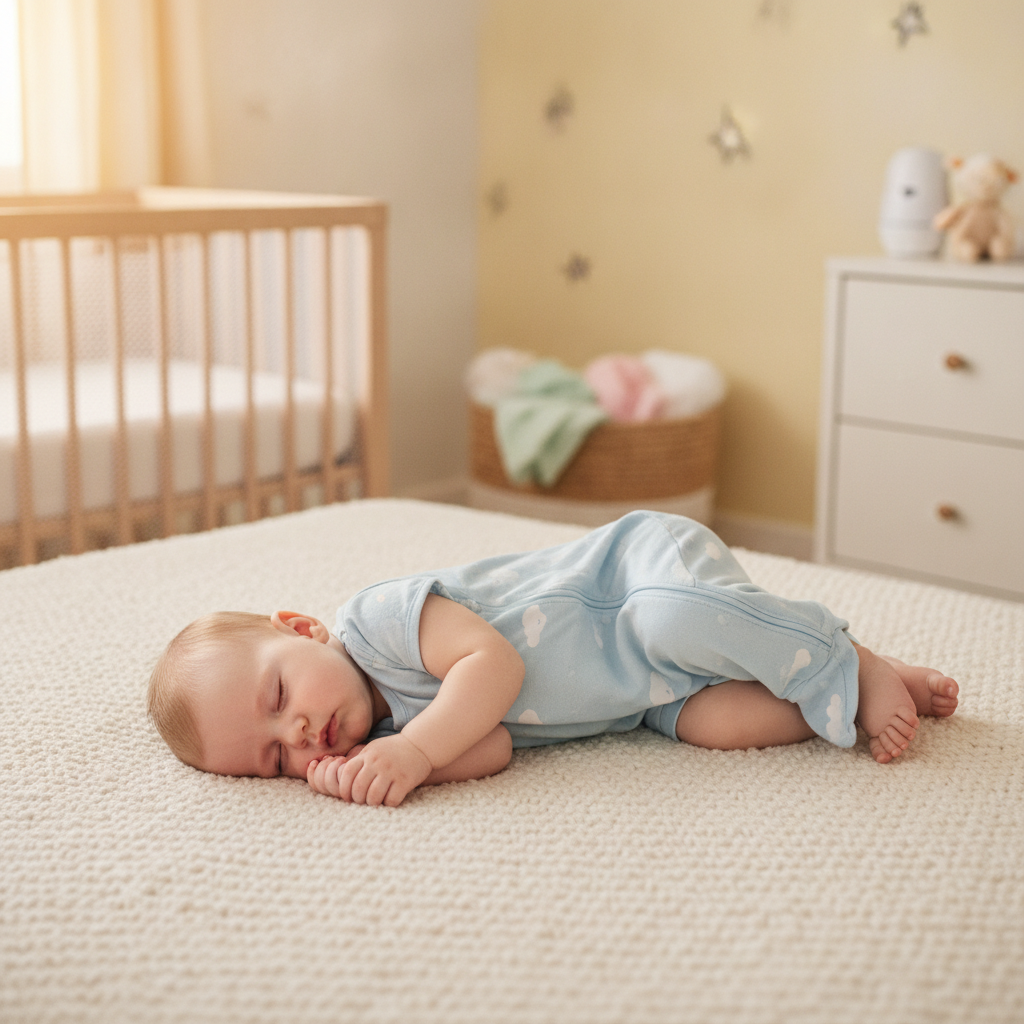
Key Takeaways
- 10-month-olds need 12-14 hours of total sleep on a well-established 2-nap schedule
- Wake windows are 3-3.75 hours (longest yet)
- Pulling to stand and cruising are the #1 sleep disruptors — babies practice in the crib
- Nap refusals are common but don't drop to 1 nap yet (wait until 13-18 months)
- Most babies should be night weaned by now — 0 night feeds expected
At 10 months, your baby's 2-nap schedule is well established and most babies are sleeping through the night. The big challenge? Physical milestones. Pulling to stand, cruising along furniture, and for some early walkers — first steps — all disrupt sleep as the brain processes these exciting new skills overnight.
Here's what a realistic 10-month-old sleep schedule looks like, plus how to handle standing in the crib and nap refusals without dropping a nap too early. Coming from last month? See our 9-month sleep schedule for comparison.
Sleep Needs at 10 Months
| Metric | Typical Range |
|---|---|
| Total sleep (24 hours) | 12-14 hours |
| Nighttime sleep | 10-12 hours |
| Daytime naps | 2 naps (well established) |
| Total nap time | 2-3 hours |
| Wake windows | 3-3.75 hours |
| Night feeds | 0 (most night weaned) |
Sample 10-Month-Old Schedule
| Time | Activity |
|---|---|
| 6:30 AM | Wake up + feed |
| 9:30 AM | Nap 1 (1-1.5 hours) |
| 11:00 AM | Wake + feed |
| 2:00 PM | Nap 2 (1-1.5 hours) |
| 3:30 PM | Wake + feed |
| 6:45 PM | Bedtime routine |
| 7:00-7:30 PM | Asleep for the night |
SmartSpot adapts to your baby's unique rhythm
At 10 months, wake windows can vary by 15-30 minutes day to day depending on nap quality. SmartSpot in ParAI tracks your baby's actual patterns and adjusts predictions automatically — no manual schedule tweaking needed.
Wake Windows at 10 Months
Wake windows at 10 months are the longest your baby has had so far. For a detailed breakdown by age, see our wake windows guide.
- First wake window: 3-3.25 hours (morning, before nap 1)
- Second wake window: 3.25-3.5 hours (between naps)
- Last wake window: 3.5-3.75 hours (longest, before bedtime)
If your baby is consistently fighting naps or taking a long time to fall asleep, their wake windows may need stretching by 15 minutes. At 10 months, undertiredness is more common than overtiredness for nap battles.
Standing & Cruising in the Crib
At 10 months, pulling to stand and cruising are in full swing. Many babies treat the crib like a gym — standing up, bouncing, cruising the rails, and then crying because they're stuck or too wired to sleep.
How to handle it:
- Practice sitting down from standing all day long — the more they practice during play, the faster they'll figure it out in the crib
- Lay them down once at bedtime — then leave. Repeatedly laying them down becomes a game
- Stay boring — if you must go in, no eye contact, no talking, just a quick lay-down
- Ensure the mattress is at the lowest setting — critical for safety with a standing baby
- Give it time — most babies figure out how to sit back down within 1-2 weeks of mastering standing
This is often the tail end of the 8-10 month sleep regression. Once standing and cruising are fully mastered, sleep typically improves dramatically.
Nap Refusals (Don't Drop to 1!)
Around 10 months, many babies start refusing one nap — usually the afternoon nap. Parents often wonder if it's time to drop to 1 nap. It's not.
Why babies refuse naps at 10 months:
- New motor skills — standing and cruising are too exciting to sleep through
- Wake windows too short — they may need 3.25-3.5 hours before nap 2 now
- Developmental leap — the brain is processing so much that settling is hard
- Separation anxiety — doesn't want to be alone in the crib
Why you shouldn't drop to 1 nap yet:
- The 2-to-1 nap transition happens between 13-18 months for most babies
- Dropping too early leads to chronic overtiredness, worse night sleep, and early morning wakes
- A 10-month-old cannot comfortably stay awake 5+ hours between naps (required for 1-nap schedule)
Instead: stretch wake windows by 15 minutes, cap nap 1 at 1.25 hours to protect nap 2, and ride it out. The refusals typically resolve within 1-2 weeks.
Separation Anxiety
Separation anxiety can peak again around 10 months, especially if your baby is also going through motor milestones. The combination of "I don't want you to leave" and "I can't stop standing up" makes for rough nights.
What helps at this age:
- Keep bedtime routine consistent — predictability is comforting
- Offer a lovey — at 10 months, a small comfort object is safe and can bridge the separation
- Brief check-ins — if needed, pop in briefly but don't pick up or linger
- Lots of connection during the day — fill their "attachment cup" so nighttime feels safer
This round of separation anxiety is usually shorter than the 8-9 month peak — typically 2-3 weeks.
Night Weaning
By 10 months, most babies are physiologically ready to sleep 10-12 hours without any feeds. With 3 solid meals plus milk feeds during the day, nighttime calories are no longer needed.
- Most babies: sleeping through with 0 night feeds
- If still feeding at night: it's likely a sleep association, not hunger
- Night weaning approach: gradually reduce feed volume/time over 5-7 nights
If your baby is still waking for feeds, consider whether it's truly hunger (unlikely at 10 months with adequate daytime intake) or a comfort habit that's preventing consolidated sleep.
Tips for Better Sleep at 10 Months
- Lots of physical activity during the day — let them practice standing, cruising, and climbing during awake time so they're less compelled to practice at night
- Cap nap 1 if nap 2 suffers — wake them at 1.25 hours from nap 1 to protect the afternoon nap
- Dark room + white noise — especially important now that they're more aware of their environment
- Consistent bedtime routine — 15-20 minutes, same order every night
- Don't rush in at every sound — at 10 months, give them a few minutes to resettle independently
FAQ
My 10-month-old keeps standing in the crib and won't lie down. What do I do?
Practice sitting from standing during the day — show them how to bend their knees and plop down. At bedtime, lay them down once, then leave. Don't make it a game by repeatedly going in. Most babies master sitting from standing within 1-2 weeks.
Is my 10-month-old ready for 1 nap?
No. The 2-to-1 nap transition doesn't happen until 13-18 months. Nap refusals at 10 months are caused by motor development and undertiredness, not readiness for 1 nap. Stretch wake windows instead of dropping a nap.
Why is my 10-month-old suddenly waking at night again?
Most likely motor milestones (standing, cruising, early walking) or a resurgence of separation anxiety. This is the tail end of the 8-10 month regression. It typically resolves within 2-3 weeks once skills are mastered.
Should my 10-month-old still be eating at night?
Most 10-month-olds don't need night feeds. With 3 solid meals and milk feeds during the day, nighttime calories aren't necessary. If still feeding at night, it's likely a comfort association. Gradual night weaning over 5-7 nights usually works well.
What's the ideal bedtime for a 10-month-old?
Between 7:00-7:30 PM for most babies. The key is the last wake window being 3.5-3.75 hours after nap 2 ends. If naps were short, move bedtime earlier. Looking ahead? See our 12-month sleep schedule for what comes next.
Struggling with Sleep? Try ParAI's AI Sleep Coach
ParAI's AI Sleep Coach creates a personalized sleep plan based on your baby's age, temperament, and patterns. Daily check-ins, progress tracking, and evidence-based guidance.