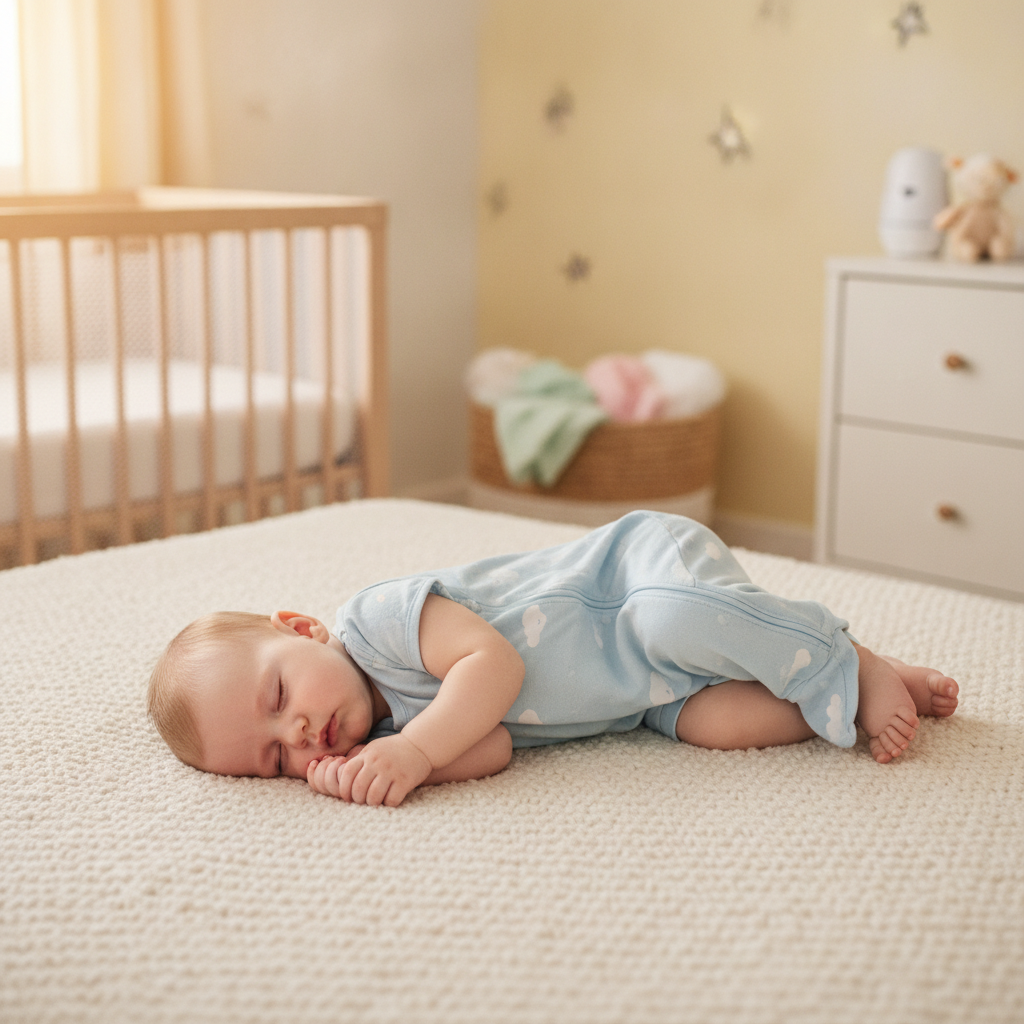
Key Takeaways
- 6-month-olds need 12-15 hours of total sleep (2-3 naps)
- Wake windows are 2-2.5 hours — longer than at 4 months
- Many babies transition from 3 naps to 2 naps around this age
- Night weaning becomes possible (but not required) for many babies
- Solids introduction may affect sleep patterns temporarily
Six months is a sweet spot for baby sleep. The 4-month regression is behind you, sleep cycles are more mature, and many babies are capable of longer stretches at night. It's also when naps start consolidating from 3-4 short naps into 2-3 longer ones.
Here's what a realistic 6-month-old sleep schedule looks like.
Sleep Needs at 6 Months
| Metric | Typical Range |
|---|---|
| Total sleep (24 hours) | 12-15 hours |
| Nighttime sleep | 10-12 hours |
| Daytime naps | 2-3 naps |
| Total nap time | 2.5-3.5 hours |
| Wake windows | 2-2.5 hours |
| Night feeds | 0-1 feeds |
Sample 6-Month-Old Schedule
3-Nap Schedule (early 6 months)
| Time | Activity |
|---|---|
| 6:30 AM | Wake up + feed |
| 8:30 AM | Nap 1 (1-1.5 hours) |
| 10:00 AM | Wake + feed + solids |
| 12:15 PM | Nap 2 (1-2 hours) |
| 2:00 PM | Wake + feed |
| 4:15 PM | Nap 3 (30-45 min catnap) |
| 4:45 PM | Wake + feed + solids |
| 6:30 PM | Bedtime routine |
| 7:00 PM | Asleep for the night |
2-Nap Schedule (late 6 months)
| Time | Activity |
|---|---|
| 6:30 AM | Wake up + feed |
| 9:00 AM | Nap 1 (1.5-2 hours) |
| 10:30 AM | Wake + feed + solids |
| 1:00 PM | Nap 2 (1.5-2 hours) |
| 2:30 PM | Wake + feed + solids |
| 6:15 PM | Bedtime routine |
| 6:45 PM | Asleep for the night |
Which schedule is right?
If your baby fights the 3rd nap, takes very short naps, or bedtime is getting too late — it's time to try 2 naps. Most babies transition between 5-7 months. SmartSpot in ParAI detects when your baby is ready for this transition based on their actual patterns.
Wake Windows at 6 Months
- First wake window: 2-2.25 hours
- Middle wake windows: 2.25-2.5 hours
- Last wake window: 2.5-2.75 hours (before bedtime)
These are noticeably longer than at 4 months. If you're still using 4-month wake windows, your baby may be undertired — leading to short naps and bedtime resistance.
Dropping the Third Nap
Signs your baby is ready to drop from 3 naps to 2:
- Consistently refusing or fighting the 3rd nap
- 3rd nap pushes bedtime too late (past 8pm)
- Taking long time to fall asleep for naps
- Night sleep is being affected (early morning waking)
The transition takes 1-2 weeks. Expect some overtiredness and earlier bedtimes during the adjustment. Move bedtime 30 minutes earlier on days without the 3rd nap.
Night Feedings & Night Weaning
At 6 months, many babies are physiologically capable of sleeping through without a feed — but not all are ready:
- Ready to night wean: gaining weight well, eating enough during the day (including solids), waking at inconsistent times (habit, not hunger)
- Still needs a feed: waking at the same time every night, eating a full feed when offered, not yet established on solids
If you're unsure, the AI Sleep Coach can help you assess readiness and create a gradual night weaning plan.
Tips for Better Sleep at 6 Months
- Extend wake windows — if still using 4-month windows, stretch by 15 min every few days
- Consistent bedtime routine — same order, same time, every night
- Solids timing — offer solids 1-2 hours before naps, not right before (digestion can disrupt sleep)
- Independent sleep skills — if not already, this is the ideal age for sleep training
- Track and predict — use ParAI to log sleep and let SmartSpot predict optimal nap times
FAQ
Should my 6-month-old be sleeping through the night?
Many can, but not all do — and that's normal. "Sleeping through" means a 10-12 hour stretch. Some babies achieve this by 6 months; others still need 1 feed. Both are within normal range.
How do solids affect sleep?
Starting solids can temporarily disrupt sleep (digestive adjustment, new allergens). Long-term, adequate daytime calories from solids help babies sleep longer at night. Don't introduce new foods right before bed.
My baby was sleeping well but suddenly isn't — is this a regression?
There's no major regression at 6 months like the 4-month one. Disruptions at this age are usually caused by: nap transition (3→2), teething, starting solids, separation anxiety beginning, or illness. Check our sleep regression guide for all ages.
Is 6pm too early for bedtime?
Not if your baby dropped the 3rd nap and the last wake window would push bedtime past 7pm. A 6-6:30pm bedtime is fine during the nap transition. It usually shifts back to 7pm once the 2-nap schedule stabilizes.
Struggling with Sleep? Try ParAI's AI Sleep Coach
ParAI's AI Sleep Coach creates a personalized sleep plan based on your baby's age, temperament, and patterns. Daily check-ins, progress tracking, and evidence-based guidance.