Key Takeaways
- Most baby tracker apps stop being useful after age 2 — they don't track meals, screen time, or behavior
- ParAI is the only tracker designed for ages 0-7 with dedicated toddler features
- Key toddler tracking needs: meal variety (not just ounces), screen time limits, behavior patterns, and nap transitions
- All tracking in ParAI is free — AI features like SmartSpot predictions and Behavior Coach are Pro/Premium
Your baby tracker was perfect for logging bottles and diapers. But now your child is 2, eating real food, watching screens, throwing tantrums, and dropping naps — and your app has nothing for any of it.
You're not alone. Most baby trackers were designed for infants and simply don't evolve with your child. Here's what toddler parents actually need to track, and which apps (if any) support it.
Looking for baby trackers (0-2)? See our Best Baby Tracker Apps 2026 comparison. For picky eating specifically, check Toddler Meal Ideas for Picky Eaters.
Why Track After Age 2?
Tracking a toddler serves different purposes than tracking a newborn:
- Picky eating patterns — seeing which food groups your child consistently refuses helps you plan meals strategically, not reactively
- Screen time awareness — the AAP recommends no more than 1 hour/day for ages 2-5. Without tracking, most families underestimate significantly
- Behavior triggers — tantrums often correlate with hunger, tiredness, or overstimulation. Tracking reveals patterns you can't see in the moment
- Nap transitions — knowing when your child is ready to drop a nap (vs just fighting it temporarily) requires data over weeks
- Pediatrician visits — "How's their diet?" is easier to answer with actual data than vague memories
The tracking gap
Most parents who track their baby's activities stop by age 18 months — not because tracking became less useful, but because their app stopped being relevant. The needs changed; the app didn't.
What Toddler Parents Need to Track
The tracking needs of a 3-year-old are fundamentally different from a 3-month-old:
Meals & Nutrition (Not Ounces)
Baby trackers count milliliters and nursing minutes. Toddler parents need to track:
- Food groups offered vs accepted (grains, protein, dairy, fruits, vegetables)
- New foods introduced and whether they were accepted or refused
- Meal patterns — is your child eating enough variety across the week?
- Snack frequency — are between-meal snacks killing dinner appetite?
Screen Time
The AAP guidelines are clear but hard to follow without measurement:
- Under 2: avoid screens except video calls
- Ages 2-5: maximum 1 hour/day of high-quality programming
- Ages 6+: consistent limits that don't displace sleep or physical activity
Tracking screen time reveals the real number — and helps you set boundaries with data, not guilt.
Behavior & Emotional Regulation
Toddler behavior isn't random. Tracking helps you see:
- When tantrums happen (time of day, before/after meals, transitions)
- What triggers them (hunger, tiredness, overstimulation, transitions)
- Which strategies work (distraction, naming emotions, choices, time-in)
- Progress over time — are meltdowns decreasing in frequency or intensity?
Sleep (Different Concerns)
Baby sleep tracking is about total hours and night wakings. Toddler sleep tracking is about:
- Nap transition readiness — is the nap getting shorter or being refused?
- Bedtime resistance — how long does it take to fall asleep?
- Night fears and terrors — frequency and triggers
- Early waking patterns
Toddler Tracking Apps Compared
| Feature | ParAI | Huckleberry | Sprout Baby | Baby Daybook |
|---|---|---|---|---|
| Age range | 0-7 years | 0-5 | 0-2 | 0-2 |
| Meal tracking (food groups) | ✅ | ❌ | ❌ | ❌ |
| Screen time tracking | ✅ (AAP limits) | ❌ | ❌ | ❌ |
| Behavior tracking | ✅ | ❌ | ❌ | ❌ |
| AI Behavior Coach | ✅ (Premium) | ❌ | ❌ | ❌ |
| Nap predictions | ✅ (Pro) | ✅ (Paid) | ❌ | ✅ (Premium) |
| Milestone tracking (2-7) | ✅ + AI analysis | Basic | ❌ | ❌ |
| AI chat (parenting questions) | ✅ | ✅ (Premium) | ❌ | ❌ |
| Dedicated toddler module | ✅ | ❌ | ❌ | ❌ |
1. ParAI — Best Overall for Toddlers (Ages 0-7)
Price: Free (all tracking) · Pro $4.99/mo · Premium $9.99/mo
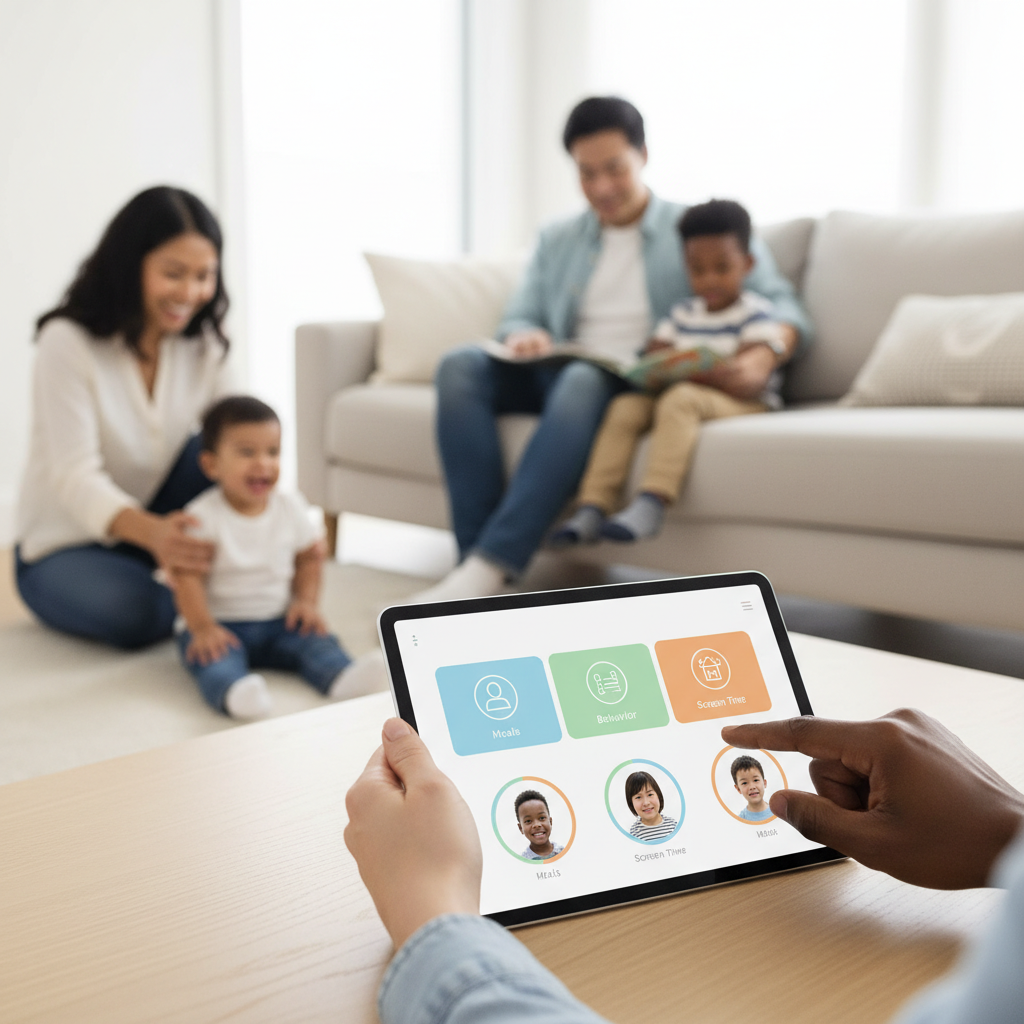
ParAI is the only tracker that was designed to grow with your child. When your baby turns 2, you switch to the Child Module — and the app transforms from bottle/diaper tracking to meal planning, screen time management, and behavior coaching.
Child Module Features
- Meal tracking with food groups — log what was offered and accepted across grains, protein, dairy, fruits, and vegetables. See weekly variety at a glance.
- Screen time with AAP limits — track daily screen time against age-appropriate limits. Visual progress bar shows how much of the daily budget is used.
- Behavior tracking — log tantrums, aggression, defiance with triggers and what helped. Spot patterns over time.
- Active play tracking — log outdoor time and physical activity
- AI Behavior Coach (Premium) — personalized strategies for your child's specific behavior challenges
- SmartSpot predictions (Pro) — AI predicts next nap and feeding based on your child's patterns
- Developmental milestones — CDC milestones for ages 2-5 with AI analysis (Premium)
Key advantage: All tracking is completely free. You never pay to log meals, screen time, or behavior. AI features (predictions, coaching, insights) are Pro/Premium.
Transition: Switch from Baby to Child module in 2 taps. All previous baby data stays accessible — you don't lose your history.
2. Huckleberry — Sleep Tracking Only
Price: Free (limited) · Plus $11.99/mo · Premium $14.99/mo
Huckleberry supports children up to age 5, but its features remain baby-focused. You can still track sleep and get SweetSpot nap predictions for toddlers, which is genuinely useful during nap transitions.
What works for toddlers: Sleep tracking, SweetSpot predictions, sleep analytics.
What's missing: No meal tracking with food groups, no screen time tracking, no behavior logging, no behavior coaching. If sleep is your only concern, it works. For everything else toddler parents need, it falls short.
3. Sprout Baby — Baby-Focused
Price: Free + subscription
Sprout Baby is an excellent baby tracker but explicitly designed for ages 0-2. Once your child is past the bottle and diaper stage, the app's core features become irrelevant. There's no toddler meal tracking, no screen time, no behavior features.
What works for toddlers: Growth charts, basic milestone tracking.
What's missing: Everything toddler-specific. The app was built for infants and doesn't adapt to older children's needs.
The real problem
Most baby trackers weren't designed to fail at toddler tracking — they simply weren't designed for it at all. The market assumed parents stop tracking at age 1-2. But the challenges don't stop — they change. Picky eating, screen time battles, and behavior challenges are just as trackable as bottles and diapers.
Which App Is Right for Your Toddler?
- You want to track meals, screen time, and behavior: ParAI is currently the only option with dedicated toddler features.
- You only care about sleep/nap timing: Huckleberry's SweetSpot still works for toddlers up to age 5.
- You want AI coaching for behavior challenges: ParAI's Behavior Coach (Premium) creates personalized strategies based on your child's tracked patterns.
- You want everything free: ParAI's tracking is 100% free — meals, screen time, behavior, sleep. You only pay for AI features.
Frequently Asked Questions
Do I need a different app when my baby becomes a toddler?
With most apps, yes — baby trackers focus on bottles, diapers, and sleep minutes, which become irrelevant after age 2. ParAI is the exception: you switch to the Child Module and the app adapts to toddler needs (meals, screen time, behavior) while keeping all your baby data.
What should I track for a 2-3 year old?
The most useful things to track for toddlers are: meal variety (food groups accepted vs refused), screen time against AAP limits, behavior patterns (triggers and what helps), sleep schedule (especially during nap transitions), and developmental milestones.
Is there a free toddler tracking app?
ParAI offers all tracking features completely free — meal logging with food groups, screen time tracking, behavior logging, sleep tracking, and milestones. AI features like predictions, insights, and coaching require Pro ($4.99/mo) or Premium ($9.99/mo).
How does tracking help with picky eating?
When you track which food groups your child accepts and refuses over weeks, patterns emerge. You might discover they eat protein fine but refuse all vegetables — or that they accept new foods better at lunch than dinner. This data helps you plan strategically instead of guessing.
At what age should I stop tracking my child?
There's no fixed age. Most parents find tracking most useful during transitions: starting solids, dropping naps, managing screen time, and navigating behavior challenges. ParAI supports ages 0-7, covering the most intensive parenting years.
Experience AI-Powered Parenting with ParAI
SmartSpot predictions, natural language logging, AI Sleep Coach, and personalized insights — all in one app. See what AI can do for your family.