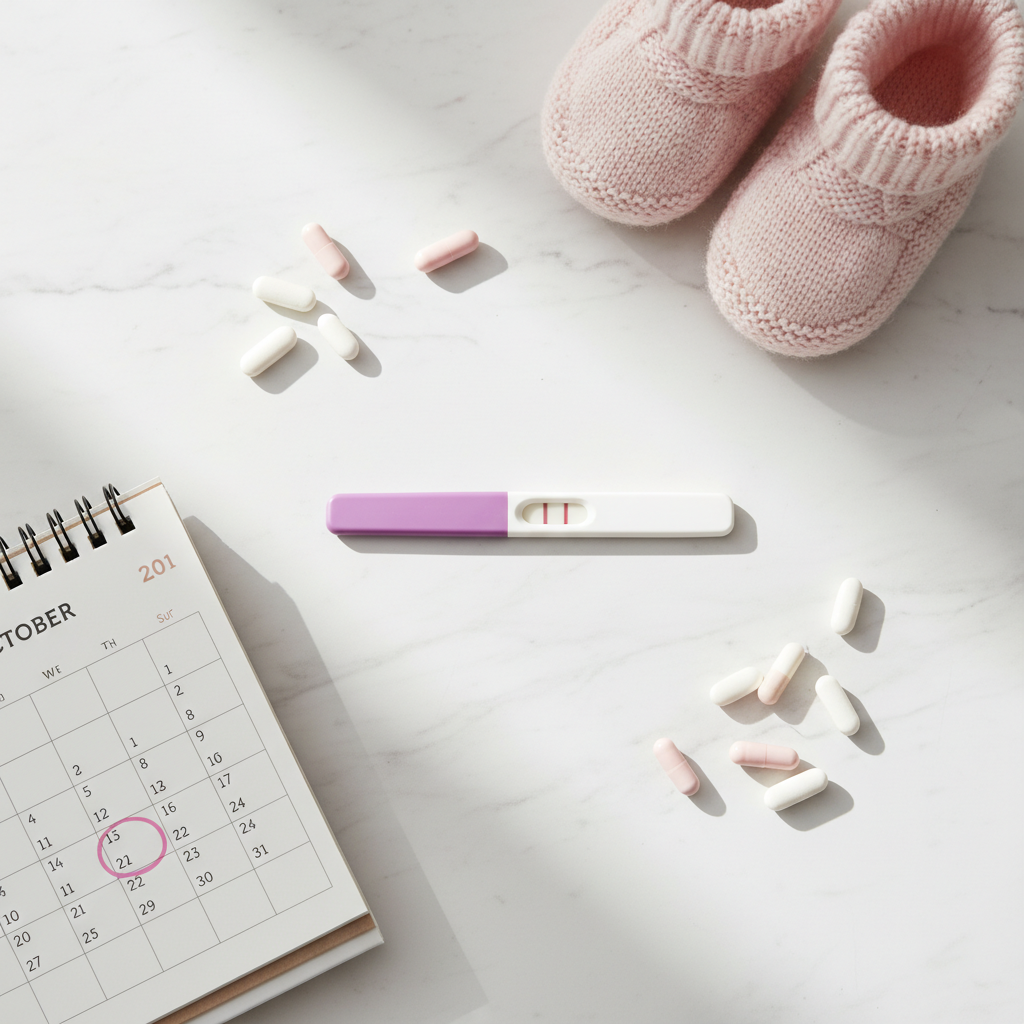
Key Takeaways
- Implantation can cause light spotting and cramping 6–12 days after conception
- Fatigue, breast tenderness, and nausea can appear before a missed period
- Home pregnancy tests are most accurate from the first day of your missed period
- Every pregnancy is different — some women have no early symptoms at all
Wondering if you might be pregnant? The two-week wait between ovulation and your expected period can feel endless. While a missed period is the most well-known sign, many women notice subtle changes days before their period is due. Here's what to look for, when symptoms typically appear, and how to tell the difference between early pregnancy and PMS.
Symptoms Before a Missed Period
Some women notice changes as early as 6–10 days after conception, when the fertilized egg implants in the uterine wall. These very early signs include:
See also: Pregnancy Week by Week: What to Expect Each Trimester and When Do Toddlers Stop Napping? Signs and How to Transition.
- Implantation bleeding — light pink or brown spotting, much lighter than a period, lasting 1–2 days
- Mild cramping — similar to period cramps but usually lighter and lower in the abdomen
- Breast changes — tenderness, swelling, or tingling; areolas may darken
- Fatigue — sudden exhaustion due to rising progesterone levels
- Heightened sense of smell — perfumes, cooking odors, or coffee may suddenly seem overwhelming
- Metallic taste — a strange taste in your mouth (dysgeusia), caused by hormonal shifts
- Bloating — progesterone slows digestion, causing gas and fullness
Not everyone gets symptoms
About 1 in 4 women experience implantation bleeding. Many women have no symptoms at all before their missed period — and that's completely normal.
Symptoms Week by Week
Pregnancy is dated from the first day of your last menstrual period (LMP), so "week 1" is actually before conception. Here's when symptoms typically appear:
| Week | What's Happening | Common Symptoms |
|---|---|---|
| Week 3 | Fertilization occurs | Usually none |
| Week 4 | Implantation (6–12 days post-ovulation) | Light spotting, mild cramps, fatigue |
| Week 5 | Missed period; hCG rising rapidly | Breast tenderness, nausea begins, frequent urination |
| Week 6 | Embryo's heart begins beating | Morning sickness, food aversions, mood swings |
| Week 7–8 | Rapid growth; placenta forming | Nausea peaks, extreme fatigue, heightened smell |
hCG doubling time
In early pregnancy, hCG levels double every 48–72 hours. This rapid rise is what causes many symptoms to intensify between weeks 5 and 8.
Early Pregnancy vs PMS
Many early pregnancy symptoms overlap with premenstrual syndrome, making it hard to tell the difference without a test. Here's how they compare:
| Symptom | PMS | Early Pregnancy |
|---|---|---|
| Breast pain | Resolves when period starts | Persists and intensifies |
| Cramping | Stronger, leads to period | Milder, no period follows |
| Fatigue | Improves after period starts | Gets worse over weeks |
| Nausea | Rare | Common (especially morning) |
| Food cravings | Chocolate, carbs | Unusual cravings or strong aversions |
| Mood changes | Irritability, resolves with period | Emotional, tearful, persists |
| Spotting | Leads to full flow | Light, brief, then stops |
The key difference: PMS symptoms resolve when your period arrives. Pregnancy symptoms persist and typically intensify over the following weeks.
When to Take a Pregnancy Test
Home pregnancy tests detect hCG (human chorionic gonadotropin) in your urine. For the most accurate result:
- Best time to test — the first day of your missed period (about 14 days post-ovulation)
- Early testing — some sensitive tests can detect hCG 6 days before your missed period, but accuracy is only ~60% that early
- Time of day — first morning urine has the highest hCG concentration
- If negative but no period — wait 3 days and test again. hCG may not be high enough yet
Test accuracy by timing
At the time of your missed period, home tests are 99% accurate. Testing 5 days early drops accuracy to about 50–60%. If you get a faint line, it's almost certainly positive — hCG is present.
Warning Signs to Watch For
While most early pregnancy symptoms are normal, contact your doctor if you experience:
- Heavy bleeding — soaking a pad in an hour, especially with severe cramping
- Severe one-sided pain — could indicate ectopic pregnancy
- Fever above 38°C (100.4°F) — may signal infection
- Severe vomiting — unable to keep any fluids down for 24+ hours (hyperemesis gravidarum)
- Dizziness or fainting — especially with bleeding or pain
Ectopic pregnancy
An ectopic pregnancy (fertilized egg implants outside the uterus) affects about 1 in 50 pregnancies. Sharp one-sided pain with bleeding between weeks 4–12 needs immediate medical attention.
What to Do Next
If your test is positive, congratulations! Here are your immediate next steps:
- Schedule a prenatal appointment — most doctors see you between weeks 8–10
- Start prenatal vitamins — especially folic acid (400–800 mcg daily) to prevent neural tube defects
- Avoid — alcohol, smoking, raw fish, soft cheeses, and high-mercury fish
- Track your symptoms — noting when symptoms appear helps your doctor date the pregnancy
- Calculate your due date — 40 weeks from the first day of your last period