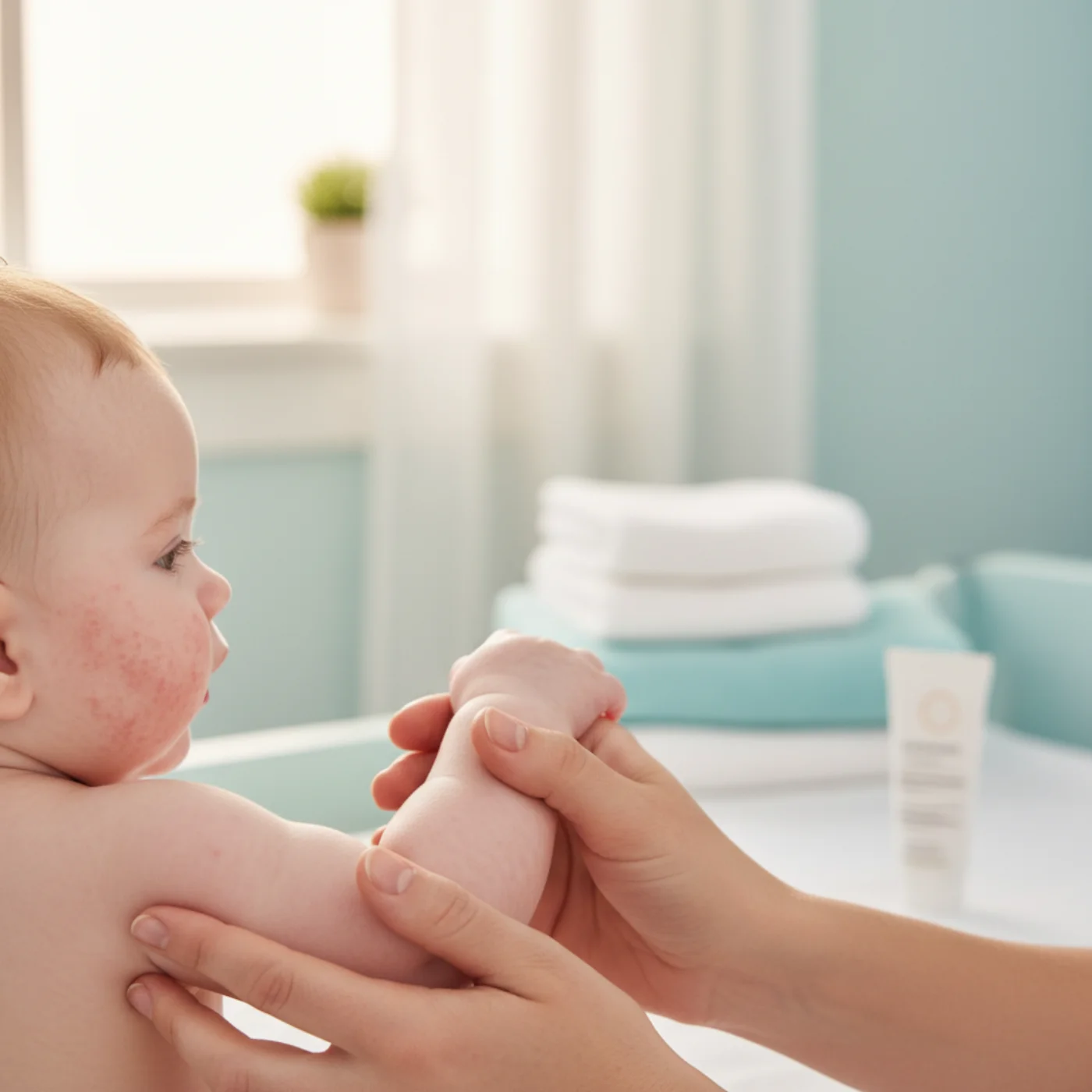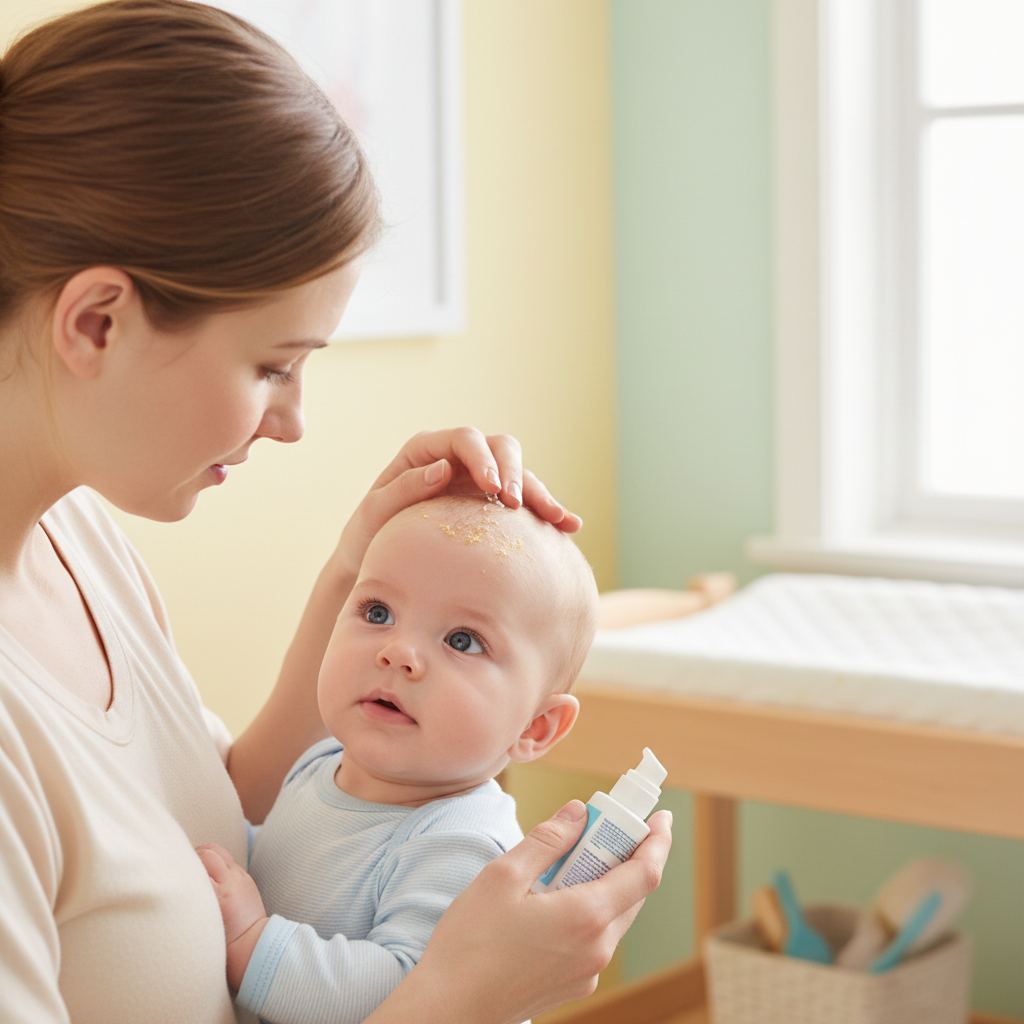
Key Takeaways
- Cradle cap is a harmless form of seborrheic dermatitis — it is NOT caused by poor hygiene
- It is not contagious and does not cause pain or itching for your baby
- Simple home treatment: oil massage → gentle brushing → mild shampoo wash
- Most cases resolve completely on their own by 6–12 months of age
- See your doctor if it spreads beyond the scalp, cracks, bleeds, or shows signs of infection
You've noticed thick, yellowish, crusty patches on your baby's scalp and you're wondering what's going on. Don't worry — this is cradle cap, one of the most common and harmless skin conditions in newborns. It looks worse than it is, and with a few simple steps, you can manage it at home while it resolves on its own.
What Is Cradle Cap?
Cradle cap (infantile seborrheic dermatitis) is a very common condition that causes thick, yellow or white, crusty or flaky scales on a baby's scalp. It can also appear on the eyebrows, behind the ears, and in skin folds.
See also: When to Call the Pediatrician: A New Parent's Guide and Teething Timeline: Symptoms, Relief, and What to Expect.
Key facts about cradle cap:
- Affects up to 70% of babies in the first 3 months of life
- Usually appears between 2 weeks and 3 months of age
- Looks like thick, greasy, yellowish or white scales stuck to the scalp
- Is not painful or itchy for your baby — it bothers parents more than babies
- Is not contagious — you cannot catch it or spread it
- Is not caused by poor hygiene — even the cleanest babies get it
Not the same as eczema
Cradle cap and baby eczema look different. Cradle cap produces greasy, yellowish scales that don't itch. Eczema causes dry, red, itchy patches. They can coexist, but they require different treatment approaches.
What Causes It
The exact cause isn't fully understood, but doctors believe cradle cap results from a combination of factors:
- Overactive sebaceous glands — maternal hormones still circulating after birth stimulate oil production in the baby's skin
- Malassezia yeast — a naturally occurring fungus that thrives in oily environments and may trigger the skin's inflammatory response
- Rapid skin cell turnover — new skin cells are produced faster than old ones shed, causing buildup
What does NOT cause cradle cap:
- Poor hygiene or not washing your baby's hair enough
- Allergies or food sensitivities
- Bacterial infection
- Anything the parent did or didn't do
How to Treat It at Home
Most cradle cap doesn't need medical treatment. Here's a simple 3-step routine that works for the majority of cases:
Step 1: Oil massage (15 minutes before bath)
Apply a natural oil generously to the affected areas and gently massage it into the scales. Let it sit for at least 15 minutes (or up to an hour) to soften the crusty patches. This loosens the scales so they come off easily without pulling.
Step 2: Gentle brushing
Using a soft-bristle baby brush or a fine-tooth comb, gently brush the scalp in small circular motions. The softened scales should lift away easily. Never pick, scratch, or force scales off — this can irritate the skin and cause bleeding.
Step 3: Wash with mild shampoo
Wash your baby's hair with a gentle, fragrance-free baby shampoo. Lather and gently massage the scalp to remove the loosened flakes and excess oil. Rinse thoroughly. Repeat this routine 2–3 times per week until the cradle cap clears.
Consistency is key
One treatment won't clear cradle cap completely. Stick with the oil-brush-wash routine 2–3 times per week for several weeks. You should see gradual improvement with each session.
Best Products for Cradle Cap
| Product | When to Use | Notes |
|---|---|---|
| Coconut oil | Mild to moderate cases | Natural antifungal properties, safe if baby licks hands |
| Mineral oil / baby oil | Moderate cases with thick scales | Very effective at softening stubborn patches |
| Olive oil | Mild cases | Some studies suggest it may worsen eczema-prone skin |
| Medicated shampoo (ketoconazole 2%) | Severe or persistent cases | Only use if recommended by your pediatrician |
| Soft-bristle cradle cap brush | All cases | Silicone brushes are gentle and easy to clean |
Avoid these
Never use adult dandruff shampoo, peanut oil (allergy risk), or any product with salicylic acid on babies. Don't pick at scales with your fingernails — always use a soft brush after oil has softened them.
When to See Your Doctor
Cradle cap rarely needs medical intervention, but contact your pediatrician if you notice:
- Spreading beyond the scalp — if it appears on the face, neck, diaper area, or body folds, it may need prescription treatment
- Cracking or bleeding — broken skin can become a gateway for infection
- Signs of infection — increased redness, warmth, swelling, oozing, or pus around the affected area
- Baby seems uncomfortable — true cradle cap doesn't itch, so if your baby is scratching or fussy, it may be eczema or another condition
- No improvement after 2 weeks of consistent home treatment
- Hair loss in the affected areas
Your doctor may prescribe a mild antifungal cream, a low-potency hydrocortisone cream, or a medicated shampoo depending on the severity.
When Does It Go Away?
The good news is that cradle cap is temporary. Here's what to expect:
- Mild cases: Often clear within a few weeks with regular treatment
- Moderate cases: May take 1–2 months of consistent care
- Most babies: Completely clear by 6–12 months of age
- Rare cases: Can persist until age 2–3, but this is uncommon
Once the overactive oil glands settle down (as maternal hormones leave the baby's system), cradle cap resolves naturally. It does not leave scars, does not cause permanent hair loss, and does not indicate any underlying health problem.
It can come back
Even after clearing, cradle cap may return briefly. This is normal. Simply resume your oil-brush-wash routine and it will clear again. Each recurrence is typically milder and shorter than the last.
AI-Powered Health Tracking for Peace of Mind
Log symptoms, medications, and temperatures. ParAI's AI helps you spot patterns and know when to call the pediatrician — based on AAP guidelines.


Disclaimer: This article is for informational purposes only and does not replace professional medical advice. Always consult your pediatrician for concerns about your baby's health or development.