Key Takeaways
- Take a home pregnancy test from the first day of your missed period for 99% accuracy
- Start folic acid (400–800 mcg) immediately — ideally before conception
- Schedule your first prenatal appointment between weeks 8–10
- First trimester screenings (NT scan, NIPT) occur between weeks 10–13
- Quit alcohol and smoking completely; limit caffeine to 200 mg/day
- Mental health screening is just as important as physical check-ups
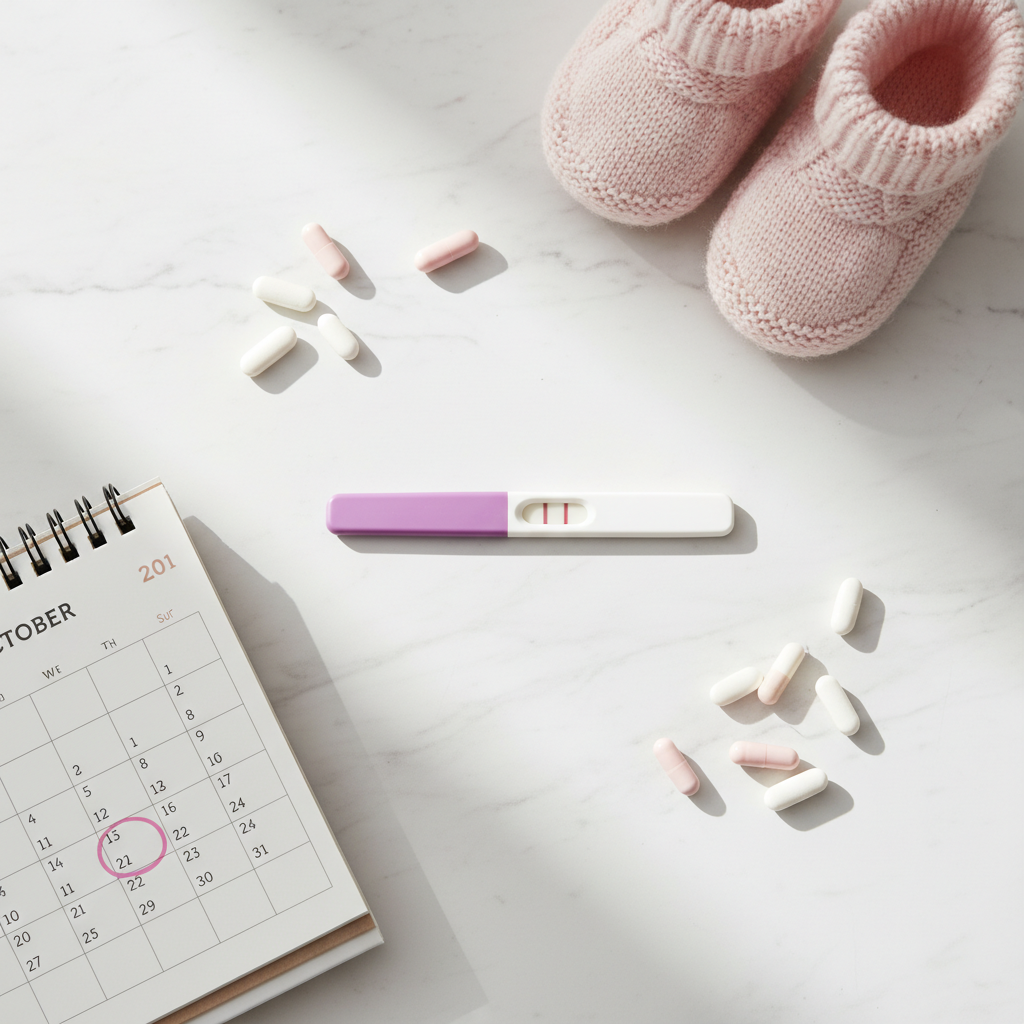
Seeing that positive test is thrilling — and overwhelming. The first trimester (weeks 1–13) sets the foundation for a healthy pregnancy, but knowing exactly what to do first can feel confusing. This checklist walks you through every essential step: confirming your pregnancy, starting the right vitamins, booking appointments, understanding screenings, making lifestyle changes, and taking care of your emotional health.
Confirm Your Pregnancy
A home pregnancy test detects hCG in your urine and is the fastest way to confirm pregnancy. Here's your confirmation checklist:
See also: Pregnancy Week by Week: What to Expect Each Trimester and newborn-essentials-checklist.
- ☑️ Take a home test — wait until the first day of your missed period for best accuracy. Use first morning urine for the highest hCG concentration.
- ☑️ Repeat if uncertain — a faint line is positive, but test again in 2–3 days if unsure. hCG doubles every 48–72 hours.
- ☑️ Schedule a blood test — your doctor can confirm with a quantitative hCG blood test, which detects pregnancy earlier and tracks hCG levels.
- ☑️ Calculate your due date — count 40 weeks from the first day of your last menstrual period (LMP). Your doctor will confirm with an early ultrasound.
When to test early
Some sensitive tests claim detection 6 days before your missed period, but accuracy is only 50–60% that early. Waiting until your missed period gives you 99% reliability and avoids false negatives.
Prenatal Vitamins & Supplements
Your baby's neural tube (which becomes the brain and spinal cord) forms in the first 28 days — often before you know you're pregnant. Starting supplements immediately is critical.
| Supplement | Daily Dose | Why It Matters |
|---|---|---|
| Folic acid | 400–800 mcg | Prevents neural tube defects (spina bifida, anencephaly) |
| Iron | 27 mg | Supports increased blood volume; prevents anemia |
| DHA (Omega-3) | 200–300 mg | Brain and eye development |
| Vitamin D | 600–1000 IU | Bone development; immune function |
| Calcium | 1000 mg | Baby's bone and teeth formation |
| Iodine | 150–220 mcg | Thyroid function; brain development |
Your checklist:
- ☑️ Choose a prenatal vitamin — look for one with at least 400 mcg folic acid, iron, DHA, and vitamin D
- ☑️ Take with food — iron can cause nausea on an empty stomach; take at bedtime if morning sickness is an issue
- ☑️ Add DHA separately if needed — not all prenatals include omega-3s
- ☑️ Avoid vitamin A (retinol) excess — over 10,000 IU can cause birth defects; beta-carotene is safe
800 mcg folic acid for high-risk
If you have a history of neural tube defects, take diabetes medication, or use anti-seizure drugs, your doctor may recommend 800 mcg or even 4 mg of folic acid daily.
Your First Appointment
Most providers schedule your first prenatal visit between weeks 8–10. Here's what to expect and how to prepare:
Choosing a provider:
- ☑️ OB-GYN — handles all pregnancies including high-risk; can perform C-sections
- ☑️ Midwife (CNM) — focuses on low-risk pregnancies; emphasizes natural birth; collaborates with OBs for complications
- ☑️ Family physician — can manage low-risk pregnancies if they offer obstetric care
What happens at the first visit:
- ☑️ Medical history review (medications, allergies, previous pregnancies)
- ☑️ Physical exam and pelvic exam
- ☑️ Dating ultrasound to confirm gestational age and due date
- ☑️ Blood work (blood type, Rh factor, CBC, immunity checks)
- ☑️ Urine test (protein, glucose, UTI screening)
- ☑️ Discussion of genetic screening options
Bring to your first appointment
Your last menstrual period date, list of current medications and supplements, family medical history (both sides), and any questions you've been saving. Write them down — pregnancy brain is real!
First Trimester Tests & Screenings
Several important screenings happen between weeks 10–13 to assess your baby's health and identify potential concerns early:
| Test | When | What It Checks |
|---|---|---|
| NT Scan (Nuchal Translucency) | Weeks 11–13 | Ultrasound measuring fluid behind baby's neck; screens for Down syndrome and heart defects |
| NIPT (Cell-Free DNA) | From week 10 | Blood test screening for chromosomal conditions (trisomy 21, 18, 13); 99% detection rate |
| Blood type & Rh factor | First visit | Identifies Rh incompatibility; Rh-negative mothers need RhoGAM injection |
| Complete blood count (CBC) | First visit | Checks for anemia, infection, platelet issues |
| Rubella immunity | First visit | Confirms vaccination protection; rubella in pregnancy causes birth defects |
| STI screening | First visit | HIV, syphilis, hepatitis B — treatable conditions that affect the baby if untreated |
Your screening checklist:
- ☑️ Discuss NIPT vs NT scan — NIPT is more accurate but may not be covered by insurance for low-risk pregnancies
- ☑️ Understand results — screening tests show risk levels, not diagnoses. A "positive" screen means further testing (CVS or amniocentesis) is offered
- ☑️ Know your Rh status — if Rh-negative, you'll receive RhoGAM at 28 weeks and after delivery
NIPT is a screening, not a diagnosis
NIPT has a 99% detection rate for Down syndrome but a ~0.1% false positive rate. A positive result means diagnostic testing (amniocentesis or CVS) is recommended to confirm.
Lifestyle Changes to Make Now
The first trimester is when your baby's organs form, making it the most critical time for healthy habits:
Stop immediately:
- ☑️ Alcohol — no safe amount during pregnancy; causes fetal alcohol spectrum disorders
- ☑️ Smoking — increases risk of miscarriage, preterm birth, and low birth weight. Ask your doctor about cessation support.
- ☑️ Recreational drugs — all carry serious risks to fetal development
Modify:
- ☑️ Caffeine — limit to 200 mg/day (about one 12 oz coffee)
- ☑️ Exercise — 150 minutes/week of moderate activity is recommended. Walking, swimming, and prenatal yoga are excellent. Avoid contact sports, hot yoga, and lying flat on your back after week 16.
- ☑️ Diet — avoid raw fish, undercooked meat, soft cheeses, deli meats, and high-mercury fish (shark, swordfish, king mackerel)
- ☑️ Medications — check all current medications with your doctor. Some common drugs (ibuprofen, certain acne treatments) are unsafe in pregnancy.
Announcing your pregnancy:
- ☑️ Most couples wait until after week 12, when miscarriage risk drops significantly (from ~15% to ~2%)
- ☑️ Tell your employer when you're ready — there's no "right" time, but many wait until the second trimester
- ☑️ Share with close family/friends earlier if you want support during the first trimester
Exercise is safe and recommended
Unless your doctor advises otherwise, continuing your pre-pregnancy exercise routine is safe. If you weren't active before, start with 10-minute walks and build up gradually. Exercise reduces gestational diabetes risk by 30%.
Emotional Health & Support
Pregnancy hormones affect your brain as much as your body. Emotional well-being deserves the same attention as physical health:
- ☑️ Acknowledge mixed feelings — even planned pregnancies bring anxiety. Feeling scared, ambivalent, or overwhelmed is normal.
- ☑️ Mental health screening — ask your provider about screening for anxiety and depression at your first visit. Perinatal mood disorders affect 1 in 5 women.
- ☑️ Build your support network — identify 2–3 people you can talk to openly. Consider a prenatal support group.
- ☑️ Manage stress — meditation, journaling, gentle exercise, and adequate sleep (7–9 hours) all help regulate mood.
- ☑️ Communicate with your partner — discuss expectations, fears, and practical plans early. Couples counseling can be proactive, not reactive.
- ☑️ Seek help if needed — persistent sadness, inability to function, panic attacks, or intrusive thoughts warrant professional support. Therapy and some medications are safe during pregnancy.
You don't have to feel happy all the time
Society expects pregnant women to be glowing and grateful. In reality, first trimester exhaustion, nausea, and hormonal shifts can make you feel terrible. That's not a character flaw — it's biology. Ask for help when you need it.