Key Takeaways
- Most babies get their first tooth between 4–7 months, but anywhere from 3–12 months is normal
- Lower central incisors (bottom front teeth) usually appear first
- Teething does NOT cause high fever — a temperature above 38°C (100.4°F) likely has another cause
- Cold teething rings, gentle gum massage, and age-appropriate pain relief are the safest options
Few things cause more confusion (and lost sleep) for new parents than teething. Your baby is drooling, fussy, and chewing on everything — but is it actually teething, or something else? Here's what the evidence says.
When Do Baby Teeth Come In?
According to the AAP, most babies get their first tooth around 6 months, but the range is wide. Some babies are born with a tooth, while others don't get one until after their first birthday. All 20 primary teeth typically come in by age 3.
See also: Gestational Diabetes: Symptoms, Diet & What to Expect and When to Start Sleep Training: Methods, Timing & What to Expect.
Don't compare timelines
Early or late teething has nothing to do with your baby's overall development. If your baby has no teeth by 18 months, mention it to your pediatrician — but it's rarely a concern.
Teething Order: Which Teeth Come First?
Teeth generally follow a predictable pattern:
| Teeth | Typical Age |
|---|---|
| Lower central incisors (bottom front) | 6–10 months |
| Upper central incisors (top front) | 8–12 months |
| Upper lateral incisors | 9–13 months |
| Lower lateral incisors | 10–16 months |
| First molars | 13–19 months |
| Canines (eye teeth) | 16–23 months |
| Second molars | 23–33 months |
Common Teething Symptoms
Research published in Pediatrics found these symptoms are genuinely associated with teething:
- Drooling — often starts weeks before a tooth appears
- Gum swelling or tenderness
- Irritability and fussiness
- Chewing on everything
- Mild temperature increase — slightly elevated but NOT a true fever
- Changes in eating or sleeping
- Ear pulling — referred pain from the gums
Teething Myths vs Facts
| Myth | Fact |
|---|---|
| Teething causes high fever | Temperature above 38°C (100.4°F) is NOT from teething |
| Teething causes diarrhea | No evidence supports this |
| Teething causes runny nose and cough | These are signs of illness, not teething |
| Amber teething necklaces work | No evidence, plus choking and strangulation risks |
| Late teething means something is wrong | Timing varies widely and is mostly genetic |
The fever rule
If your baby's temperature is above 38°C (100.4°F), don't blame teething. Check for other causes and call your pediatrician.
How to Soothe a Teething Baby
Cold pressure
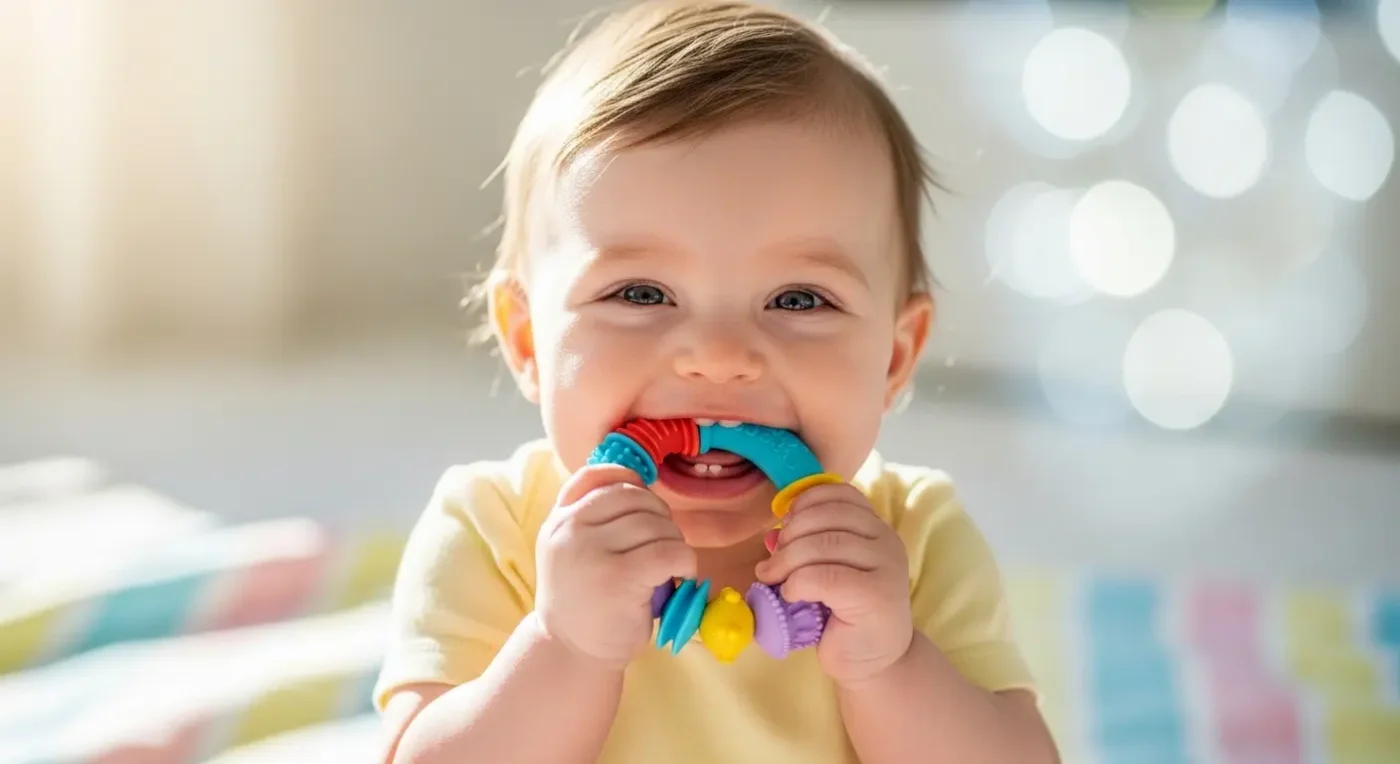
- Chilled teething ring — refrigerate (don't freeze)
- Cold washcloth — wet, chill, and let baby chew on it
- Chilled spoon — quick relief from the fridge
Gentle massage
Wash your hands and gently rub your baby's gums with a clean finger. The counter-pressure helps relieve the aching.
Pain relief (when needed)
For babies over 6 months, infant acetaminophen or ibuprofen can help. Always follow dosing instructions and check with your pediatrician.
What to Avoid
- Teething gels with benzocaine or lidocaine — FDA warns against these for children under 2
- Amber teething necklaces — choking hazard with no proven benefit
- Frozen teething rings — too hard, can hurt gums
- Homeopathic teething tablets — FDA has warned about inconsistent ingredients
When to Call Your Pediatrician
- Fever above 38°C (100.4°F)
- Diarrhea, vomiting, or rash
- Refusing to eat or drink for more than a day
- Excessive crying that you can't soothe
- No teeth by 18 months
- Signs of infection around the gums
AI-Powered Health Tracking for Peace of Mind
Log symptoms, medications, and temperatures. ParAI's AI helps you spot patterns and know when to call the pediatrician — based on AAP guidelines.


Disclaimer: This article is for informational purposes only and does not replace professional medical advice. Always consult your pediatrician for concerns about your baby's health or development.