Key Takeaways
- Freshly expressed milk is safe at room temperature up to ~4 hours, in the fridge up to 4 days, and in the freezer up to ~6 months (best)
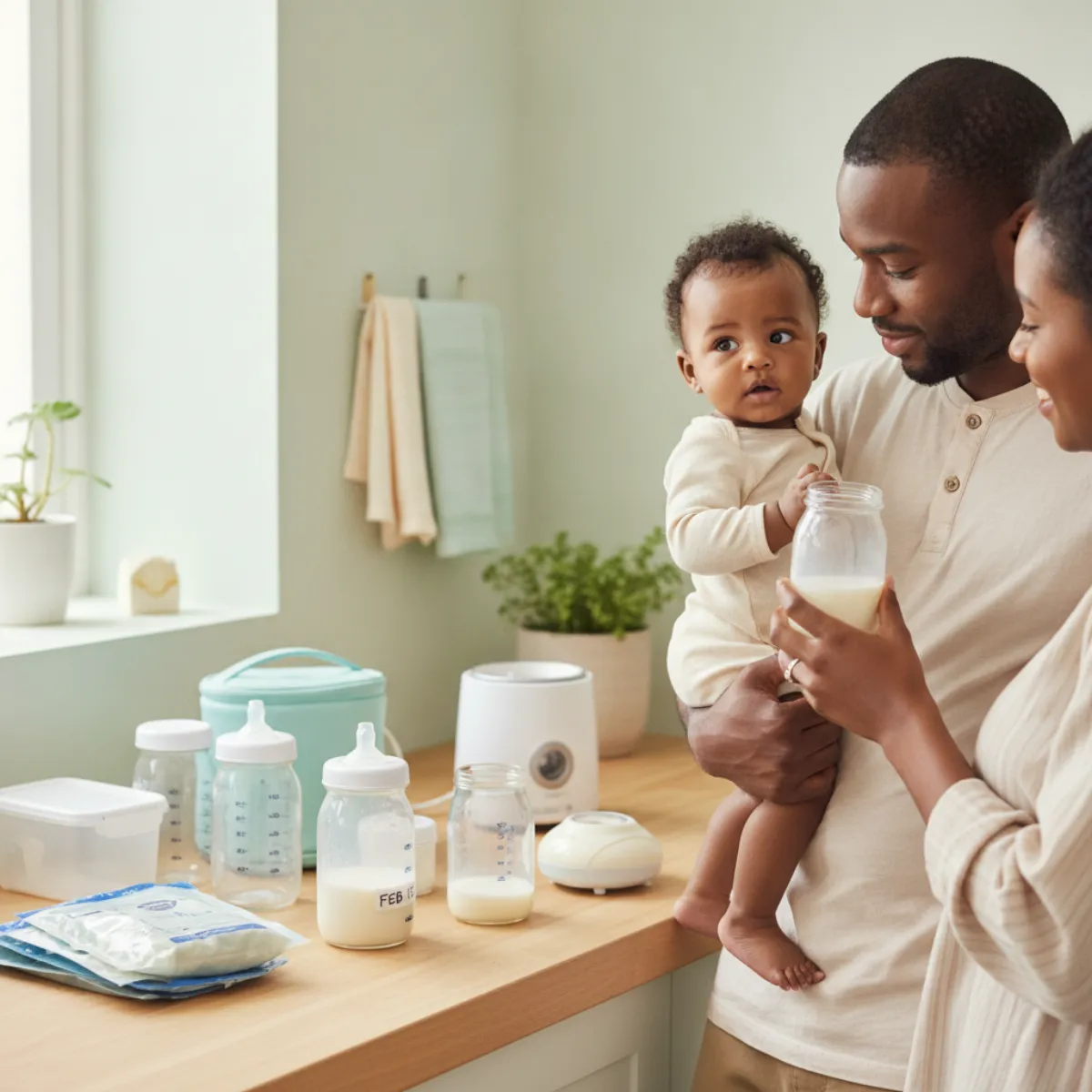
- Store in clean, BPA-free bottles or breast milk storage bags; label with the date
- Thaw in the fridge or under warm running water — never in the microwave
- Use the oldest milk first ("first in, first out")
- Once baby has started a bottle, use it within about 2 hours and discard leftovers
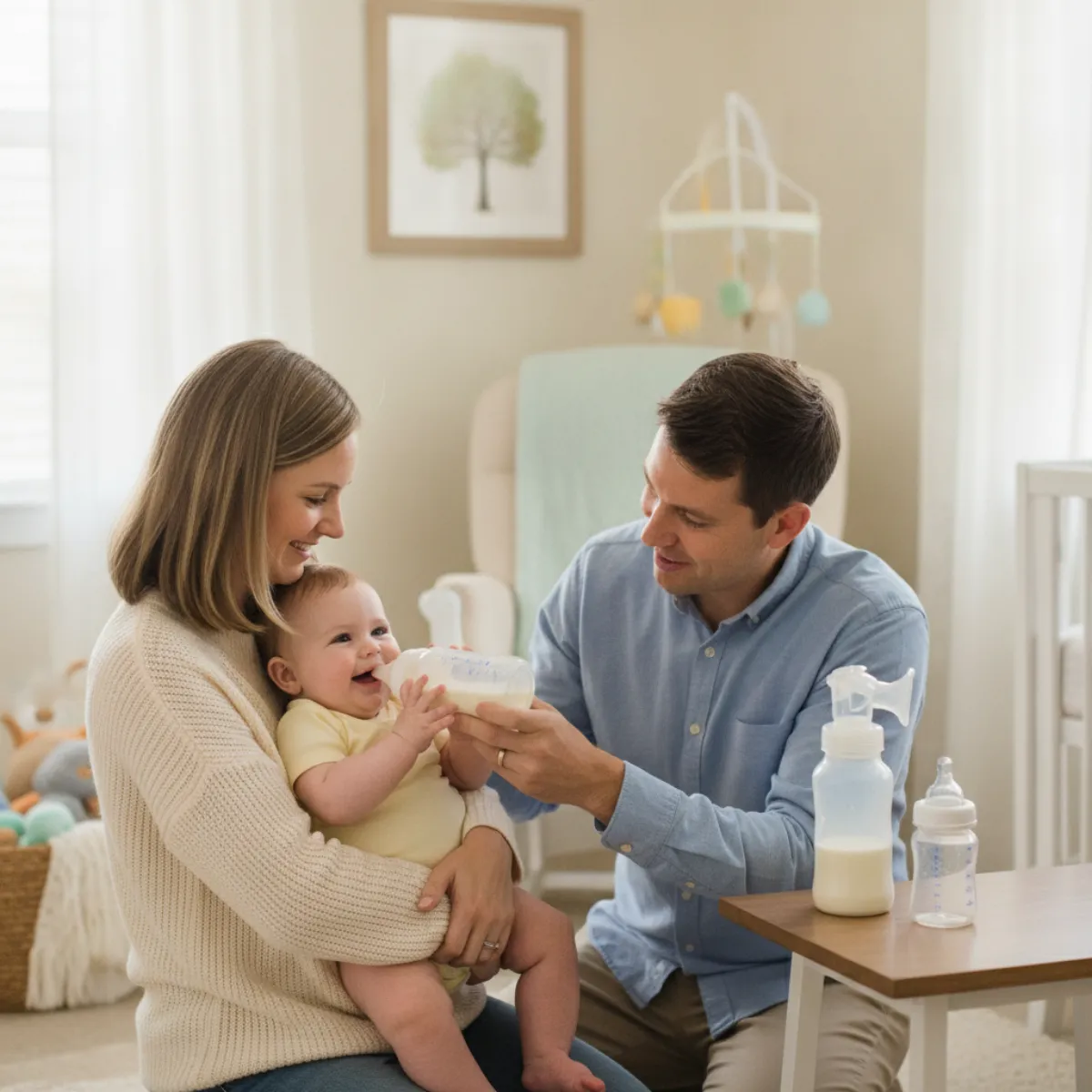
Pumping takes effort, so the last thing you want is wasted milk. Safe storage keeps all that "liquid gold" nutritious and ready when you need it. This guide covers the storage time limits, how to freeze and thaw, and how to tell if milk has spoiled — the practical essentials for building and using a stash.
Related: Pumping Schedule by Age and Pumping at Work & Daycare Transition.
Storage Rules at a Glance
These are widely used guidelines for healthy, full-term babies. When in doubt, go with the shorter time.
| Location | Freshly Expressed | Thawed (from frozen) |
|---|---|---|
| Room temp (up to 25°C/77°F) | Up to 4 hours (ideal); 6–8 max | Use within 1–2 hours |
| Refrigerator (4°C/39°F) | Up to 4 days | Up to 24 hours |
| Freezer | Best within 6 months; up to 12 | Do not refreeze |
Freeze in small portions
Store milk in 2–4 oz (60–120 ml) portions so you can thaw just what baby needs and avoid waste. Leave some space at the top of the container — milk expands as it freezes.
Containers & Labeling
- Use clean, food-grade, BPA-free bottles with tight lids, or purpose-made milk storage bags
- Avoid regular household plastic bags, which can leak or tear
- Label each container with the date expressed (and baby's name if going to daycare)
- Store at the back of the fridge or freezer, not the door, where temperature is most stable
Thawing & Warming Safely
- Thaw overnight in the fridge, or hold the sealed container under warm running water
- Warm by placing the bottle in a bowl of warm water or using a bottle warmer
- Never microwave — it creates hot spots that can burn baby and may damage nutrients
- Swirl (don't shake vigorously) to mix separated layers; test temperature on your wrist
- Use thawed milk within 24 hours and never refreeze it
Leftover & Combining Milk
- Once a baby drinks from a bottle, bacteria from the mouth enter the milk — use it within about 2 hours and discard the rest
- You can combine freshly expressed milk from the same day, but cool fresh milk before adding it to already-chilled or frozen milk
- Don't add warm fresh milk directly to frozen milk
Signs Milk Has Gone Off
- Separation into layers is normal — just swirl to recombine
- A sour or rancid smell that doesn't go away after swirling suggests it's spoiled
- When unsure about safety, discard it rather than risk feeding spoiled milk
Transporting & Travel
- Use an insulated cooler bag with ice packs for up to ~24 hours in transit
- Transfer to the fridge or freezer as soon as you arrive
- For flights, expressed milk is generally allowed in carry-on; check your airline and airport rules
FAQ
Can I store milk in the fridge door?
It's better to store it toward the back of the fridge or freezer, where the temperature stays most consistent. The door warms up each time it's opened.
Why does my stored milk smell soapy?
Some milk develops a soapy or metallic smell due to the enzyme lipase breaking down fats. It's usually still safe, though some babies refuse it. Scalding fresh milk before freezing can prevent this — ask a lactation consultant.
How much milk should I store per bag?
Freezing in small 2–4 oz portions reduces waste, since you can thaw exactly what baby needs and never have to toss a large unfinished amount.
Track Feedings in Seconds with Natural Language
Just type "150ml bottle at 3pm" and ParAI logs it instantly. No forms, no tapping through menus. Plus AI insights on feeding patterns and schedules.


Disclaimer: This article is for informational purposes only and does not replace professional medical advice. Always consult your pediatrician for concerns about your baby's health or development.