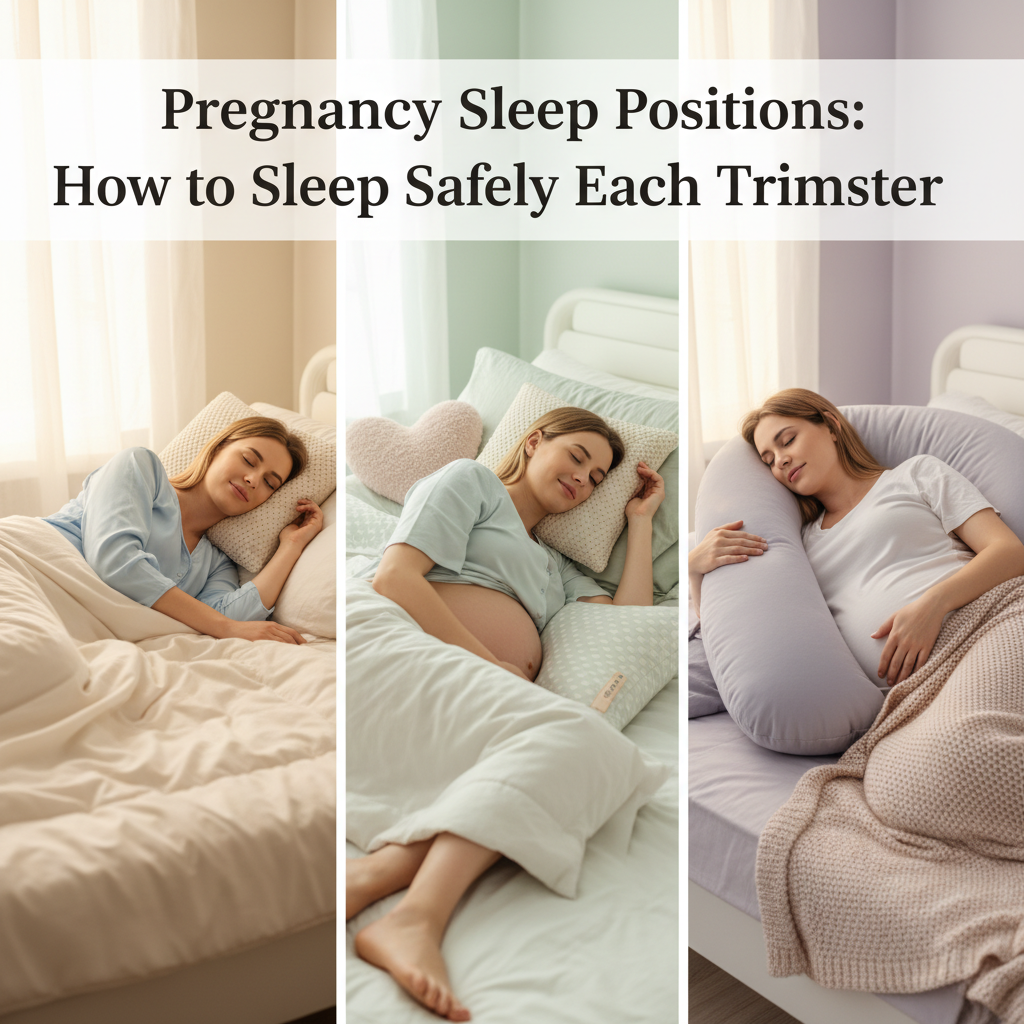
Key Takeaways
- Left side sleeping (SOS) is the safest position after 28 weeks — it optimizes blood flow to your baby
- Back sleeping after 28 weeks compresses the inferior vena cava, reducing blood flow to the uterus
- Any side is better than back — don't panic if you wake up on your back, just roll over
- Pillow placement between knees and under the belly reduces hip pain and improves alignment
- First trimester: sleep in any comfortable position — the uterus is still small
Sleep becomes increasingly challenging as pregnancy progresses. Between a growing belly, heartburn, hip pain, and frequent bathroom trips, finding a comfortable position can feel impossible. This evidence-based guide explains which sleep positions are safest for each trimester and practical strategies to help you rest better.
Why Sleep Position Matters
As your uterus grows, it becomes heavy enough to compress major blood vessels when you lie on your back. The inferior vena cava — the large vein that returns blood from your lower body to your heart — runs along the right side of your spine. When compressed, blood flow to the placenta decreases, potentially reducing oxygen delivery to your baby.
See also: Pregnancy Week by Week: What to Expect Each Trimester and Sleep Regression: Ages, Signs, and How to Survive Each One.
Research published in the British Medical Journal found that sleeping on your back after 28 weeks is associated with a 2.6-fold increased risk of stillbirth. This is why healthcare providers recommend side sleeping (particularly the left side) during the third trimester. The left side position keeps the uterus off the vena cava and maximizes blood flow to the placenta.
However, it's important to understand that briefly ending up on your back during the night is not dangerous. The risk applies to prolonged back sleeping as your primary position. Your body will often wake you with discomfort before any harm occurs.
Don't panic about rolling over
If you wake up on your back, simply roll to your side. Studies show the position you fall asleep in is the one you spend the most time in. Focus on starting on your side — your body will naturally adjust throughout the night.
First Trimester (Weeks 1–12)
During the first trimester, your uterus is still tucked behind the pubic bone and too small to compress any blood vessels. You can safely sleep in any position — back, stomach, or side.
Common sleep challenges in the first trimester include:
- Extreme fatigue — progesterone surges cause overwhelming drowsiness
- Frequent urination — increased blood volume means more kidney filtration
- Nausea — can disrupt sleep, especially if worse at night
- Breast tenderness — stomach sleeping may become uncomfortable
This is a good time to start practicing side sleeping if you're naturally a back or stomach sleeper. Building the habit early makes the transition easier later.
Second Trimester (Weeks 13–27)
The second trimester is when most women need to transition away from back and stomach sleeping. By week 20, the uterus reaches the navel and becomes heavy enough to affect circulation when lying flat.
Key recommendations for the second trimester:
- Begin side sleeping — either side is acceptable, left is slightly preferred
- Use a pillow between your knees — aligns hips and reduces lower back strain
- Slight recline is OK — a 30-degree wedge behind your back prevents full supine position
- Stomach sleeping becomes impractical — the growing belly makes it uncomfortable naturally
The wedge trick
If you keep rolling onto your back, place a firm pillow or rolled towel behind you. This prevents you from going fully flat while still feeling supported. Many women find this more comfortable than strict side-only sleeping.
Third Trimester (Weeks 28–40)
The third trimester is when sleep position matters most. The uterus is at its heaviest, and the risk from vena cava compression is highest. Left side sleeping (SOS — Sleep On Side) is the gold standard recommendation from 28 weeks onward.
Why left side specifically:
- The vena cava runs slightly to the right of the spine — left side keeps maximum pressure off it
- Improves kidney function and reduces swelling in feet and ankles
- Optimizes blood flow to the placenta, uterus, and baby
- May reduce heartburn compared to right side (stomach anatomy)
That said, right side sleeping is also safe and far better than back sleeping. Alternating sides throughout the night is perfectly fine and can help with hip discomfort.
| Trimester | Safe Positions | Avoid | Notes |
|---|---|---|---|
| First (1–12 weeks) | Any position | None | Start practicing side sleeping |
| Second (13–27 weeks) | Left side, right side, slight recline | Flat on back (from ~20 weeks) | Use pillow between knees |
| Third (28–40 weeks) | Left side (preferred), right side | Back sleeping | Wedge behind back to prevent rolling |
Tips for Better Sleep
Beyond position, these strategies address the most common pregnancy sleep disruptors:
Heartburn
- Elevate your head 15–20cm with an extra pillow or bed wedge
- Avoid eating 2–3 hours before bed
- Sleep on your left side — keeps the stomach below the esophagus
- Avoid spicy, acidic, and fatty foods at dinner
Hip Pain
- Place a firm pillow between your knees and ankles
- Use a mattress topper for extra cushioning
- Alternate sides throughout the night
- Try a warm bath before bed to relax pelvic muscles
Frequent Urination
- Reduce fluids 2 hours before bedtime (stay hydrated during the day)
- Lean forward while urinating to empty the bladder completely
- Use a dim nightlight in the bathroom to avoid fully waking up
Create a sleep routine
A consistent wind-down routine signals your body it's time to sleep. Try 30 minutes of screen-free time, gentle stretching, and keeping your bedroom cool (18–20°C). Pregnancy insomnia affects up to 78% of women — you're not alone.
Pregnancy Pillow Guide
The right pillow setup can transform pregnancy sleep. Here are the main types and when each works best:
| Pillow Type | Best For | How to Use |
|---|---|---|
| Wedge pillow | Belly support, heartburn relief | Under belly or behind back to prevent rolling |
| Between-knees pillow | Hip alignment, lower back pain | Between knees and ankles while side sleeping |
| C-shaped body pillow | Full body support | Wraps around front with tail between knees |
| U-shaped body pillow | Back and front support simultaneously | Surrounds entire body — prevents back rolling |
| Regular pillows (3–4) | Budget-friendly, adjustable | One between knees, one under belly, one behind back |
Start with a simple between-knees pillow in the second trimester. If hip or back pain persists, upgrade to a full body pillow. Many women find the U-shaped pillow most effective in the third trimester because it supports both sides and prevents unconscious back rolling.
Remember: the best sleep position is one you can actually maintain. If strict left-side sleeping causes you so much discomfort that you can't fall asleep, alternating sides or using a slight recline with wedge support is a perfectly safe compromise. Quality sleep matters for both you and your baby's health.