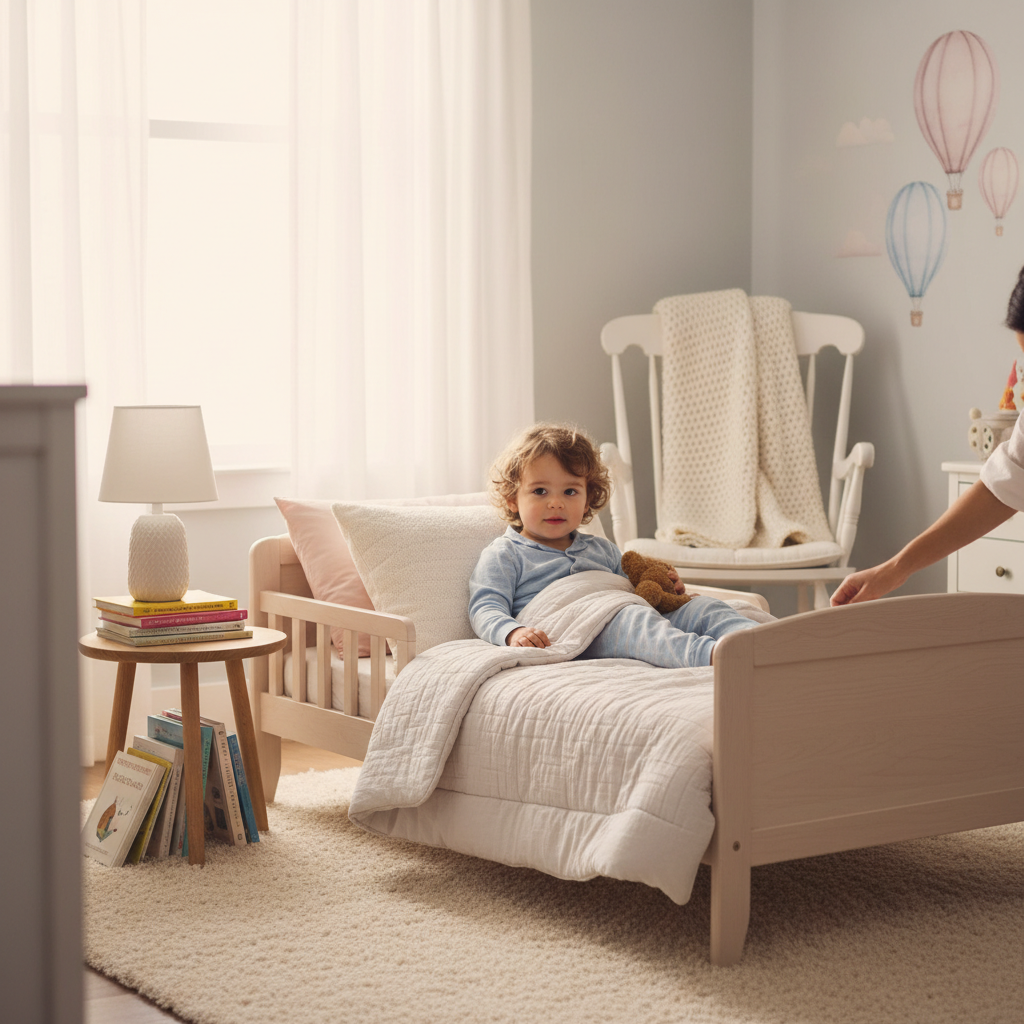
Key Takeaways
- The 2-year sleep regression is driven by independence, language explosion, and big life changes — not sleep cycle maturation like the 4-month regression
- It typically lasts 2-6 weeks and can include bedtime resistance, night waking, nap refusal, and early rising
- The #1 mistake: dropping the nap too early because they're fighting it
- Stay consistent with boundaries and routine — this regression is behavioral, not biological
- Common triggers: new sibling, potty training, crib-to-bed transition, starting daycare
Your 2-year-old was sleeping beautifully. Twelve hours at night, a solid afternoon nap. Then suddenly: bedtime takes an hour, they're waking at 2am, refusing naps, and climbing out of the crib. What happened?
Welcome to the 2-year sleep regression. Unlike the 4-month regression (which is a permanent change in sleep architecture), this one is behavioral — driven by your toddler's exploding independence, language, and awareness of the world. The good news: it's temporary. The bad news: it requires patience and consistency to get through.
Related: Sleep Regression Guide (All Ages) and When Do Toddlers Stop Napping?
What Is the 2-Year Sleep Regression?
The 2-year sleep regression is a period (typically 2-6 weeks) when a previously good sleeper suddenly struggles with sleep. It can happen anywhere between 18 months and 2.5 years, with the peak around 24 months.
Unlike earlier regressions that are tied to sleep cycle development, the 2-year regression is primarily behavioral and developmental. Your toddler isn't losing the ability to sleep — they're choosing not to, testing boundaries, or too stimulated by their rapidly developing brain to settle.
Why It Happens
Multiple developmental factors converge around age 2:
- Independence drive — the defining feature of age 2. "I do it myself" extends to "I decide when I sleep." Bedtime becomes a power struggle.
- Language explosion — vocabulary is growing rapidly. Their brain is processing new words even during sleep, causing more active sleep and night wakings.
- Imagination development — for the first time, toddlers can imagine things that aren't there. This is when fear of the dark, monsters, and being alone begins.
- FOMO (Fear of Missing Out) — they're now aware that life continues when they're in bed. They don't want to miss anything.
- Big life changes — new sibling, potty training, crib-to-bed transition, starting daycare, or moving house often trigger or worsen the regression.
- Separation anxiety resurgence — a second wave of separation anxiety often hits around 18-24 months.
- Molars — second molars typically come in between 20-33 months and can cause significant discomfort.
Don't stack changes
If your child is in the middle of a sleep regression, avoid adding more changes (potty training, new bed, dropping the nap) simultaneously. Each change requires adaptation energy. Stack them and you get chaos. Handle one at a time.
Signs of the 2-Year Regression
The regression can show up in different ways:
- Bedtime resistance — stalling tactics (water, potty, one more story, "I'm scared"), taking 45-60+ minutes to fall asleep
- Night waking — waking 1-3 times per night after previously sleeping through
- Nap refusal — fighting the afternoon nap or taking 30+ minutes to fall asleep
- Early morning waking — waking at 5-5:30am instead of their usual 6:30-7am
- Crib climbing — newfound physical ability to escape the crib
- Calling out/crying — "Mommy! Daddy!" repeatedly after being put down
- New fears — suddenly afraid of the dark, shadows, or being alone
How Long Does It Last?
The typical timeline:
- 2-3 weeks — if you stay consistent with boundaries and don't create new sleep associations
- 4-6 weeks — if there are complicating factors (new sibling, bed transition, illness)
- Longer — if new habits form during the regression (co-sleeping, rocking to sleep, staying in the room until they fall asleep) that then need to be undone
Key insight: The regression itself is temporary. But the habits you create during it can become permanent. This is why consistency matters so much.
What to Do
Keep the routine rock-solid
Your bedtime routine should be predictable and non-negotiable: bath → pajamas → teeth → books → song → lights out. Same order, same duration (20-30 minutes), every night. Predictability is calming when everything else feels chaotic.
Set clear boundaries with empathy
"I know you want to stay up. It's bedtime now. I love you. I'll see you in the morning." Validate the feeling, hold the boundary. Don't negotiate.
Address fears genuinely
If your child is newly afraid of the dark, take it seriously. A dim nightlight, a "monster spray" (water in a spray bottle), or a special stuffed animal "protector" can help. Don't dismiss their fears — they're real to them.
Offer limited choices
Satisfy the autonomy need within boundaries: "Do you want the blue pajamas or the red ones?" "One book or two?" "Door open a crack or closed?" Choices give them control without giving up the boundary.
Handle curtain calls consistently
If they call out or come out of the room: brief, boring response. "It's bedtime. Back to bed." No long conversations, no extra stories, no getting into bed with them. Make coming out unrewarding.
Don't drop the nap
Nap refusal is common during this regression but doesn't mean they're ready to drop it. Most 2-year-olds still need 1-2 hours of daytime sleep. Keep offering the nap consistently — the refusal usually passes within 2-4 weeks.
Track the pattern
During a regression, tracking sleep data helps you see whether things are actually getting worse or just feel worse (sleep deprivation distorts perception). ParAI's sleep tracking shows trends over days and weeks — so you can see when the regression is resolving, even if individual nights still feel hard.
What NOT to Do
- Don't start co-sleeping — bringing them to your bed "just this once" during the regression often becomes a months-long habit that's harder to break than the regression itself
- Don't stay in the room until they fall asleep — this creates a new sleep association. If they need you present to fall asleep, they'll need you present at every night waking too.
- Don't drop the nap prematurely — nap resistance at 2 is almost always the regression, not readiness. An overtired toddler sleeps worse at night, not better.
- Don't move to a bed because of crib climbing — if possible, lower the mattress, use a sleep sack, or turn the crib around (high side facing out). A toddler bed gives them freedom to leave, which makes the regression worse.
- Don't engage in long negotiations — every minute you spend negotiating teaches them that stalling works. Keep responses brief and boring.
- Don't punish — they're not being "bad." Their brain is developing rapidly and they're testing how the world works. Punishment increases anxiety, which worsens sleep.
Frequently Asked Questions
Is the 2-year sleep regression real or just a phase?
It's real in the sense that developmental changes at this age genuinely disrupt sleep for most children. It's a "phase" in that it's temporary (2-6 weeks). The distinction from earlier regressions: it's behavioral (driven by independence and awareness) rather than biological (sleep cycle changes).
Should I sleep train again?
If your child was previously sleep trained and the regression has lasted more than 3-4 weeks, a brief "refresher" may help. Use the same method you used originally. Often just 2-3 nights of consistency is enough to reset. ParAI's AI Sleep Coach can create a plan tailored to regression recovery.
My child is suddenly afraid of the dark. Is this related?
Yes. Around age 2, imagination develops enough for children to conceive of things that aren't visible — including scary things in the dark. This is a normal developmental milestone, not a sleep problem. Address it with a nightlight and reassurance, not by changing sleep arrangements.
We just had a new baby. Is that causing the regression?
Very likely. A new sibling is one of the most common triggers for the 2-year regression. Your toddler is processing big emotions (jealousy, insecurity, excitement) and may seek extra attention at bedtime. Give extra connection during the day, maintain bedtime boundaries at night.
When should I worry?
See your pediatrician if: the regression lasts more than 8 weeks with no improvement despite consistency, your child seems to be in pain (ear pulling, fever), snoring or breathing pauses during sleep, or extreme daytime sleepiness that doesn't improve.
Struggling with Sleep? Try ParAI's AI Sleep Coach
ParAI's AI Sleep Coach creates a personalized sleep plan based on your baby's age, temperament, and patterns. Daily check-ins, progress tracking, and evidence-based guidance.