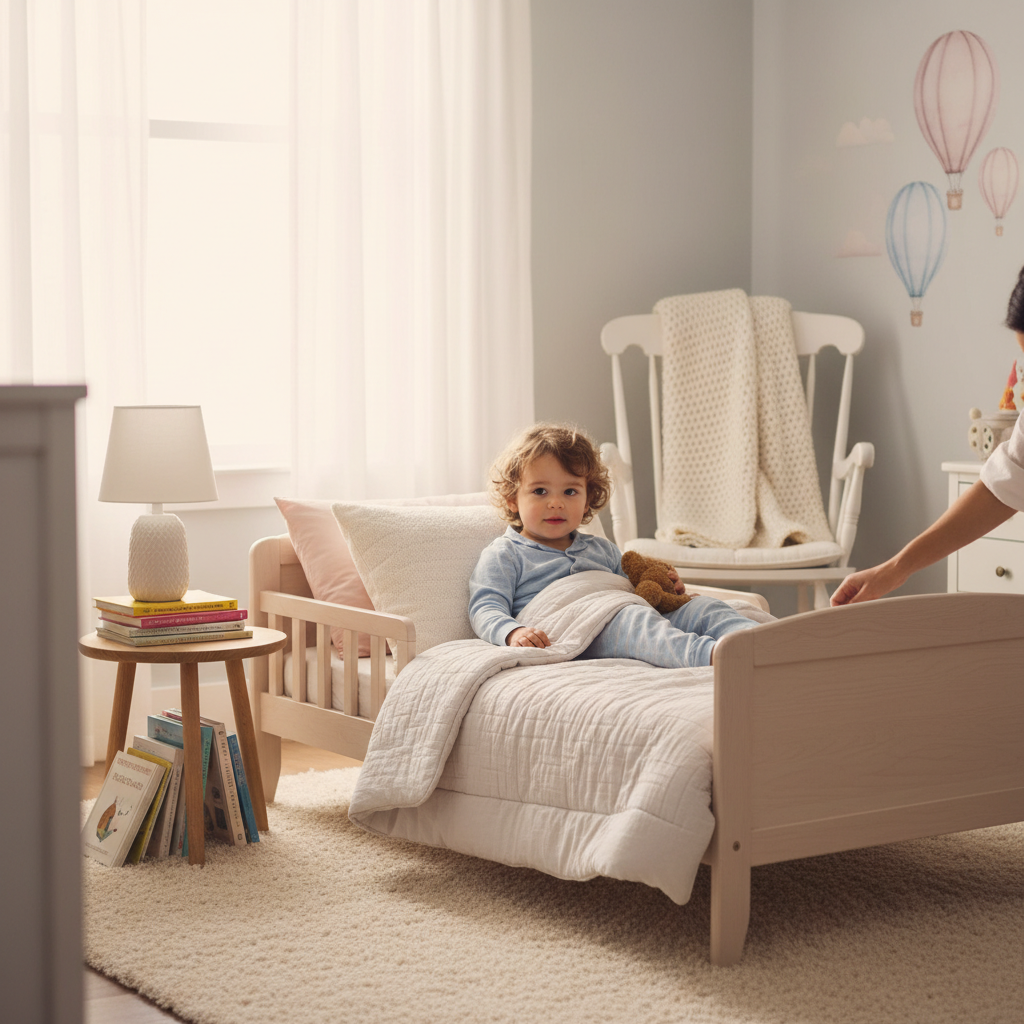
Key Takeaways
- A predictable bedtime routine reduces cortisol and helps toddlers fall asleep faster
- The ideal routine lasts 20–30 minutes: bath → pajamas → teeth → books → song → lights out
- Consistency across all caregivers is the single most important factor for success
- Stalling tactics are normal — give limited choices and use visual routine charts
If bedtime in your house has become a 90-minute negotiation involving water, bathroom trips, and "just one more book," you're not alone. Toddlers are wired to push boundaries, and bedtime is their favorite testing ground. The good news: a consistent, predictable routine can transform bedtime from a battle into the calmest part of your day.
Research shows that children with a regular bedtime routine fall asleep faster, wake less during the night, and sleep longer overall. Here's exactly how to build one that works.
See also: Toddler Sleep Schedule: Naps, Bedtime, and Common Problems (1–5 Years) and Preparing Your Toddler for a New Sibling: A Complete Guide.
Why Routines Matter
Toddler brains thrive on predictability. When a child knows exactly what comes next, their nervous system can relax. Specifically, predictable sequences reduce cortisol (the stress hormone) and trigger melatonin production, making it physically easier to fall asleep.
Studies from the AAP show that children with a consistent bedtime routine:
- Fall asleep 15–20 minutes faster
- Wake up less frequently during the night
- Get 30–60 more minutes of total sleep
- Show fewer behavioral problems during the day
- Have better emotional regulation
The routine itself matters less than the consistency. Whether you do bath-books-bed or pajamas-song-cuddle, doing the same thing in the same order every single night is what trains the brain to expect sleep.
The science behind it
Repetitive pre-sleep sequences create conditioned associations. After 2–3 weeks of consistency, your toddler's brain will begin producing melatonin automatically when the routine starts — before you even turn off the lights.
Finding the Right Bedtime
The right bedtime depends on your child's age, wake time, and whether they still nap. Here are evidence-based guidelines:
| Age | Ideal Bedtime | Total Sleep Needed |
|---|---|---|
| 12 months | 6:30–7:30pm | 11–14 hours |
| 2 years | 7:00–8:00pm | 11–14 hours |
| 3–5 years | 7:00–8:30pm | 10–13 hours |
Watch for sleepy cues: rubbing eyes, yawning, becoming clumsy or hyperactive. Hyperactivity in toddlers often signals overtiredness — if your child is bouncing off the walls at 8pm, bedtime is probably too late, not too early.
Start the routine 30 minutes before target sleep time
If you want your child asleep by 7:30pm, start the routine at 7:00pm. This gives enough time for the full sequence without rushing, which defeats the calming purpose.
The Perfect Bedtime Routine
The ideal toddler bedtime routine is 20–30 minutes long, follows the same order every night, and moves from active to calm. Here's a proven sequence:
Sample routine (25 minutes)
- Bath (5–10 min) — Warm water drops core body temperature afterward, triggering sleepiness. Keep it calm — no splashing wars
- Pajamas (2–3 min) — Let them choose between two options for a sense of control
- Brush teeth (2 min) — Non-negotiable, same time every night
- Books (5–10 min) — Read 2–3 short books or one longer one. Let them pick within limits ("choose 2 books")
- Goodnight song or lullaby (2–3 min) — Same song every night builds the strongest association
- Lights out — A kiss, an "I love you," and leave the room
On nights when bath isn't practical, replace it with a warm washcloth on hands and face — the temperature change still helps signal sleep time.
Environment checklist
- Room temperature: 65–70°F (18–21°C)
- Darkness: blackout curtains or shades
- White noise: consistent, not too loud (50–60 dB)
- Comfort object: one lovey or stuffed animal is fine after 12 months
- Night light: red or warm orange only (blue/white light suppresses melatonin)
Common Bedtime Battles
Even with a perfect routine, toddlers will test boundaries. Here are the most common battles and how to handle them:
Curtain calls ("I need one more thing!")
Your child comes out of their room repeatedly after being put to bed. Solution: the "bedtime pass" — give them one physical card they can trade for one request (water, hug, bathroom). Once it's used, that's it. This works remarkably well for ages 3+.
Fear of the dark
Completely normal from age 2–3 as imagination develops. Use a dim red/orange night light, do a "monster check" together as part of the routine, and give them a "brave buddy" (stuffed animal that "protects" them). Avoid dismissing the fear — acknowledge it and provide tools.
Wanting water
Put a small sippy cup of water by the bed as part of the routine. When they ask for water later, point to the cup. Problem solved — no more trips to the kitchen.
"One more book!"
Set the expectation before you start: "We're reading two books tonight." Let them choose which two. When they ask for more, say "We read our two books. Tomorrow night you can pick two more." Be warm but firm.
Handling Stalling Tactics
Stalling is your toddler's way of maintaining control and connection. It's developmentally normal but needs clear boundaries. Here's what works:
Give limited choices
Offer control within boundaries: "Do you want the blue pajamas or the green ones?" "Should we read the bear book or the moon book first?" This satisfies their need for autonomy without derailing the routine.
Use a visual routine chart
Create a simple picture chart showing each step: bath → pajamas → teeth → books → song → sleep. Point to it and say "What's next?" This shifts authority from you to the chart, reducing power struggles. Let your child check off or flip each step.
Offer control within boundaries
The key principle: your child controls the "how" but not the "what" or "when." They choose which pajamas, which books, which stuffed animal — but bedtime is bedtime, and the routine order doesn't change.
The 'when-then' technique
"When you brush your teeth, then we can read books." This frames the non-negotiable step as a gateway to the fun step. It works far better than "If you don't brush your teeth, no books" — same outcome, completely different emotional tone.
Tips for Consistency
The routine only works if everyone follows it. Here's how to maintain consistency even when life gets complicated:
- Same order every night — The sequence matters more than the exact timing. Even if bedtime shifts 30 minutes, keep the steps identical
- All caregivers follow the same routine — Grandparents, babysitters, and partners need to know the routine. Write it down or use a visual chart
- Weekends too — Allowing bedtime to drift more than 30 minutes on weekends disrupts the circadian rhythm for days
- Travel adaptation — Bring familiar items (lovey, white noise machine, books) and follow the same steps even in a new environment
- Expect regression — Illness, travel, new siblings, and developmental leaps will temporarily disrupt sleep. Return to the routine immediately after, and things will normalize within a few days
- Be boring after lights out — If your child comes out or calls for you, respond with minimal emotion and engagement. Walk them back, say "it's sleep time," and leave. No lectures, no negotiations
Track patterns with ParAI
Use ParAI's sleep tracking to identify your toddler's natural sleep patterns and optimal bedtime. The AI analyzes trends and suggests adjustments based on your child's actual data — not generic charts.
Struggling with Sleep? Try ParAI's AI Sleep Coach
ParAI's AI Sleep Coach creates a personalized sleep plan based on your baby's age, temperament, and patterns. Daily check-ins, progress tracking, and evidence-based guidance.


Disclaimer: This article is for informational purposes only and does not replace professional medical advice. Always consult your pediatrician for concerns about your baby's health or development.