Key Takeaways
- Toddlers (1–3 years) need 11–14 hours of total sleep per day including naps
- Preschoolers (3–5 years) need 10–13 hours including naps
- Most children drop to one nap around 15–18 months and drop naps entirely by age 3–5
- A consistent bedtime routine is the single most effective sleep tool at any age
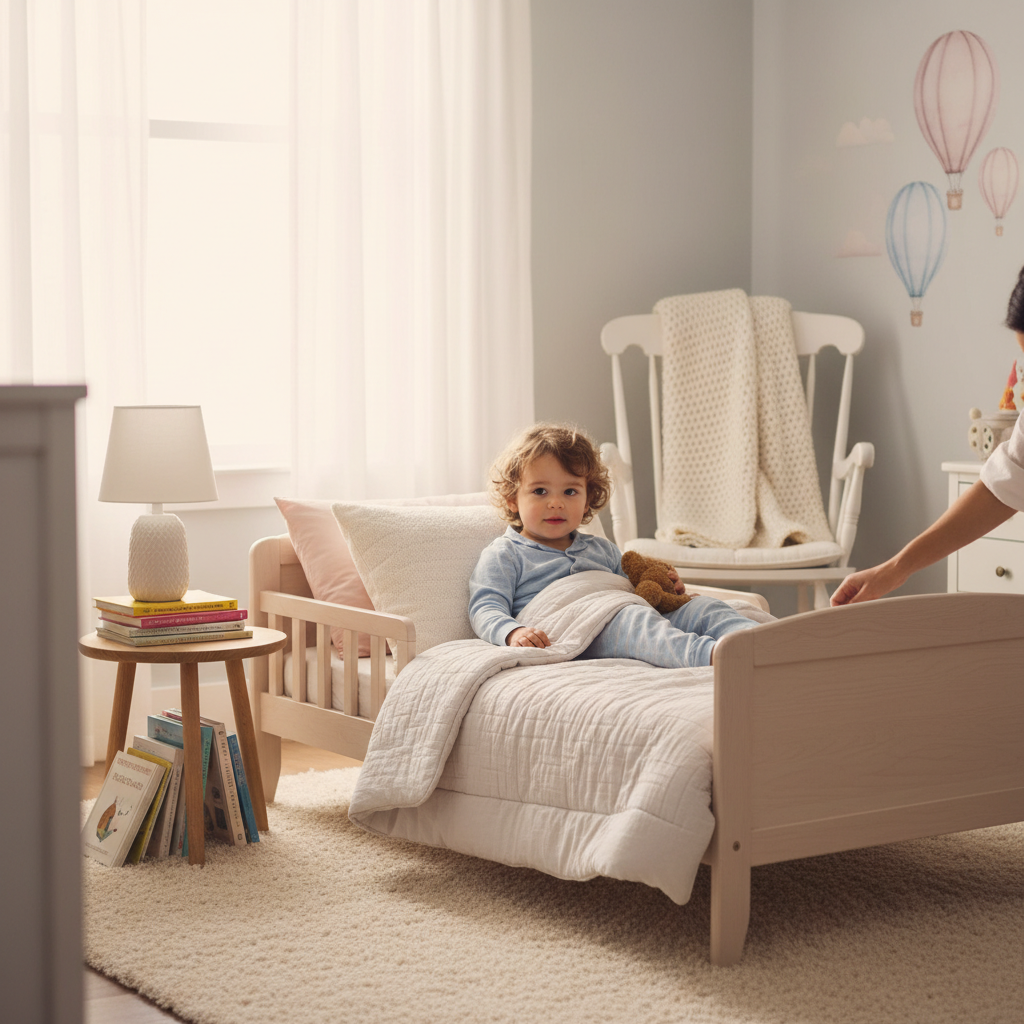
Your baby sleep schedule worked perfectly — and then your child turned two and decided bedtime is optional. Toddler and preschooler sleep is a different game. Naps change, bedtime battles begin, and "I need water" becomes a nightly ritual.
Here's what the AAP recommends for sleep at ages 1–5, sample schedules that actually work, and how to handle the most common problems.
See also: Baby Sleep Schedule by Age: Naps, Bedtime, and Total Hours and Best Activities for Toddler Development by Age (1–5 Years).
How Much Sleep by Age
The American Academy of Sleep Medicine (AASM) guidelines, endorsed by the AAP:
- 1–2 years: 11–14 hours total (including 1–2 naps)
- 2–3 years: 11–14 hours total (including 1 nap)
- 3–5 years: 10–13 hours total (nap may or may not be included)
These are totals — nighttime sleep plus naps. Most toddlers get 10–12 hours at night and 1–3 hours from naps.
Every child is different
Some toddlers thrive on 11 hours total. Others need 14. Watch your child's behavior, not just the clock. If they're happy, alert, and not melting down by 4pm, they're probably getting enough sleep.
Sample Schedules by Age
12–18 months (2 naps → 1 nap transition)
- 6:30–7:00am — Wake up
- 9:30–10:00am — Morning nap (45–90 min) — dropping soon
- 1:00–1:30pm — Afternoon nap (1–2 hours)
- 7:00–7:30pm — Bedtime
18 months – 3 years (1 nap)
- 6:30–7:00am — Wake up
- 12:30–1:00pm — Nap (1.5–2.5 hours)
- 7:00–7:30pm — Bedtime
Wake window before nap: 5–6 hours. Wake window after nap: 4–5 hours.
3–4 years (nap dropping)
- 6:30–7:00am — Wake up
- 1:00pm — Nap (1–1.5 hours) OR quiet time (if refusing nap)
- 7:00–7:30pm — Bedtime (earlier on no-nap days: 6:30pm)
4–5 years (no nap)
- 6:30–7:00am — Wake up
- 1:00pm — Quiet time (30–60 min, books or calm play in room)
- 7:00–7:30pm — Bedtime
Nap Transitions
2 naps → 1 nap (12–18 months)
Signs they're ready: fighting the morning nap, taking forever to fall asleep for it, or the morning nap pushes the afternoon nap too late.
How to transition: Gradually push the morning nap later by 15–30 minutes every few days until it merges with the afternoon nap around 12:30–1:00pm. Expect a cranky 1–2 weeks during the transition. Move bedtime earlier temporarily.
1 nap → no nap (3–5 years)
Signs they're ready: consistently refusing the nap, lying awake for 30+ minutes, or napping but then not falling asleep until 9pm at night.
How to transition: Replace the nap with "quiet time" — 30–60 minutes of books, puzzles, or calm play in their room. Move bedtime 30–60 minutes earlier to compensate. Some days they'll still nap, and that's fine — just adjust bedtime accordingly.
Quiet time is non-negotiable
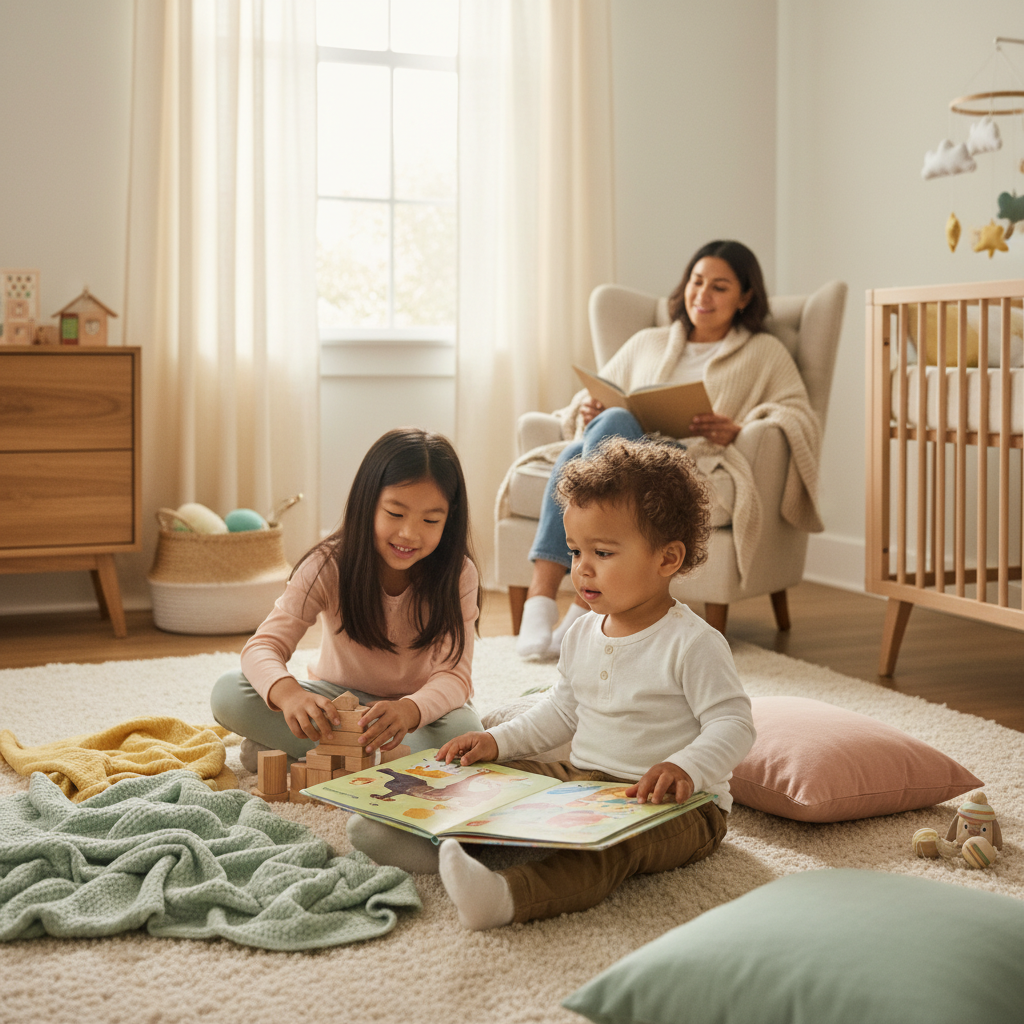
Even after dropping naps, keep quiet time. It gives both of you a break, teaches independent play, and prevents the late-afternoon meltdown. Most kindergartens still have rest time for a reason.
Building a Bedtime Routine
A consistent routine is the #1 predictor of good sleep in children. Research shows that children with a regular bedtime routine fall asleep faster, wake less at night, and sleep longer.
The ideal routine (20–30 minutes)
- Bath — warm water signals the body it's time to wind down
- Pajamas and brush teeth
- 1–2 books — let them choose (within limits: "pick 2 books")
- Goodnight ritual — song, prayer, "goodnight moon," whatever your family does
- Lights out — same time every night, within 15 minutes
Rules that help
- No screens 1 hour before bed — blue light suppresses melatonin
- Same time every night — consistency trains the circadian rhythm. Weekends too
- Keep the room dark and cool — 65–70°F (18–21°C) is ideal
- White noise — helps block household sounds, especially for light sleepers
- One "last thing" rule — they get one request after lights out (water, bathroom, one more hug). After that, it's sleep time
Common Sleep Problems
Bedtime stalling
"I need water. I need to pee. One more book. I'm scared. My toe hurts." This is normal boundary-testing. Use the "one last thing" rule and be consistent. A bedtime pass (one card they can trade for one request) works well for 3+ year olds.
Night waking
If your toddler wakes at night, keep interactions boring — dim light, quiet voice, minimal engagement. Walk them back to bed without conversation. Consistency is key — if you sometimes let them in your bed and sometimes don't, they'll keep trying.
Early morning waking
If they're waking before 6am: check the room is dark enough (blackout curtains), make sure bedtime isn't too early, and use an "okay to wake" clock that turns green when it's morning.
Nightmares and night terrors
Nightmares (age 2+): child wakes up scared, remembers the dream, wants comfort. Comfort them, reassure, stay until calm.
Night terrors (age 3+): child screams, thrashes, eyes open but not awake, doesn't recognize you. Don't wake them — just keep them safe. They won't remember it. Usually caused by overtiredness.
When to Talk to Your Pediatrician
- Snoring regularly — may indicate sleep apnea (enlarged tonsils/adenoids)
- Mouth breathing during sleep
- Pauses in breathing during sleep
- Extreme difficulty falling asleep (more than 30–45 minutes every night despite good routine)
- Restless legs — kicking, moving constantly during sleep
- Excessive daytime sleepiness despite adequate sleep hours
- Sleepwalking frequently
Struggling with Sleep? Try ParAI's AI Sleep Coach
ParAI's AI Sleep Coach creates a personalized sleep plan based on your baby's age, temperament, and patterns. Daily check-ins, progress tracking, and evidence-based guidance.


Disclaimer: This article is for informational purposes only and does not replace professional medical advice. Always consult your pediatrician for concerns about your baby's health or development.