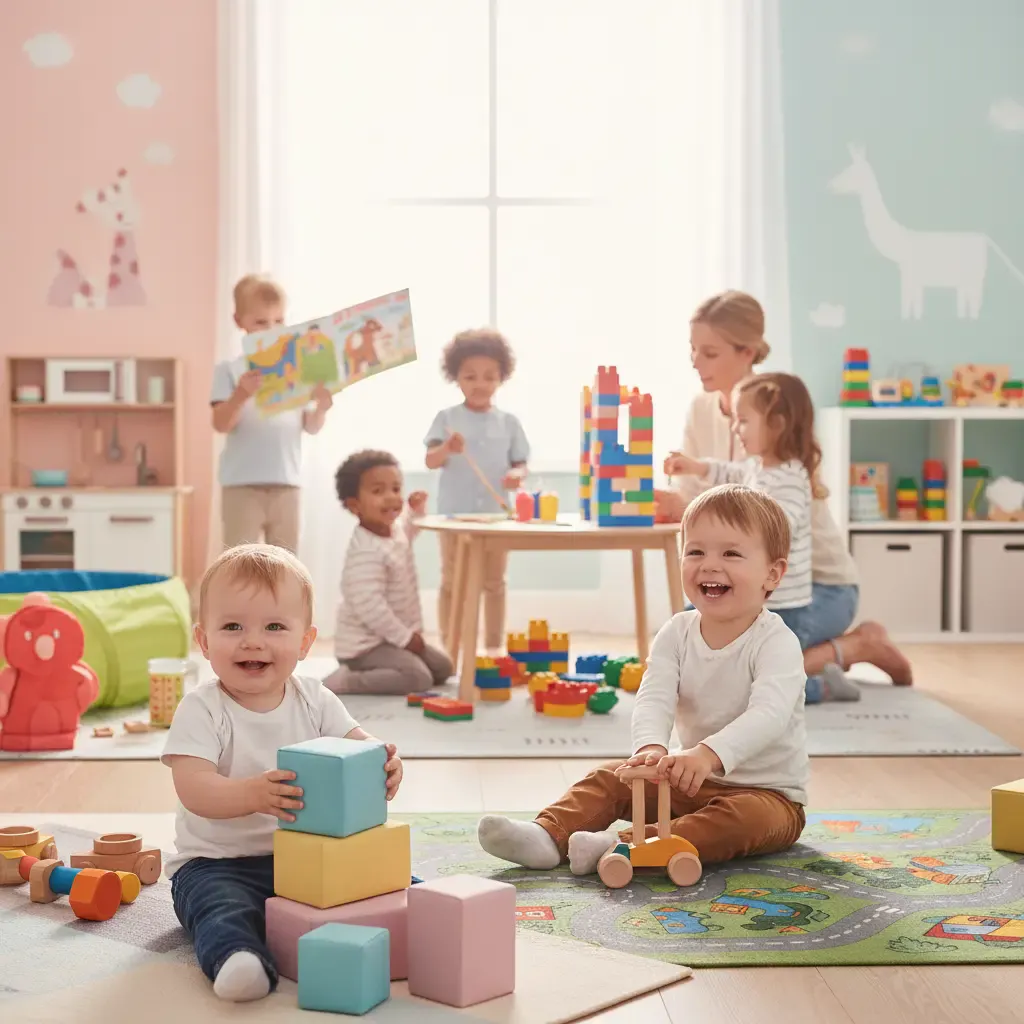
Key Takeaways
- Toddlers need at least 3 hours of physical activity per day (AAP recommendation)
- Unstructured free play builds more skills than organized activities at this age
- The best activities develop multiple skills at once — motor, cognitive, social, and language
- You don't need expensive toys — household items and outdoor time are enough
You don't need to sign your toddler up for baby yoga, toddler French, and infant swimming to give them a developmental edge. The research is clear: the best thing for toddler development is plain old play — running, climbing, building, pretending, and getting messy.
Here are activities that actually matter for development, organized by age and type, plus ideas for when you're stuck inside and running out of patience.
See also: Toddler Won't Listen? Positive Discipline Strategies by Age (1-5) and Toddler Daily Routine: Sample Schedules by Age (1-5 Years).
Why Play Is the Most Important Thing
Play isn't a break from learning — it IS learning. The AAP released a clinical report in 2018 titled "The Power of Play" that states play is essential for developing:
- Executive function — planning, focus, impulse control, working memory. These predict school success better than IQ
- Language — pretend play drives vocabulary growth. Children who engage in more pretend play have larger vocabularies
- Social skills — taking turns, sharing, negotiating, reading emotions
- Motor skills — running, climbing, and building develop gross and fine motor control
- Emotional regulation — play lets children process fears, practice scenarios, and build resilience
- Creativity and problem-solving — open-ended play (blocks, art, sand) builds divergent thinking
Structured vs. unstructured play
Structured activities (classes, organized sports) have their place, but unstructured free play — where the child decides what to do — builds more executive function and creativity. A child building a fort out of couch cushions is doing more developmental work than a child following instructions in a class.
Best Activities by Age
1–2 years: Sensory exploration
At this age, everything is new. They learn by touching, tasting, throwing, and dumping.
- Water play — cups, funnels, sponges in a shallow tub. Teaches cause and effect
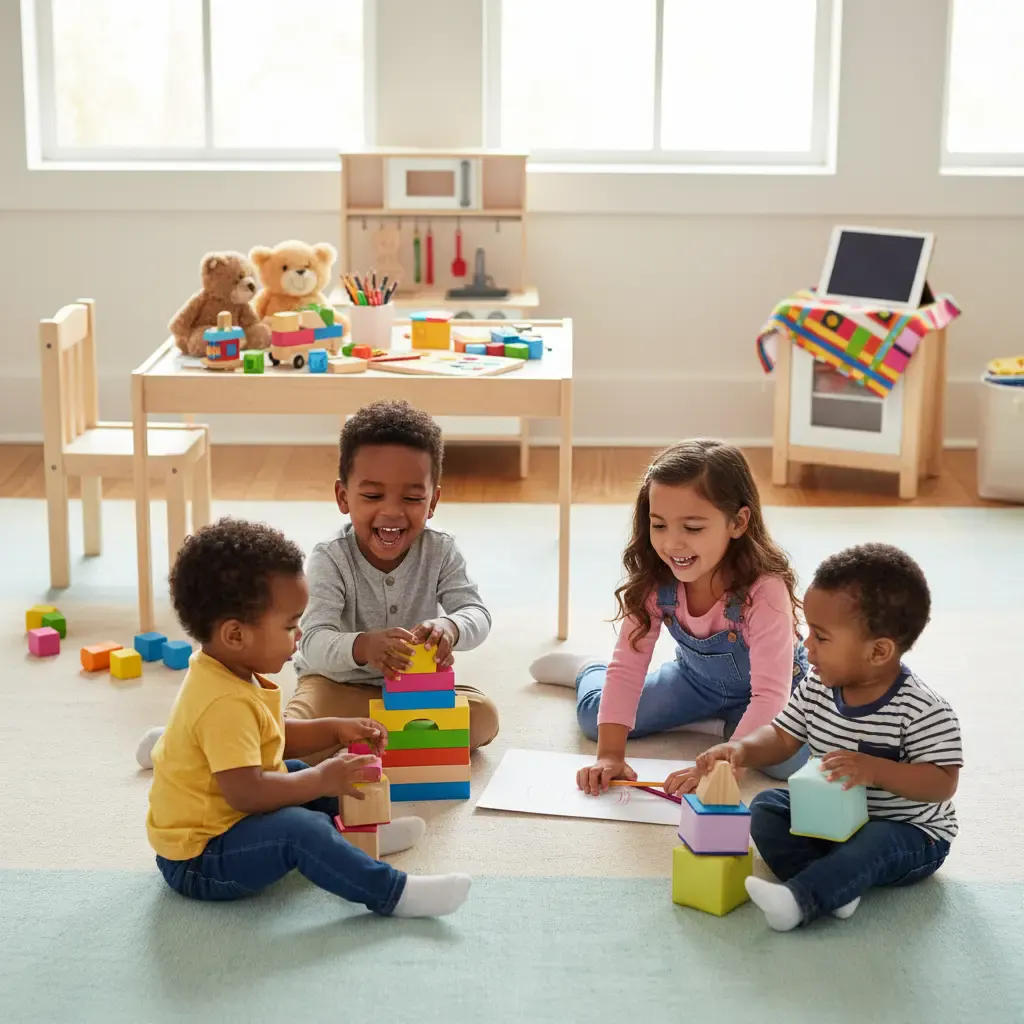
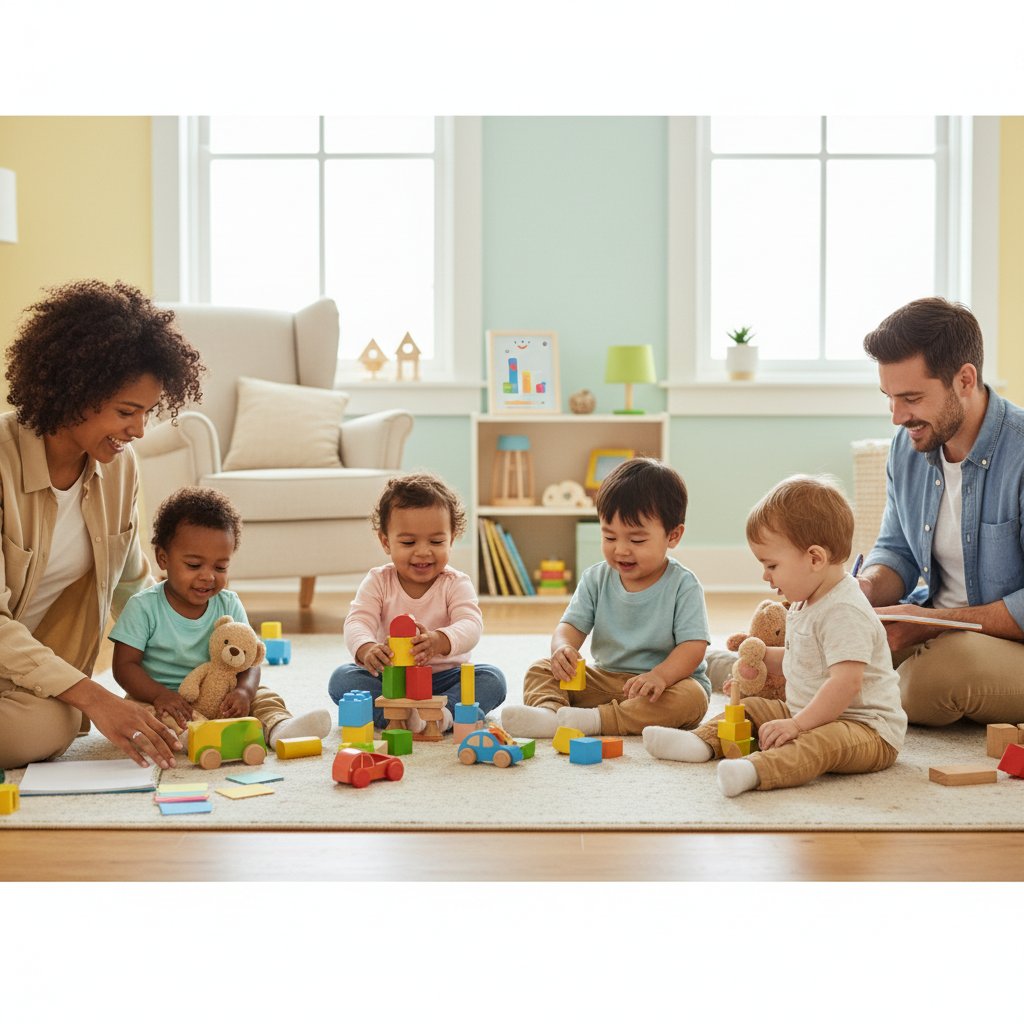
- Stacking and knocking down — blocks, cups, boxes. Builds spatial awareness and fine motor skills
- Sensory bins — rice, pasta, sand with scoops and containers. Develops tactile processing
- Push/pull toys — wagons, push mowers, pull-along animals. Strengthens legs and balance
- Simple puzzles — chunky knob puzzles with 3–5 pieces. Builds problem-solving
- Music and dancing — shakers, drums, dancing to songs. Develops rhythm and coordination
2–3 years: Pretend play begins
Imagination explodes. They start pretending — cooking, caring for dolls, being animals.
- Play kitchen / tea party — develops language, social skills, and sequencing
- Dress-up — hats, scarves, old clothes. Fuels imagination and self-expression
- Play-Doh and clay — rolling, cutting, shaping. Excellent for fine motor strength
- Drawing and painting — crayons, finger paint, chalk. Don't worry about the result — the process matters
- Obstacle courses — pillows to climb over, tunnels to crawl through, lines to balance on
- Sorting and matching — colors, shapes, sizes. Builds early math concepts
3–5 years: Complex play and social skills
Play becomes more elaborate. They can follow rules, play with others, and create stories.
- Building (Duplo, Magna-Tiles, blocks) — planning, spatial reasoning, engineering thinking
- Board games — simple ones (Candy Land, Hi Ho Cherry-O). Teaches turn-taking, counting, losing gracefully
- Scissors and glue projects — cutting, pasting, creating. Fine motor mastery
- Elaborate pretend play — doctor, store, school, restaurant. Complex language and social negotiation
- Riding bikes/scooters — balance, coordination, confidence
- Gardening — digging, planting, watering. Teaches patience, responsibility, and science
Indoor Activities (Rainy Day Survival)
When you're stuck inside and screen time is maxed out:
- Blanket fort — drape blankets over chairs. Bring books and snacks inside
- Dance party — put on music and go wild. 10 minutes burns serious energy
- Baking together — measuring, pouring, stirring. Math + science + snack
- Tape roads on the floor — painter's tape + toy cars = 30 minutes of play
- Bath time play — not just for cleaning. Add cups, toys, foam letters
- Cardboard box — a large box becomes a car, boat, house, rocket. The best toy is free
- Treasure hunt — hide toys around the house, give simple clues
- Helping with chores — sweeping, wiping tables, sorting laundry. They love it and it builds life skills
Outdoor Activities
Outdoor play is irreplaceable. Research shows children who spend more time outside have better attention spans, lower stress, and stronger immune systems.
- Playground — climbing, sliding, swinging. Develops gross motor skills and risk assessment
- Nature walks — collect leaves, rocks, sticks. Talk about what you see. Language + science
- Sand and mud play — digging, building, pouring. Sensory heaven
- Running games — chase, tag, races. Cardiovascular fitness starts here
- Ball play — kicking, throwing, catching. Coordination and bilateral skills
- Puddle jumping — yes, let them. Waterproof boots exist for a reason
- Bug hunting — magnifying glass + garden = instant science lesson
There's no bad weather, only bad clothing
Scandinavian parents send kids outside in rain, snow, and cold daily. Invest in waterproof boots, a rain jacket, and snow gear. Outdoor time in any weather improves mood, sleep, and behavior.
Screen-Free Ideas When You Need a Break
Sometimes you need 15 minutes to cook dinner without a child attached to your leg. These buy you time without screens:
- Sticker books — cheap, quiet, and toddlers are obsessed
- Water painting — a cup of water + a paintbrush + the sidewalk or a cardboard box. It dries and they start over
- Magnetic tiles on the fridge — they build while you cook
- Audiobooks or podcasts for kids — Sesame Street podcast, Story Pirates. Audio without the screen
- Play-Doh at the table — give them cookie cutters and a rolling pin
- Coloring books — simple, effective, portable
How Much Active Play Per Day?
The AAP and WHO recommend:
- 1–2 years: At least 180 minutes (3 hours) of physical activity spread throughout the day, including energetic play
- 3–5 years: At least 180 minutes, with at least 60 minutes being moderate-to-vigorous (running, jumping, climbing)
This sounds like a lot, but it includes all movement — walking to the car, climbing stairs, playing in the yard, dancing in the living room. It doesn't need to be structured exercise.
Track Milestones & Get AI Developmental Insights
ParAI tracks CDC milestones and uses AI to spot patterns, suggest activities, and alert you if something needs attention. Personalized to your child's age.


Disclaimer: This article is for informational purposes only and does not replace professional medical advice. Always consult your pediatrician for concerns about your baby's health or development.