Key Takeaways
- Most baby rashes are harmless and resolve on their own within days to weeks
- Eczema affects up to 20% of babies and usually appears between 2–6 months
- Moisturizing is the single most effective eczema prevention and treatment
- Rashes with fever, blisters, or spreading purple spots need immediate medical attention
Baby skin is incredibly sensitive. In the first year alone, most babies will develop at least one rash that sends parents straight to Google. The good news: the vast majority of baby rashes are completely harmless. Here's how to tell what you're looking at and when to worry.
Common Baby Rashes by Type
Newborn rashes (0–3 months)
- Baby acne — small red or white bumps on cheeks, nose, and forehead. Caused by maternal hormones. Clears on its own by 3–4 months. Don't pop or scrub.
- Milia — tiny white dots on the nose and cheeks. Trapped skin cells. Disappear within weeks.
- Erythema toxicum — red blotches with yellowish bumps. Looks alarming but is completely harmless. Appears in the first week and resolves within days.
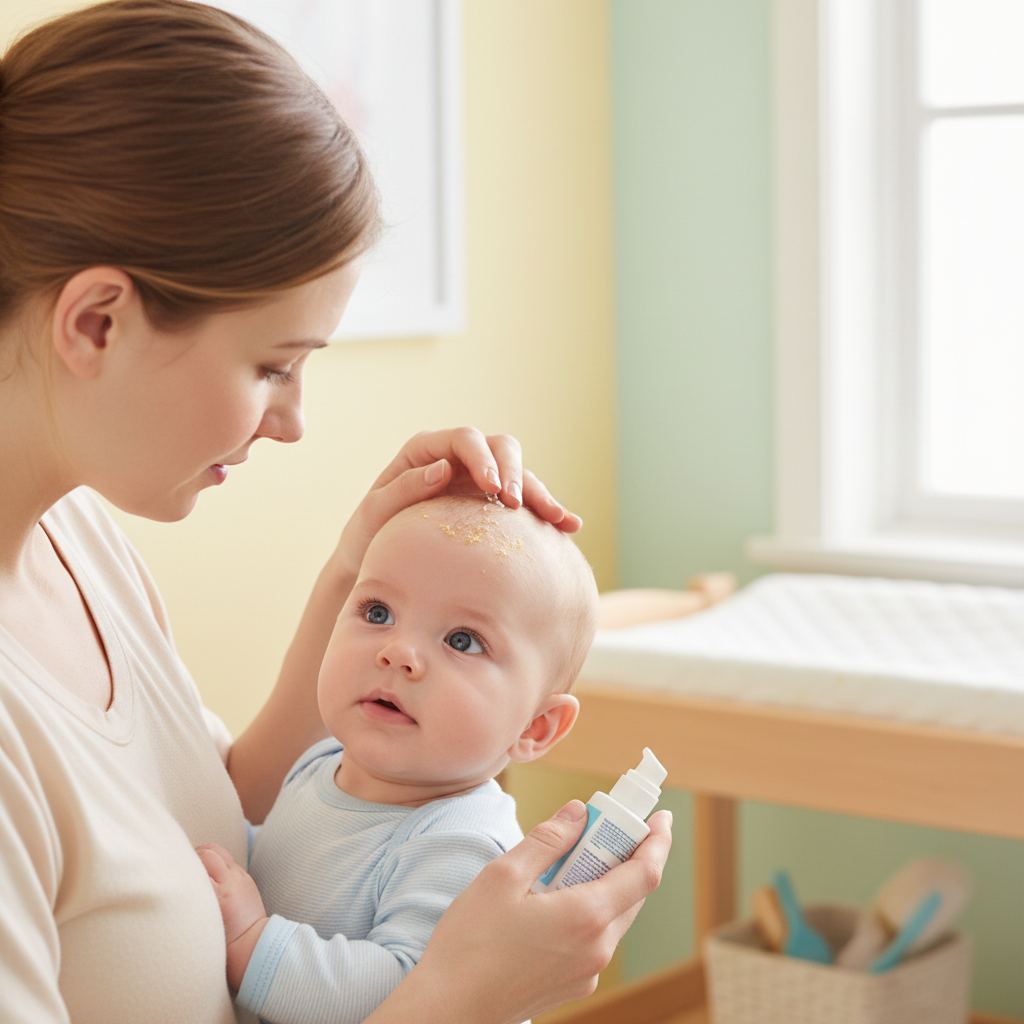
- Cradle cap — crusty, yellowish scales on the scalp. A form of seborrheic dermatitis. Gentle brushing and baby oil help.
Ongoing rashes
- Diaper rash — red, irritated skin in the diaper area. Caused by moisture, friction, or yeast. Barrier cream (zinc oxide) is the go-to treatment.
- Heat rash (miliaria) — tiny red bumps in skin folds or covered areas. Caused by blocked sweat glands. Cool the baby down and dress in breathable fabrics.
- Drool rash — red, chapped skin around the mouth and chin. Common during teething. Keep the area dry and apply petroleum jelly as a barrier.
- Contact dermatitis — red, itchy patches where skin touched an irritant (new detergent, fabric, lotion). Remove the irritant and apply fragrance-free moisturizer.
Take a photo
Rashes can change quickly. Take a photo when you first notice it — including a close-up and a wider shot showing the location. This helps your pediatrician even if the rash fades before your appointment.
See also: Baby Diaper Guide: What's Normal and When to Worry and How to Swaddle a Baby: Step-by-Step Guide & When to Stop.
Baby Eczema (Atopic Dermatitis)
Eczema is the most common chronic skin condition in babies, affecting up to 20% of infants. It typically appears between 2 and 6 months of age.
What it looks like
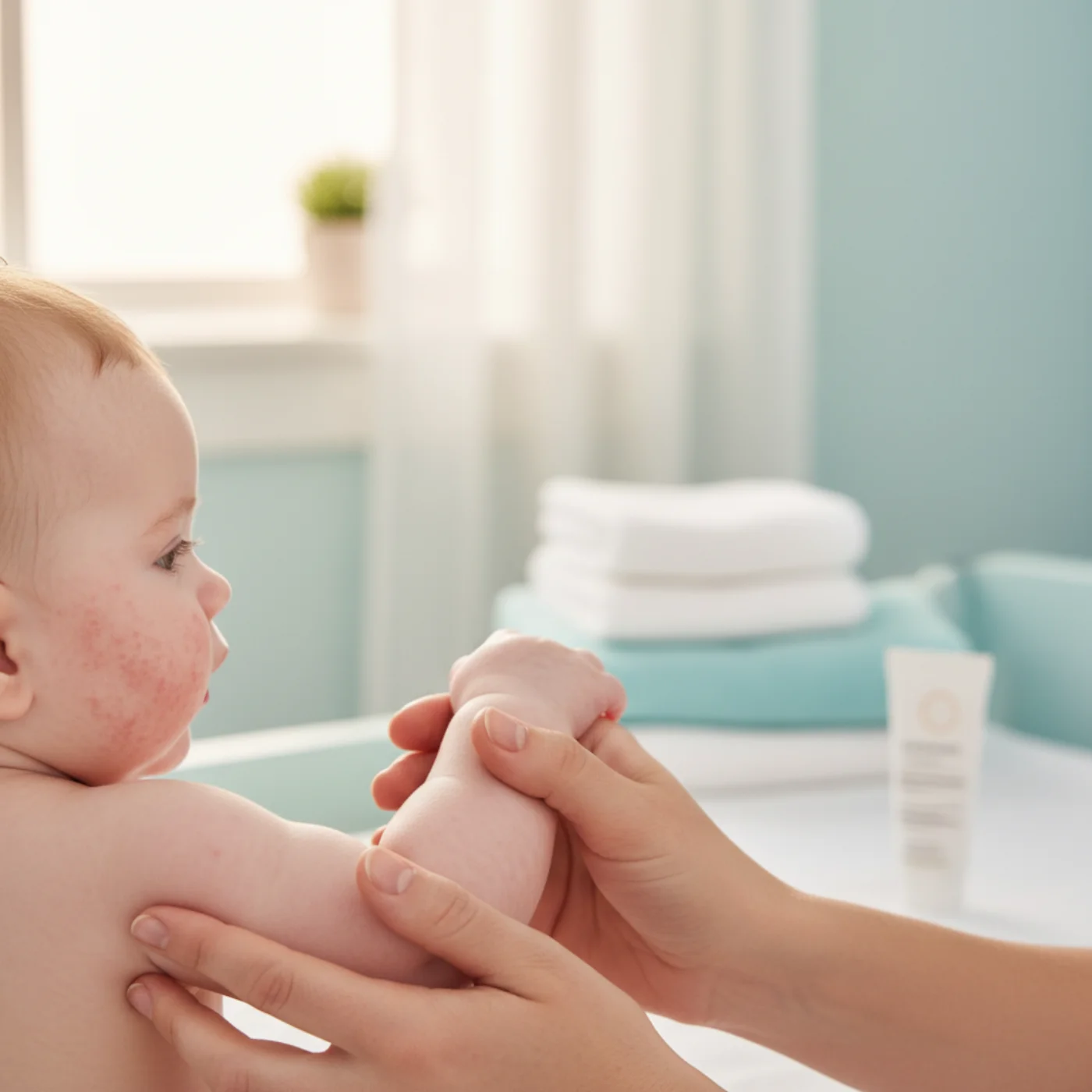
- Dry, rough, red patches — often on cheeks, forehead, and scalp in young babies
- In older babies: elbows, knees, wrists, and ankles
- Intensely itchy — babies may rub their face against sheets or scratch
- Can weep or crust when scratched
What causes it
Eczema is caused by a combination of genetics and a weakened skin barrier. If either parent has eczema, asthma, or allergies, the baby is more likely to develop it. Triggers include dry air, heat, irritating fabrics, fragrances, and sometimes food allergens.
Will it go away?
Many children outgrow eczema by age 5. About half still have it in adulthood, but usually in a milder form. Early, consistent treatment leads to better outcomes.
Treatment and Prevention
The moisturize-first approach
Dermatologists agree: moisturizing is the foundation of eczema management. Apply a thick, fragrance-free cream or ointment (not lotion) at least twice daily, especially right after baths.
Bathing tips
- Lukewarm water (not hot) — 5–10 minutes maximum
- Fragrance-free, soap-free cleanser only where needed
- Pat dry gently — don't rub
- Apply moisturizer within 3 minutes of getting out ("soak and seal")
Avoiding triggers
- Use fragrance-free detergent and skip fabric softener
- Dress baby in soft cotton — avoid wool and synthetic fabrics
- Keep the room cool (68–72°F / 20–22°C) — heat worsens eczema
- Keep nails short to minimize scratch damage
When to use medicated creams
If moisturizing alone isn't enough, your pediatrician may prescribe a low-potency topical steroid (like hydrocortisone 1%). Use it only on active flare-ups, not as a daily preventive. Follow your doctor's instructions on duration.
When to Call Your Doctor
Most rashes are harmless, but seek medical attention if:
- Fever + rash — especially in babies under 3 months
- Purple or dark red spots that don't fade when you press on them (petechiae) — this needs urgent evaluation
- Blisters or open sores — could indicate infection or a more serious condition
- Spreading rapidly — a rash that covers more area within hours
- Signs of infection — yellow crusting, pus, warmth, or increasing redness around eczema patches
- Baby seems unwell — lethargic, not feeding, or inconsolable
The glass test
Press a clear glass against a rash. If the rash fades under pressure, it's likely harmless. If it stays visible (doesn't blanch), especially if it's purple or dark red, seek emergency care immediately — it could indicate meningitis.
AI-Powered Health Tracking for Peace of Mind
Log symptoms, medications, and temperatures. ParAI's AI helps you spot patterns and know when to call the pediatrician — based on AAP guidelines.


Disclaimer: This article is for informational purposes only and does not replace professional medical advice. Always consult your pediatrician for concerns about your baby's health or development.