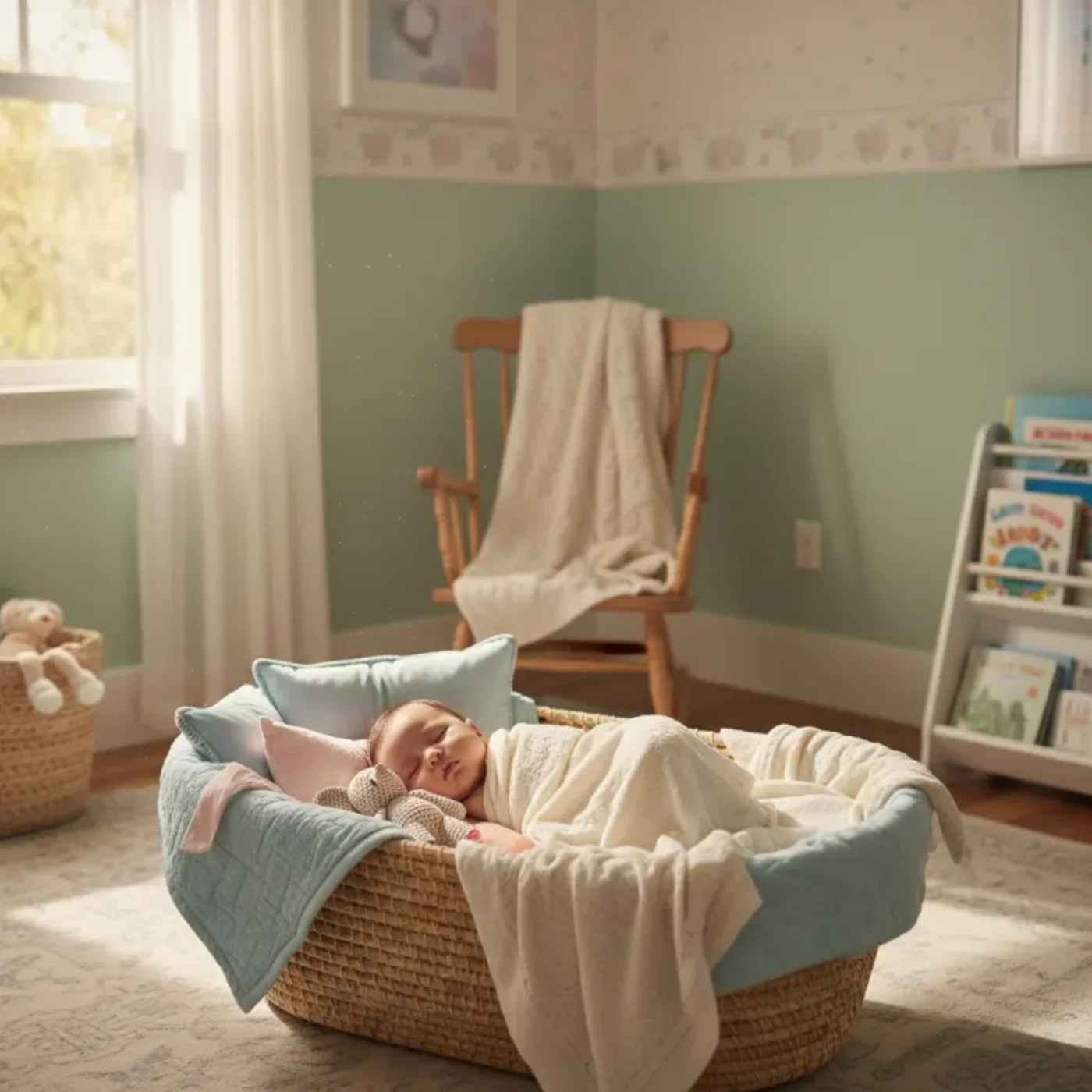
Key Takeaways
- Swaddling mimics the womb and calms the Moro (startle) reflex, helping newborns sleep longer
- The diamond swaddle is the most popular technique — snug on arms, loose on hips
- Always place a swaddled baby on their back to sleep
- Stop swaddling when your baby shows signs of rolling — usually around 3–4 months
- Transition gradually using one-arm-out or a sleep sack
Swaddling is one of the oldest and most effective soothing techniques for newborns. When done correctly, a snug swaddle recreates the cozy, contained feeling of the womb and helps your baby settle into longer, calmer sleep. This guide covers the most popular techniques, essential safety rules, and how to know when it's time to stop.
Why Swaddling Works
Newborns are born with the Moro reflex (startle reflex) — an involuntary response where their arms suddenly fling outward, often waking them from sleep. This reflex is strongest from birth to about 3–4 months and gradually fades as the nervous system matures.
See also: Toddler Bedtime Routine: Step-by-Step Guide for Better Sleep and Potty Training: Readiness Signs, Methods, and Step-by-Step Guide.
Swaddling works by gently restricting arm movement, which prevents the startle reflex from waking your baby. The snug wrap also provides deep-pressure touch — similar to being held — which activates the calming reflex and lowers cortisol levels.
Research shows that swaddled newborns:
- Sleep longer with fewer spontaneous awakenings
- Spend more time in quiet sleep (the restorative phase)
- Cry less, especially during the "witching hour" period
- Have more stable heart rates and breathing patterns
Step-by-Step: Diamond Swaddle
The diamond swaddle (also called the traditional swaddle) is the most widely recommended technique. You'll need a large, thin, square blanket — muslin works best.
| Step | Action |
|---|---|
| 1 | Lay the blanket in a diamond shape. Fold the top corner down about 15 cm to create a straight edge. |
| 2 | Place your baby face-up with their neck on the folded edge. Their shoulders should be just below the fold. |
| 3 | Straighten your baby's left arm alongside their body. Take the left side of the blanket and pull it snugly across their chest, tucking it under their right side. |
| 4 | Fold the bottom corner up over their feet, tucking it into the top of the wrap near the chest. Leave room for hips to bend naturally. |
| 5 | Straighten the right arm. Pull the right side of the blanket across the chest and tuck it under the left side. The wrap should be snug on the arms but allow 2–3 fingers of space at the hips. |
The Two-Finger Test
After swaddling, slide two fingers between the blanket and your baby's chest. If you can fit them comfortably, the swaddle is snug enough to stay put but not too tight. At the hips, you should be able to fit your whole hand — baby's legs need room to bend up and out in a frog position.
Other Swaddle Methods
The DUDU Method (Down-Up-Down-Up)
A simplified technique popular with midwives:
- Down — Left side of blanket goes down and across, tucked under baby
- Up — Bottom corner comes up over the feet
- Down — Right side goes down and across the chest
- Up — Remaining fabric tucks up into the top fold to secure
This method is faster and works well for wiggly babies who escape traditional swaddles.
Arms-Up Swaddles
Some babies prefer their hands near their face. Arms-up swaddle products (like the Love To Dream Swaddle Up) allow hands to rest by the cheeks while still providing the snug torso wrap that prevents startle wake-ups. These are also excellent as a transition tool when moving away from traditional swaddling.
Swaddle Safety Rules
Swaddling is safe when done correctly. Follow these non-negotiable rules:
- Always place baby on their back — a swaddled baby must never sleep on their stomach or side. The risk of SIDS increases significantly if a swaddled baby rolls face-down
- Don't wrap too tight on the hips — tight swaddling of the legs can cause hip dysplasia. Baby's legs should be able to bend up and splay outward naturally
- No loose fabric near the face — the blanket must be secured so it cannot ride up and cover the nose or mouth. If the swaddle comes undone easily, switch to a zip-up swaddle product
- Don't overheat — use a thin muslin or cotton blanket. Dress baby in only a onesie or diaper underneath. Feel the back of their neck — it should be warm, not sweaty
- Stop at signs of rolling — the moment your baby attempts to roll (even partially), swaddling must stop immediately
Overheating Check
Touch the back of your baby's neck or chest. If the skin feels hot or damp, remove a layer or switch to a lighter blanket. Overheating is a risk factor for SIDS — a swaddled baby should feel comfortably warm, never hot.
When to Stop Swaddling
You must stop swaddling when your baby shows any signs of rolling over. For most babies, this happens between 3–4 months, but some start earlier. Watch for:
- Rolling from back to side during sleep or play
- Breaking out of the swaddle frequently (increased strength)
- Pushing up strongly during tummy time
- Rocking side to side when on their back
A swaddled baby who rolls onto their stomach cannot use their arms to push up or reposition, creating a suffocation risk. When in doubt, stop swaddling — it's always safer to transition early.
Transitioning Out of the Swaddle
Going cold turkey from swaddle to no swaddle can be rough. These gradual strategies help:
| Strategy | How It Works | Best For |
|---|---|---|
| One arm out | Swaddle with one arm free for 3–5 nights, then both arms out | Babies who startle mildly |
| Sleep sack | Switch to a wearable blanket that allows free arm movement but keeps the cozy feeling | All babies — the gold standard transition |
| Arms-up product | Transitional swaddle with arms free but gentle pressure on torso | Babies who need hands near face |
| Naps first | Remove swaddle for naps only, keep it for nighttime until adjusted | Sensitive sleepers |
Most babies adjust within 3–7 nights. Expect some extra wake-ups during the transition — this is normal and temporary. Pairing the transition with other sleep cues (white noise, dark room, consistent routine) helps your baby adapt faster.
Struggling with Sleep? Try ParAI's AI Sleep Coach
ParAI's AI Sleep Coach creates a personalized sleep plan based on your baby's age, temperament, and patterns. Daily check-ins, progress tracking, and evidence-based guidance.


Disclaimer: This article is for informational purposes only and does not replace professional medical advice. Always consult your pediatrician for concerns about your baby's health or development.