Key Takeaways
- 8-month-olds need 12-15 hours of total sleep (firmly on a 2-nap schedule)
- Wake windows are 2.5-3.5 hours (first shortest, last longest)
- The 8-month regression is driven by separation anxiety, pulling to stand, and crawling
- Most babies need 0-1 night feeds at this age
- Each nap should be 1-2 hours for a total of 2.5-3 hours of daytime sleep
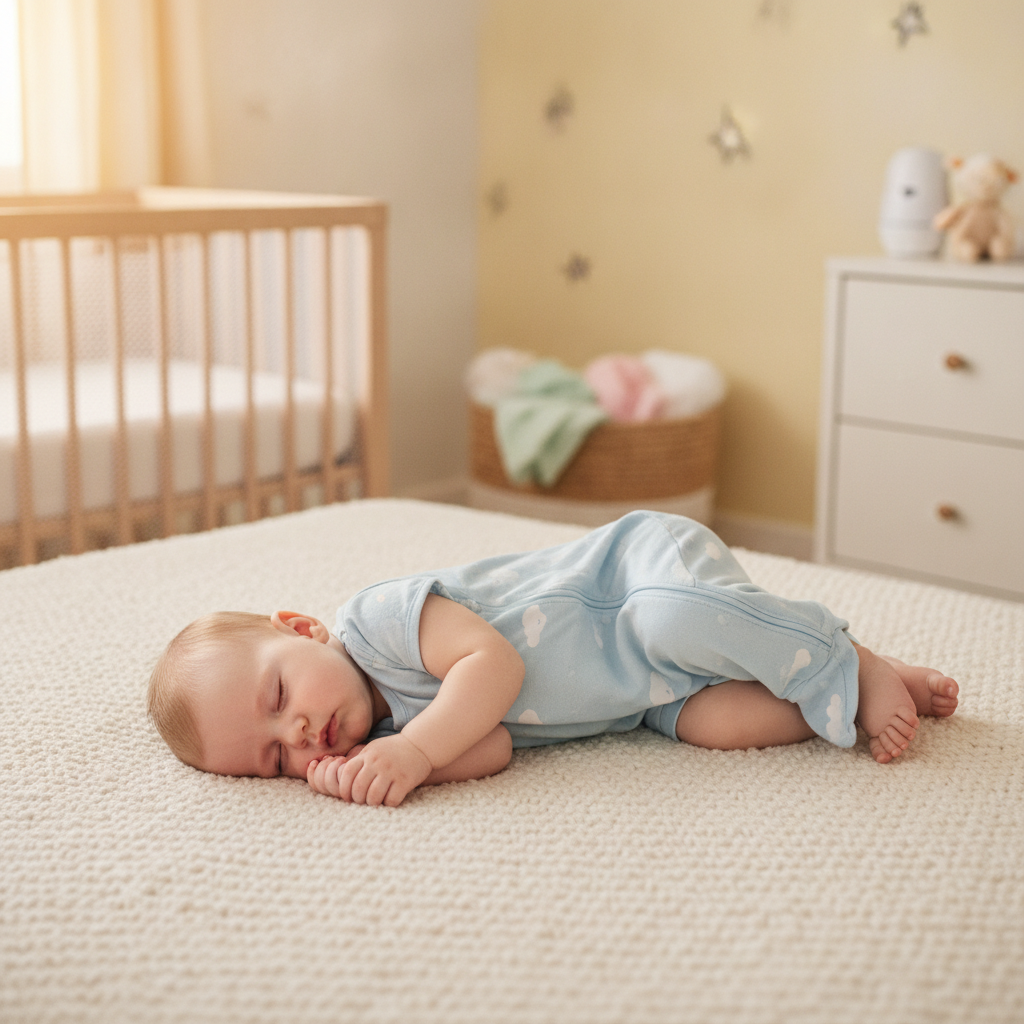
At 8 months, your baby is firmly on a 2-nap schedule and their sleep is becoming more predictable — until the 8-month regression hits. This regression is fueled by major developmental leaps: separation anxiety, pulling to stand in the crib, and newfound crawling skills that your baby wants to practice 24/7.
Here's what a realistic 8-month-old sleep schedule looks like, plus how to handle the 8-month sleep regression.
Sleep Needs at 8 Months
| Metric | Typical Range |
|---|---|
| Total sleep (24 hours) | 12-15 hours |
| Nighttime sleep | 10-12 hours |
| Daytime naps | 2 naps |
| Total nap time | 2.5-3 hours |
| Wake windows | 2.5-3.5 hours |
| Night feeds | 0-1 feeds |
Sample 8-Month-Old Schedule
| Time | Activity |
|---|---|
| 6:30 AM | Wake up + feed |
| 9:00 AM | Nap 1 (1-1.5 hours) |
| 10:30 AM | Wake + feed |
| 1:30 PM | Nap 2 (1-1.5 hours) |
| 3:00 PM | Wake + feed |
| 6:15 PM | Bedtime routine |
| 7:00 PM | Asleep for the night |
This is a guide, not a rule
Every baby is different. Follow wake windows rather than the clock. If your baby shows sleepy cues (yawning, eye rubbing, fussiness) before the scheduled nap time, put them down earlier. SmartSpot in ParAI learns YOUR baby's specific patterns and predicts their ideal nap times.
Wake Windows at 8 Months
Wake windows are the most important factor at this age — more important than clock time:
- First wake window: 2.5-3 hours (shortest of the day)
- Second wake window: 3-3.25 hours
- Last wake window: 3.25-3.5 hours (longest, before bedtime)
If your baby is overtired (wake window too long), they'll fight sleep harder. If undertired (wake window too short), they'll take short naps or play in the crib. At 8 months, most babies can handle longer stretches of awake time than parents expect.
The 8-Month Sleep Regression
If your baby was sleeping well and suddenly isn't — the 8-month regression is likely to blame. Here's what drives it:
- Separation anxiety peaks around 8-10 months — your baby now understands you exist when you leave the room, and they don't like it
- Pulling to stand in the crib — your baby practices this new skill at every opportunity, including 2 AM
- Crawling disruption — the brain is processing new motor skills during sleep, causing more wake-ups
- Object permanence — baby now remembers you were there when they fell asleep and notices you're gone
For a deep dive on all sleep regressions, see our full guide: Sleep Regression Guide: Ages, Signs & Solutions.
The good news: this regression typically lasts 2-4 weeks. If your baby already has independent sleep skills from sleep training, the impact is usually milder.
Night Feedings at 8 Months
Most 8-month-olds are ready to sleep through the night without feeds, especially if they're eating solids well during the day.
- Many babies: can sleep 10-12 hours without a feed
- Some babies: still benefit from 1 feed (especially breastfed)
- If feeding 2+ times: likely a sleep association rather than hunger
If your baby is waking multiple times to feed at night, it's worth evaluating whether they're getting enough calories during the day. Ensure solid food intake is adequate and daytime milk feeds are full.
Tips for Better Sleep at 8 Months
- Practice standing and sitting during the day — the more they practice pulling up and sitting back down while awake, the less they'll do it at 2 AM
- Play peek-a-boo — this helps with separation anxiety by teaching object permanence in a fun, low-stakes way
- Keep the room dark and boring — at 8 months, babies are curious about everything. Blackout curtains and white noise are essential.
- Don't rush in — give your baby 5-10 minutes to resettle before intervening. They may fuss briefly and fall back asleep.
- Track patterns — use ParAI to log sleep times and spot what's working. SmartSpot will predict optimal nap windows based on your baby's unique data.
FAQ
Is my 8-month-old ready to drop to 1 nap?
No — 8 months is too early for 1 nap. The transition to 1 nap typically happens between 13-18 months. If your baby is refusing a nap, it's more likely the 8-month regression or a wake window issue, not readiness to drop a nap.
Why does my 8-month-old stand up in the crib and cry?
This is extremely common during the 8-month regression. Your baby has learned to pull up but may not know how to sit back down. Practice sitting from standing during playtime. At night, lay them back down once calmly, then let them figure it out.
How do I handle separation anxiety at bedtime?
Keep your bedtime routine consistent and confident. A brief, loving goodbye is better than a long, drawn-out departure. Consider a transitional object (lovey or small blanket) if your pediatrician approves. For more strategies, see our separation anxiety guide.
What time should an 8-month-old go to bed?
Between 6:30-7:30 PM is ideal for most 8-month-olds. The key is the last wake window being 3.25-3.5 hours after the second nap ends. If naps were short, move bedtime earlier to prevent overtiredness.
My baby was sleeping through the night and now wakes up again — what happened?
This is the classic 8-month regression pattern. Separation anxiety, new motor skills, and cognitive leaps all disrupt sleep temporarily. Stay consistent with your approach, avoid creating new sleep associations (like bringing baby to your bed), and it should resolve in 2-4 weeks.
Struggling with Sleep? Try ParAI's AI Sleep Coach
ParAI's AI Sleep Coach creates a personalized sleep plan based on your baby's age, temperament, and patterns. Daily check-ins, progress tracking, and evidence-based guidance.