Key Takeaways
- Avoid raw or undercooked meat, fish, and eggs — they may carry Listeria, Salmonella, or Toxoplasma
- Limit caffeine to 200mg per day (about one 12oz coffee) per ACOG guidelines
- No alcohol at any stage of pregnancy — there is no known safe amount
- High-mercury fish (shark, swordfish, king mackerel, tilefish) should be completely avoided
- Soft unpasteurized cheeses and deli meats can harbor Listeria — heat deli meats until steaming
Knowing which foods to avoid during pregnancy is one of the most important steps you can take to protect your baby's development. This guide is based on current ACOG (American College of Obstetricians and Gynecologists) and FDA recommendations to help you make safe choices every day.
Unsafe Foods List
Certain foods carry a higher risk of bacterial contamination or contain substances that can harm fetal development. Here's what to avoid:
See also: When to Call the Pediatrician: A New Parent's Guide and Preparing Your Toddler for a New Sibling: A Complete Guide.
Raw or Undercooked Meat & Fish
- Raw fish and sushi — risk of parasites and bacteria including Listeria
- Rare or undercooked beef, pork, lamb — risk of Toxoplasma and E. coli
- Raw shellfish (oysters, clams, mussels) — risk of Vibrio and norovirus
- Smoked seafood (lox, nova) unless cooked in a dish
High-Mercury Fish
Mercury can damage your baby's developing nervous system. The FDA advises pregnant women to completely avoid:
- Shark
- Swordfish
- King mackerel
- Tilefish (Gulf of Mexico)
- Bigeye tuna
- Marlin
- Orange roughy
Dairy & Deli
- Soft unpasteurized cheeses — brie, camembert, queso fresco, blue-veined cheeses
- Deli meats and hot dogs — unless heated to 165°F (74°C) until steaming
- Refrigerated pâté or meat spreads
- Unpasteurized milk and juice
Eggs & Produce
- Raw or runny eggs — risk of Salmonella (includes homemade mayo, mousse, raw cookie dough)
- Unwashed fruits and vegetables — can carry Toxoplasma from soil
- Raw sprouts (alfalfa, clover, radish, mung bean) — bacteria can enter seeds before sprouting
Listeria warning
Listeria is especially dangerous during pregnancy — it can cross the placenta and cause miscarriage, stillbirth, or severe newborn infection. Unlike most bacteria, Listeria grows at refrigerator temperatures, making deli meats and soft cheeses particularly risky.
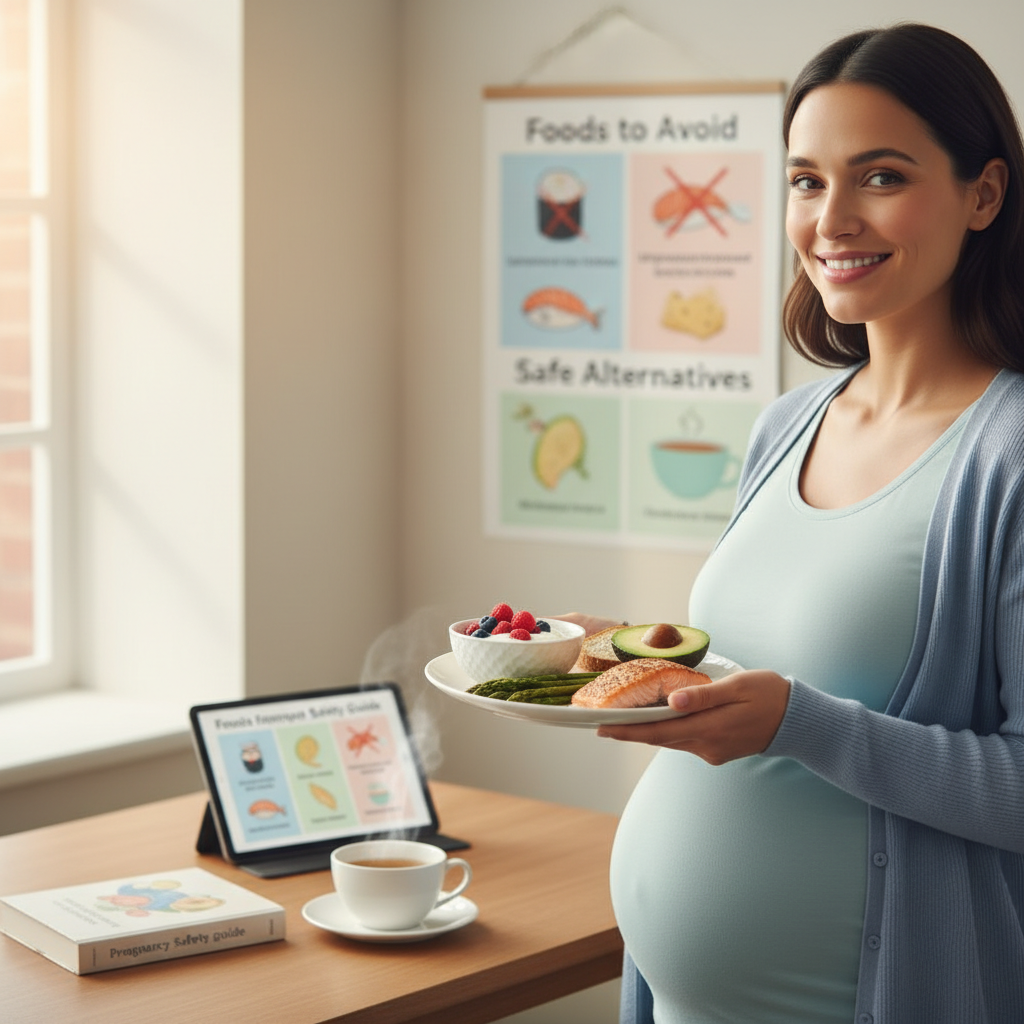
Safe Alternatives
You don't have to give up flavor or nutrition. Here are safe swaps for common pregnancy cravings:
| Avoid | Safe Alternative | Why It's Safe |
|---|---|---|
| Raw sushi | Cooked rolls (shrimp tempura, eel, veggie) | Cooking kills parasites and bacteria |
| High-mercury fish | Salmon, sardines, anchovies, trout | Low mercury, high omega-3s |
| Soft unpasteurized cheese | Hard cheeses (cheddar, Swiss) or pasteurized soft cheese | Pasteurization kills Listeria |
| Deli meat (cold) | Deli meat heated to steaming (165°F/74°C) | Heat kills Listeria |
| Raw eggs | Pasteurized eggs or fully cooked eggs | Pasteurization eliminates Salmonella |
| Unpasteurized juice | Pasteurized or freshly squeezed at home (washed fruit) | No bacterial contamination risk |
| Raw sprouts | Cooked sprouts or other greens | Cooking eliminates bacteria in seeds |
Eat 2-3 servings of low-mercury fish per week
The FDA recommends 8-12 ounces of low-mercury fish weekly during pregnancy. Good choices include salmon, tilapia, shrimp, pollock, catfish, and canned light tuna. Fish provides DHA essential for baby's brain development.
Caffeine & Drinks
ACOG recommends limiting caffeine to less than 200mg per day during pregnancy. High caffeine intake has been linked to increased risk of miscarriage and low birth weight.
| Beverage | Caffeine (approx.) | Status |
|---|---|---|
| Brewed coffee (8oz) | 95–200mg | Limit to 1 cup/day |
| Espresso (1 shot) | 63mg | OK in moderation |
| Black tea (8oz) | 40–70mg | OK, 2-3 cups/day |
| Green tea (8oz) | 25–50mg | OK in moderation |
| Cola (12oz) | 30–40mg | OK occasionally |
| Energy drinks | 150–300mg | Avoid |
Alcohol
There is no known safe amount of alcohol during pregnancy. Alcohol crosses the placenta and can cause Fetal Alcohol Spectrum Disorders (FASD), including intellectual disabilities, growth problems, and facial abnormalities. This applies to all types — wine, beer, and spirits.
Herbal Teas to Avoid
- Chamomile — may stimulate uterine contractions in large amounts
- Licorice root — linked to preterm birth and developmental issues
- Pennyroyal — toxic, can cause miscarriage
- Dong quai — may stimulate the uterus
- St. John's wort — insufficient safety data in pregnancy
Safe options include ginger tea (helps with nausea), peppermint tea, and rooibos tea (caffeine-free).
Supplements & Vitamins
While prenatal vitamins are essential, some supplements should be avoided or limited:
- Vitamin A (retinol form) — excess can cause birth defects. Stick to beta-carotene from food. Limit to 10,000 IU/day maximum
- Herbal supplements — most lack safety data in pregnancy. Avoid unless approved by your provider
- High-dose vitamin E — may increase bleeding risk
- Fish oil supplements — choose ones tested for mercury and PCBs; avoid cod liver oil (high vitamin A)
Essential prenatal nutrients
Take a prenatal vitamin with at least 400-800mcg folic acid, 27mg iron, 1000mg calcium, 600 IU vitamin D, and 200-300mg DHA. Start folic acid at least one month before conception if possible.
Food Preparation Safety
- Wash all produce thoroughly under running water, even pre-washed greens
- Cook meat to safe temperatures — beef/pork to 145°F (63°C), poultry to 165°F (74°C), ground meat to 160°F (71°C)
- Use separate cutting boards for raw meat and produce
- Refrigerate leftovers within 2 hours and eat within 3-4 days
- Avoid cross-contamination — wash hands, utensils, and surfaces after handling raw meat
- Check expiration dates — pregnant women are more susceptible to foodborne illness
Use a food thermometer
Don't rely on color or texture to judge doneness. A food thermometer is the only reliable way to ensure meat has reached a safe internal temperature. This is especially important for ground meat, which should reach 160°F (71°C) throughout.
Eating Out Safely
Dining out during pregnancy is perfectly fine with a few precautions:
- Ask for meat and fish to be cooked well-done
- Avoid buffets where food may sit at unsafe temperatures
- Skip salad bars — produce may not be thoroughly washed
- Ask if cheeses are pasteurized before ordering
- Request dressings on the side (some contain raw egg)
- Choose hot dishes over cold — heat kills most harmful bacteria
- Avoid raw fish restaurants unless they offer cooked options
When in doubt, choose cooked, hot foods from reputable restaurants. Most chain restaurants use pasteurized ingredients and follow strict food safety protocols.
AI-Powered Health Tracking for Peace of Mind
Log symptoms, medications, and temperatures. ParAI's AI helps you spot patterns and know when to call the pediatrician — based on AAP guidelines.


Disclaimer: This article is for informational purposes only and does not replace professional medical advice. Always consult your pediatrician for concerns about your baby's health or development.