Key Takeaways
- 6-month-olds need 24–32 oz (720–960ml) of breast milk or formula per day
- Solids are just starting — 1–2 tablespoons, 1–2 times per day
- Milk remains the primary nutrition source; solids are for practice
- Many babies can drop night feeds entirely by 6 months
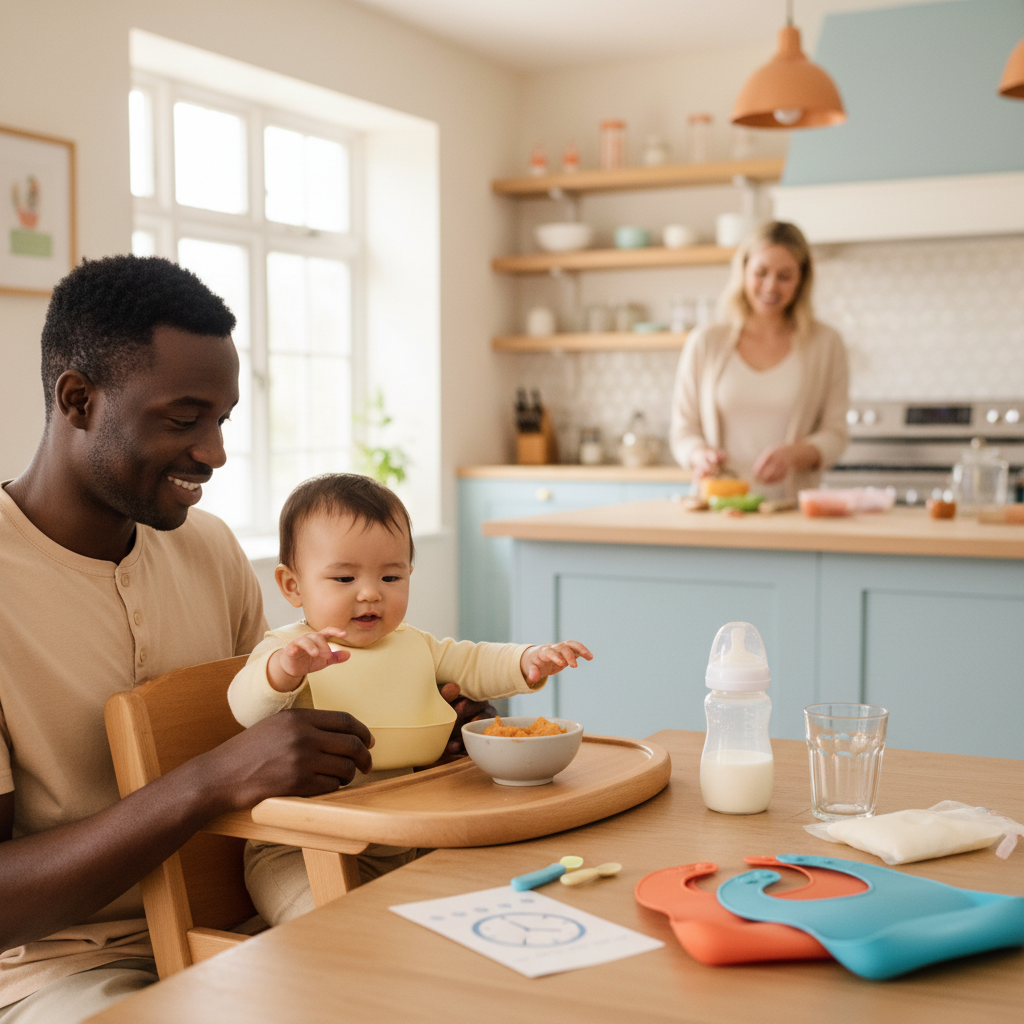
At 6 months, your baby hits an exciting milestone: starting solid foods! But milk is still the main event. Here's exactly how much your 6-month-old needs each day.
Breast Milk & Formula at 6 Months
| Feeding Type | Per Feeding | Feedings/Day | Total/Day |
|---|---|---|---|
| Breastfed | Varies (nurse fully) | 4–5 sessions | 24–32 oz (720–960ml) |
| Formula-fed | 6–8 oz (180–240ml) | 4–5 bottles | 24–32 oz (720–960ml) |
| Solids | 1–2 tablespoons | 1–2 times | Practice only |
Milk first, solids second
Always offer breast milk or formula before solids at this age. Milk provides the calories and nutrients your baby needs — solids are for exploring textures and tastes.
See also: Formula Feeding Guide: Types, Amounts by Age & How to Prepare and Breastfeeding Tips for New Moms.
Starting Solids: Signs of Readiness
Not every baby is ready for solids at exactly 6 months. Look for these signs:
- Sitting with support — can hold head steady and sit upright in a high chair
- Lost tongue-thrust reflex — doesn't automatically push food out with tongue
- Interested in food — watches you eat, reaches for your plate, opens mouth when food approaches
- Good head control — can turn head to refuse food
- Doubled birth weight — at least 13 lbs (6kg)
Learn more: Introducing Solid Foods: A Complete Guide.
Best First Foods for 6 Month Olds
Start with single-ingredient foods, one at a time, waiting 3–5 days between new foods to watch for allergies:
- Iron-fortified cereal — rice or oat cereal mixed with breast milk or formula
- Pureed vegetables — sweet potato, squash, peas, carrots
- Pureed fruits — banana, avocado, apple, pear
- Pureed meats — chicken, turkey (excellent iron source)
Portion size at 6 months
Start with just 1–2 teaspoons and work up to 1–2 tablespoons per sitting. Your baby may only take a few bites at first — that's perfectly normal!
See also: Baby-Led Weaning Guide.
Sample Daily Feeding Schedule
| Time | Feeding | Amount |
|---|---|---|
| 6:30 AM | Breast milk / Formula | 6–8 oz (180–240ml) |
| 9:00 AM | Breast milk / Formula | 6–8 oz (180–240ml) |
| 10:00 AM | Solids (breakfast) | 1–2 tbsp |
| 12:30 PM | Breast milk / Formula | 6–8 oz (180–240ml) |
| 3:30 PM | Breast milk / Formula | 6–8 oz (180–240ml) |
| 5:00 PM | Solids (dinner) | 1–2 tbsp |
| 7:00 PM | Breast milk / Formula | 6–8 oz (180–240ml) |
Milk feeds happen every 3–4 hours, with solids offered 1–2 times between milk feeds. Adjust timing to your baby's natural rhythm.
Night Feeds at 6 Months
By 6 months, many babies can sleep through the night without feeding. Most need 0–1 night feeds.
- If your baby is gaining weight well and eating enough during the day, they may not need night feeds
- A single dream feed around 10–11 PM can help some babies sleep until morning
- If still waking multiple times, it may be habit rather than hunger — consult your pediatrician
Water and Other Drinks
Once solids begin, you can offer small sips of water (1–2 oz / 30–60ml) from an open cup during meals. This helps with swallowing solids and introduces cup drinking.
- Water is not needed as a main hydration source — milk provides all the fluids
- No juice, cow's milk, or sweetened drinks before 12 months
- An open cup or straw cup is better than a sippy cup for oral development
FAQ
Should I give solids before or after milk?
At 6 months, offer milk first, then solids 30-60 minutes later. Milk is still the primary nutrition source. As baby approaches 9 months, you can start offering solids first for some meals.
My baby isn't interested in solids yet — should I worry?
No. Some babies take a few weeks to warm up to solids. Keep offering without pressure. As long as they're getting enough milk and gaining weight, there's no rush. Most babies are eating well by 7-8 months.
How do I know if baby is getting enough milk now that solids are starting?
Watch for 6+ wet diapers per day and steady weight gain. If baby is nursing/taking bottles well 4-5 times per day and eating some solids, they're likely getting enough. Track with ParAI to see patterns over time.
Can I give my 6-month-old water?
Small sips (1-2 oz / 30-60ml) with meals are fine for practice, but water shouldn't replace milk feeds. Breast milk and formula provide all the hydration needed at this age.
Track Feedings in Seconds with Natural Language
Just type "150ml bottle at 3pm" and ParAI logs it instantly. No forms, no tapping through menus. Plus AI insights on feeding patterns and schedules.