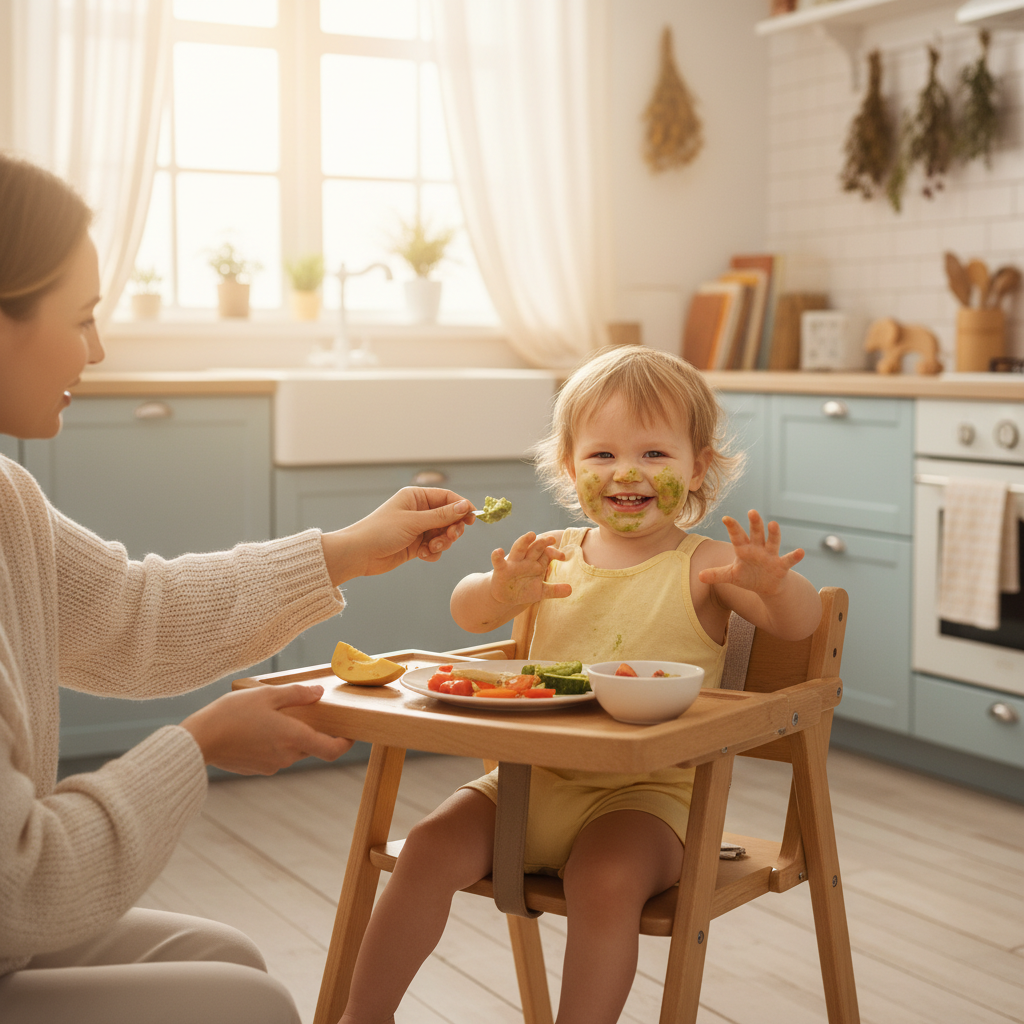
Key Takeaways
- Food refusal is a normal developmental phase — most toddlers go through it between ages 1 and 5
- Food neophobia (fear of new foods) peaks between ages 2 and 6 — it's evolutionary, not defiance
- It takes 15–20 exposures to a new food before a child may accept it
- Pressure and force backfire — the Division of Responsibility approach works best
- Most picky eating resolves by age 5–6 without intervention
Your toddler ate everything as a baby. Now they survive on crackers, milk, and sheer willpower. You've tried begging, bribing, hiding vegetables in smoothies, and making airplane noises. Nothing works.
Take a breath. This is one of the most common parenting struggles — and in most cases, it's completely normal. Here's why it happens and what actually helps.
See also: Toddler Meal Ideas for Picky Eaters: What Actually Works and Toddler Won't Listen? Positive Discipline Strategies by Age (1-5).
Why Food Refusal Is Normal
Between ages 2 and 6, most children develop food neophobia — an instinctive fear of new or unfamiliar foods. This is an evolutionary survival mechanism. When toddlers became mobile enough to forage on their own, being suspicious of unknown plants kept them alive.
At the same time, growth slows dramatically after the first year. Babies triple their birth weight in 12 months, but toddlers may gain only 2–3 kg per year. Less growth means less appetite — and that's perfectly healthy.
A toddler's stomach is roughly the size of their fist. They genuinely cannot eat adult-sized portions, and their appetite fluctuates wildly from day to day. One day they'll eat everything in sight; the next, three bites of toast is enough.
The numbers are reassuring
Studies show that 25–35% of toddlers are described as "picky eaters" by their parents. Among preschoolers, the number rises to nearly 50%. Your child is not unusual — they're textbook normal.
Common Causes
Understanding why your toddler refuses food helps you respond calmly instead of reactively:
- Neophobia — hardwired suspicion of unfamiliar foods, peaking at ages 2–6
- Slower growth — genuinely reduced caloric needs compared to infancy
- Grazing — too many snacks and milk between meals kills mealtime appetite. Toddlers need 2–3 hours between eating occasions
- Autonomy drive — saying "no" to food is one of the few things a toddler can control. It's about independence, not the food itself
- Sensory sensitivity — textures, temperatures, colors, and even how foods touch each other on the plate can trigger refusal
- Mealtime pressure — research consistently shows that pressuring children to eat increases food refusal and decreases intake long-term
- Illness or teething — temporary appetite drops during colds, ear infections, or teething are normal
- Too much milk — more than 500 ml/day fills them up and blocks iron absorption
What to Do
Follow the Division of Responsibility (Ellyn Satter)
This is the gold standard recommended by pediatric dietitians worldwide:
- Parents decide — what food is offered, when meals happen, and where (at the table)
- Children decide — whether to eat and how much
This removes the power struggle entirely. Your job is to provide nutritious options on a predictable schedule. Their job is to listen to their body.
Practical strategies
- Always include one safe food — serve at least one item you know they'll eat alongside new foods
- Keep offering rejected foods — it takes 15–20 neutral exposures (no pressure) before acceptance. Put a small amount on their plate without comment
- Eat together — toddlers learn by watching. Eat the same food enthusiastically without commenting on theirs
- Set a schedule — 3 meals + 2 snacks at predictable times. No grazing between
- Keep portions tiny — 1 tablespoon per year of age is a serving. A mountain of food overwhelms them
- Involve them — washing vegetables, stirring, choosing between two options. Kids who help prepare food are more likely to try it
- Stay neutral — no praise for eating, no disappointment for refusing. Keep meals emotionally calm
The 30-minute rule
Set a time limit for meals (20–30 minutes). When time is up, calmly remove the plate without comment. They'll learn that mealtime is for eating, and the next snack or meal is coming on schedule.
What NOT to Do
- Don't pressure or force — "just one more bite" creates negative associations with food and increases refusal
- Don't bribe with dessert — "eat your peas and you get ice cream" teaches that peas are punishment and dessert is the reward
- Don't short-order cook — making a separate meal when they refuse teaches them that refusing works. Serve the family meal with one safe food included
- Don't use food as reward or punishment — this distorts their relationship with eating
- Don't let them graze all day — constant snacking means they're never hungry enough for meals
- Don't label them — saying "he's my picky eater" in front of them reinforces the identity
- Don't hide vegetables deceptively — it's fine to blend spinach into a smoothie, but don't lie about it. Trust is important
The pressure paradox
The more you push food, the more they resist. Studies show that children whose parents use pressure tactics eat fewer fruits and vegetables long-term than children whose parents stay neutral. Your calm is your superpower.
When to See Your Doctor
Most food refusal is normal and resolves by age 5–6. However, consult your pediatrician if you notice:
- Weight loss or falling off their growth curve
- Fewer than 20 accepted foods — and the list is shrinking, not growing
- Gagging or vomiting on certain textures consistently (not just dislike — physical distress)
- Only one food group — eating exclusively carbs or refusing all protein
- Extreme mealtime distress — anxiety, crying, or panic beyond normal toddler resistance
- Nutritional deficiencies — fatigue, pale skin, brittle nails, frequent illness
- Sensory issues beyond food — also sensitive to clothing tags, loud sounds, or certain textures
Your doctor may refer you to a pediatric feeding therapist (occupational therapist or speech-language pathologist) who can help with food aversion or sensory processing difficulties.
Easy Accepted Foods
These are foods that pediatric dietitians recommend as reliable options for most toddlers. Use them as your "safe food" at meals:
| Food Group | Easy Wins | Serving Tips |
|---|---|---|
| Carbs | Toast, pasta, rice, oatmeal, crackers | Serve plain with toppings on the side |
| Protein | Eggs, yogurt, cheese, nut butter, mini meatballs | Cut small, offer dipping sauces |
| Fruits | Banana, berries, apple slices, mango, grapes (halved) | Serve fresh, frozen, or in smoothies |
| Vegetables | Peas, corn, sweet potato, cucumber, carrots | Roast for sweetness, offer raw with dip |
| Dairy | Whole milk, full-fat yogurt, cheese cubes | Max 500 ml milk/day to preserve appetite |
| Fats | Avocado, olive oil, butter, nut butters | Add to other foods for calories and brain development |
The one-bite myth
Forget "just try one bite." Instead, let them interact with food without eating it — touching, smelling, licking, even playing. Food learning happens in stages, and every interaction counts as an exposure toward those 15–20 needed for acceptance.
Track Feedings in Seconds with Natural Language
Just type "150ml bottle at 3pm" and ParAI logs it instantly. No forms, no tapping through menus. Plus AI insights on feeding patterns and schedules.


Disclaimer: This article is for informational purposes only and does not replace professional medical advice. Always consult your pediatrician for concerns about your baby's health or development.