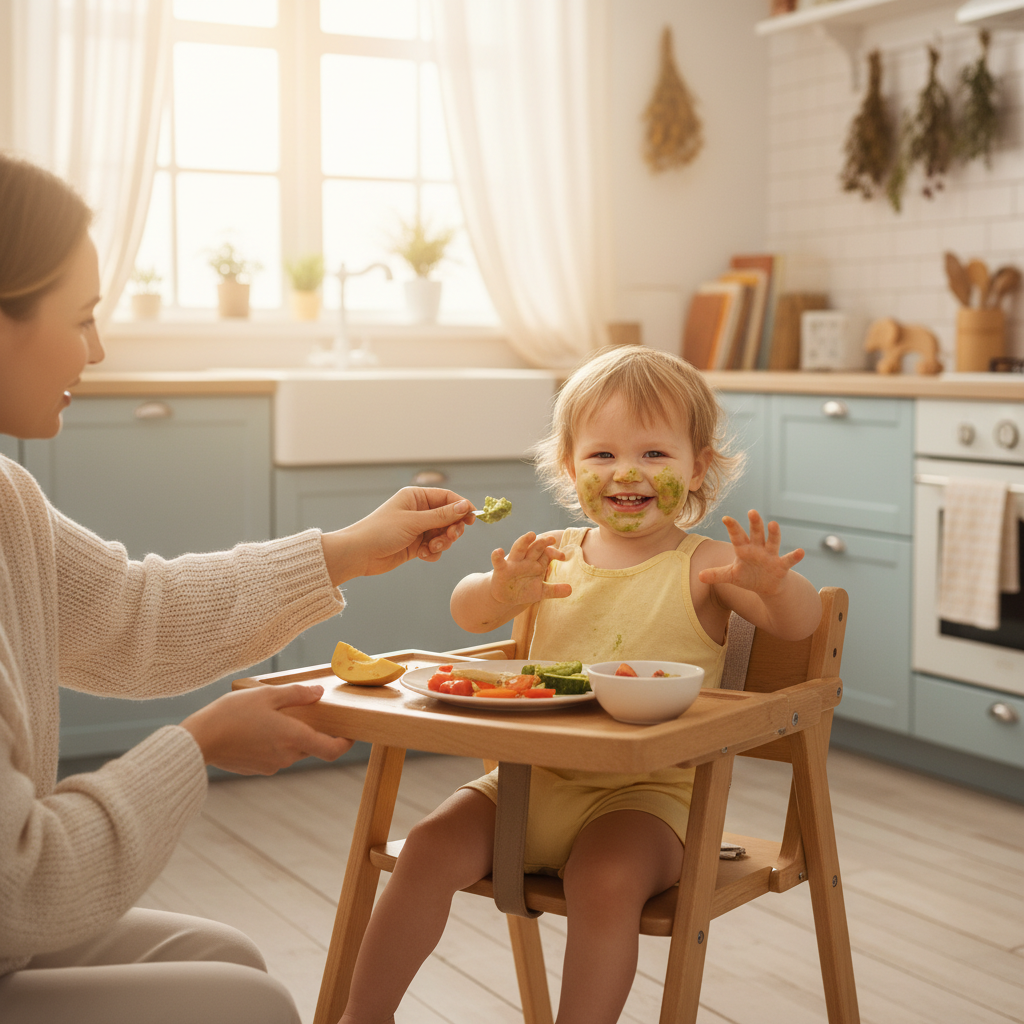
Key Takeaways
- Picky eating peaks between ages 2-6 and is driven by food neophobia — an evolutionary survival mechanism
- It takes 15-20 neutral exposures to a new food before a child may accept it
- The Division of Responsibility (Ellyn Satter) is the gold standard: parents decide what/when/where, children decide whether/how much
- Pressure, bribing, and forcing consistently backfire in research
- Most picky eating resolves by age 5-6 without intervention
Your toddler used to eat everything. Now they survive on bread, cheese, and sheer stubbornness. Every meal feels like a negotiation you're losing.
Here's the truth: picky eating in toddlers is overwhelmingly normal, biologically driven, and temporary. But that doesn't make it less stressful. This guide covers why it happens, what actually works (based on research, not Pinterest), and when to genuinely worry.
Related: Toddler Won't Eat: Why It Happens & What Helps covers the immediate "my child refuses food" crisis. This guide goes deeper into long-term strategies and the science behind food neophobia. For meal planning, see Toddler Meal Plan: What to Feed a 2-3 Year Old.
Why Toddlers Become Picky Eaters
Picky eating isn't defiance — it's biology. Several developmental factors converge between ages 1-3:
- Food neophobia — an instinctive fear of unfamiliar foods that peaks between ages 2-6. When toddlers became mobile enough to forage independently, being suspicious of unknown plants kept them alive. This is hardwired.
- Dramatically slower growth — babies triple their birth weight in year one. Toddlers gain only 2-3 kg per year. Less growth = less appetite. This is healthy, not a problem.
- Autonomy drive — toddlers can control very few things in their world. Food is one of them. Saying "no" is about independence, not the food itself.
- Sensory development — toddlers become more aware of textures, temperatures, colors, and how foods look on the plate. Mixed textures (like soup with chunks) are especially challenging.
- Smaller stomach — a toddler's stomach is the size of their fist. They physically cannot eat large portions, and appetite fluctuates wildly day to day.
You're not alone
Research shows 25-50% of toddlers are described as "picky eaters" by their parents. Among preschoolers, the number approaches 50%. This is the norm, not the exception.
Normal Picky Eating vs Red Flags
Normal (no intervention needed)
- Refusing new foods but eating familiar ones
- Eating well one day, barely eating the next
- Going through phases (only wants pasta for a week)
- Refusing vegetables but eating fruits
- Eating better at daycare than at home
- Accepting 15-20 different foods total
See your pediatrician if
- Eating fewer than 10 foods total and the list is shrinking
- Losing weight or falling off their growth curve
- Gagging, vomiting, or showing fear/anxiety around food
- Refusing entire food textures (only eats purees past age 2)
- Extreme rigidity (only eats one brand, one color, one temperature)
- Mealtime causes significant distress for the child (not just the parent)
These may indicate ARFID (Avoidant/Restrictive Food Intake Disorder), sensory processing issues, or oral motor difficulties that benefit from professional evaluation.
Evidence-Based Strategies
1. Follow the Division of Responsibility
Developed by dietitian Ellyn Satter and endorsed by the AAP:
- Parents decide: what food is offered, when meals happen, where (at the table)
- Children decide: whether to eat and how much
This removes the power struggle entirely. Your job is to provide nutritious options on a predictable schedule. Their job is to listen to their body.
2. The 15-20 exposure rule
Research consistently shows it takes 15-20 neutral exposures (seeing, touching, smelling — not just tasting) before a child may accept a new food. Most parents give up after 3-5 attempts. Keep putting a small amount on their plate without comment or pressure.
3. Always include one safe food
At every meal, serve at least one item you know they'll eat alongside new or challenging foods. This ensures they won't go hungry while still being exposed to variety.
4. Eat together and model
Children learn by watching. Eat the same food enthusiastically without commenting on theirs. Family meals where everyone eats the same thing (even if the child only touches the bread) are more effective than separate "kid food."
5. Keep portions tiny
One tablespoon per year of age is a serving. A mountain of food overwhelms toddlers. Start small — they can always ask for more.
6. Involve them
Children who help prepare food are significantly more likely to try it. Let them wash vegetables, stir, pour, choose between two options at the store, or pick which vegetable to have at dinner.
7. Stay emotionally neutral
No praise for eating ("good job!"), no disappointment for refusing ("you didn't even try it"). Keep meals calm and pressure-free. Food should not be emotionally charged.
Foods Most Toddlers Accept
When building meals, include at least one from this "high acceptance" list:
- Grains: Pasta, bread, crackers, rice, oatmeal, pancakes
- Protein: Cheese, yogurt, eggs, chicken nuggets, peanut butter
- Fruits: Bananas, strawberries, blueberries, apple slices, grapes (halved)
- Vegetables: Corn, peas, sweet potato, carrots (roasted), cucumber
- Snacks: Hummus with pita, cheese sticks, smoothies, trail mix
The vegetable trick
Roasting vegetables brings out natural sweetness and changes the texture from "mushy" to "crispy" — two changes that dramatically increase toddler acceptance. Try roasted carrots, sweet potato fries, or broccoli "trees" with a dip.
What NOT to Do
- Don't pressure or force — "just one more bite" and "you can't leave until you eat" increase food refusal long-term
- Don't bribe with dessert — "eat your broccoli and you can have ice cream" teaches that broccoli is punishment and ice cream is reward
- Don't make separate meals — cooking a different dinner because they refused the family meal teaches that refusing works
- Don't label them — calling your child a "picky eater" in front of them reinforces the identity
- Don't restrict all treats — forbidden foods become more desirable. Include treats occasionally without making them special
- Don't let them graze — constant snacking and milk between meals kills appetite. Space eating 2-3 hours apart
How Tracking Reveals Progress
Picky eating feels endless when you're living it meal by meal. But when you track food groups accepted and refused over weeks, patterns emerge:
- Hidden progress — a food refused 15 times that's finally touched (then tasted, then accepted) is invisible without records
- Actual variety — you might think they "eat nothing" but tracking shows they accepted foods from 4 of 5 food groups this week
- Trigger identification — maybe they refuse everything at dinner (tired) but eat well at lunch. That's useful information.
- Reduced parental anxiety — data is more reassuring than memory. Seeing the weekly picture calms the daily frustration.
Track food groups, not calories
ParAI's meal tracking logs food groups offered and accepted — grains, protein, dairy, fruits, vegetables. Over weeks, you see which groups need more exposure and where progress is happening. All meal tracking is free.
Frequently Asked Questions
How long does picky eating last?
Food neophobia typically peaks between ages 2-4 and gradually improves by age 5-6. Some children remain selective eaters longer, but most expand their diet significantly once they start school and see peers eating different foods.
Should I hide vegetables in food?
Sneaking vegetables into smoothies or sauces is fine as a nutrition strategy — but it shouldn't be your only approach. Children also need to see, touch, and eventually taste vegetables in their recognizable form to build long-term acceptance.
My child only eats white/beige foods. Is that normal?
Yes — this is extremely common between ages 2-4. Bland, familiar-looking foods feel "safe." Keep offering colorful foods without pressure. Many children who eat only beige foods at 2 are eating a varied diet by 5.
Will my picky eater be malnourished?
Most picky eaters get adequate nutrition despite their limited diet — especially if they eat dairy, some protein, and fruit. The AAP recommends vitamin D (600 IU/day) for all children. Discuss a multivitamin with your pediatrician if the diet is very restricted.
Does picky eating mean my child has autism or sensory issues?
Not necessarily. Typical picky eating is extremely common and resolves on its own. However, if food refusal is extreme (fewer than 10 foods), accompanied by gagging/vomiting, or part of a broader pattern of sensory sensitivities, discuss with your pediatrician.
Track Feedings in Seconds with Natural Language
Just type "150ml bottle at 3pm" and ParAI logs it instantly. No forms, no tapping through menus. Plus AI insights on feeding patterns and schedules.