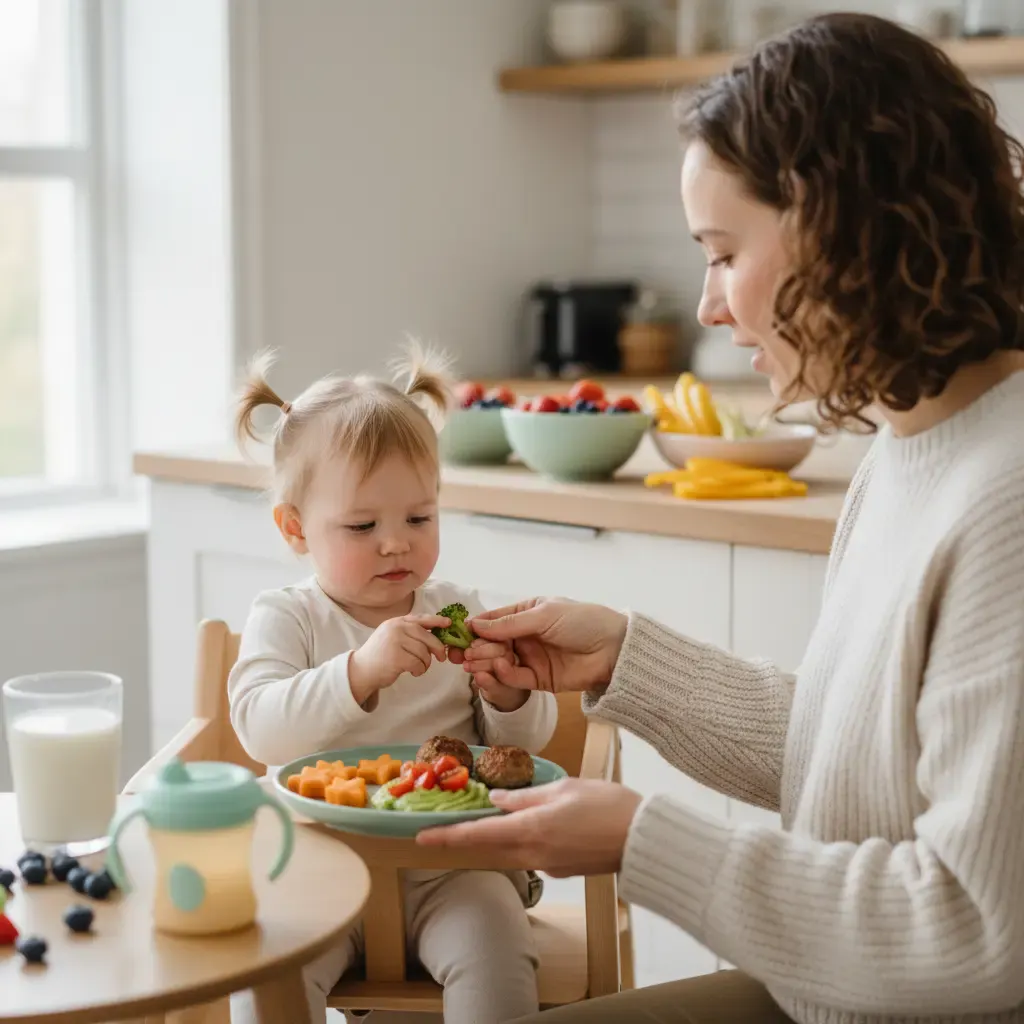
Key Takeaways
- Toddlers aged 2-3 need about 1,000-1,400 calories per day across 3 meals and 2 snacks
- Focus on variety across the week, not perfection at every meal
- A toddler serving is roughly 1 tablespoon per year of age for each food group
- Milk should be limited to 500ml (16oz) per day to avoid displacing solid food intake
- Tracking food groups (not calories) reveals patterns in picky eating
Feeding a 2-3 year old feels like a daily negotiation. Yesterday they loved pasta; today they won't touch it. You're not sure if they're eating enough, eating the right things, or just surviving on crackers and milk.
The good news: toddler nutrition is simpler than it seems. You don't need to count calories or obsess over every meal. Focus on offering variety across food groups, keep portions small, and trust your child's appetite signals.
Dealing with food refusal? See Picky Eating in Toddlers: What Actually Works and Toddler Won't Eat: Why It Happens.
Nutrition Needs at 2-3 Years
According to the AAP and USDA Dietary Guidelines, toddlers aged 2-3 need:
- Calories: 1,000-1,400 per day (varies by activity level and size)
- Protein: 13g per day (equivalent to 2 eggs or 60g of chicken)
- Calcium: 700mg per day (about 2 cups of milk or equivalent dairy)
- Iron: 7mg per day (fortified cereal, meat, beans, spinach)
- Fiber: 19g per day (fruits, vegetables, whole grains)
- Fat: 30-40% of calories (essential for brain development — don't restrict fat at this age)
Toddler portion sizes
A toddler serving is much smaller than you think. The rule of thumb: 1 tablespoon per year of age for each food. So a 2-year-old gets about 2 tablespoons of vegetables, 2 tablespoons of protein, etc. Their stomach is the size of their fist.
Daily Food Groups & Portions
The USDA MyPlate guidelines for 2-3 year olds recommend:
| Food Group | Daily Amount | Examples |
|---|---|---|
| Grains | 85g (3 oz) | 1 slice bread, 1/2 cup cereal, 1/2 cup pasta |
| Vegetables | 1 cup | Cooked carrots, peas, sweet potato, broccoli |
| Fruits | 1 cup | Banana, berries, apple slices, melon |
| Protein | 55g (2 oz) | Chicken, fish, eggs, beans, tofu |
| Dairy | 2 cups | Milk, yogurt, cheese |
Important: These are daily totals spread across all meals and snacks — not per-meal targets. If your child eats well at breakfast and barely touches dinner, that's normal. Look at the week, not the meal.
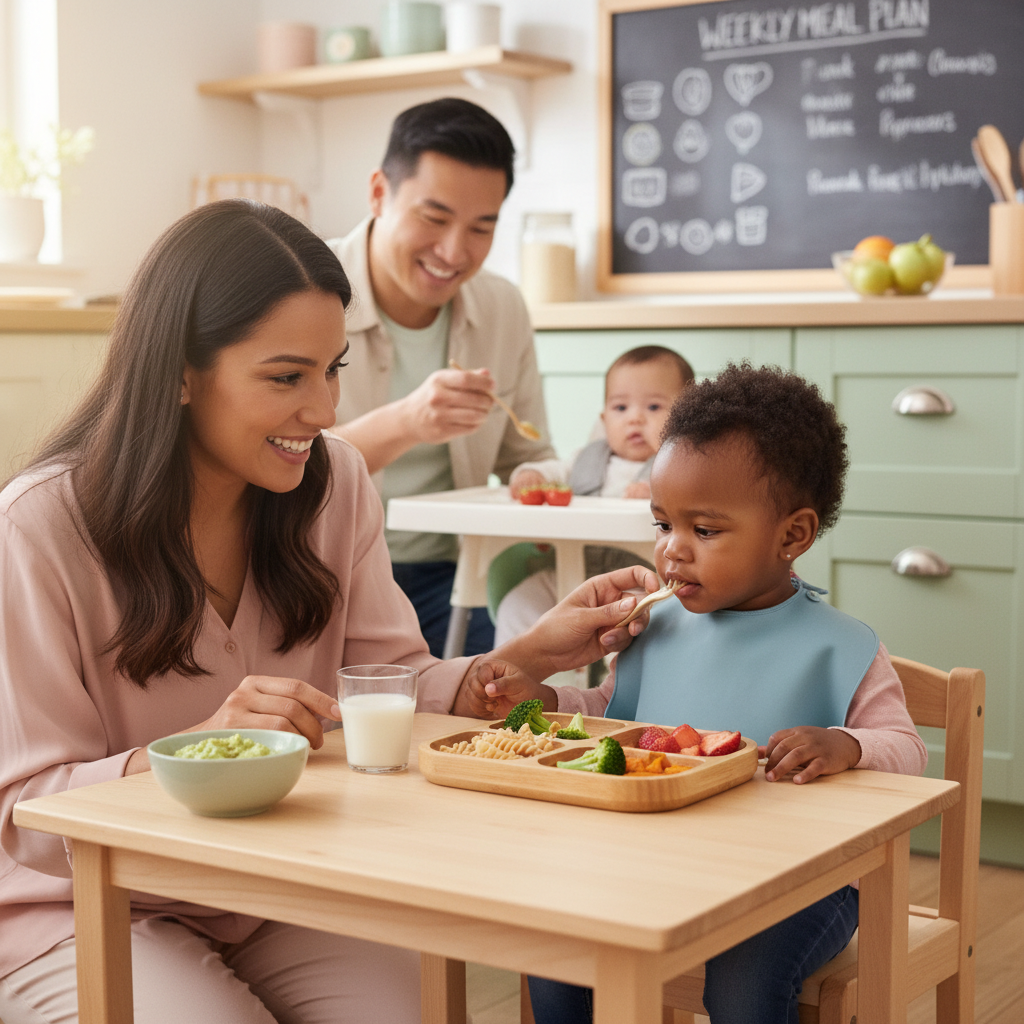
Sample Weekly Meal Plan
This plan provides variety across food groups. Adjust based on your child's preferences and allergies:
Monday
- Breakfast: Oatmeal with banana slices + whole milk
- Snack: Apple slices with peanut butter
- Lunch: Grilled cheese on whole wheat + steamed broccoli
- Snack: Yogurt with berries
- Dinner: Chicken strips + sweet potato + peas
Tuesday
- Breakfast: Scrambled egg + toast + strawberries
- Snack: Cheese cubes + crackers
- Lunch: Pasta with meat sauce + cucumber slices
- Snack: Banana + handful of cheerios
- Dinner: Fish fingers + rice + steamed carrots
Wednesday
- Breakfast: Whole wheat pancakes + blueberries + milk
- Snack: Hummus + pita strips
- Lunch: Bean quesadilla + avocado + tomato
- Snack: Yogurt tube + grapes (halved)
- Dinner: Meatballs + mashed potato + green beans
Thursday-Sunday
Rotate similar patterns, aiming for:
- At least 2 different protein sources per day
- A fruit or vegetable at every meal
- Whole grains at least half the time
- One new or previously-refused food offered (without pressure) 2-3 times per week
Quick Meal Ideas by Category
High-acceptance breakfasts
- Overnight oats with fruit
- Mini muffins (add grated zucchini or carrot)
- Toast fingers with cream cheese and banana
- Yogurt parfait with granola
Protein-rich lunches
- Mini sandwiches (cut with cookie cutters for fun)
- Egg muffins with hidden vegetables
- Lentil soup (blended smooth)
- Tuna or chicken salad on crackers
Vegetable strategies
- Roasted vegetables (roasting brings out sweetness)
- Vegetable muffins or fritters
- Raw vegetables with dip (ranch, hummus)
- Smoothies with spinach (color hidden by berries)
Common Feeding Mistakes
- Too much milk — more than 500ml/day fills them up and blocks iron absorption. Switch to water between meals.
- Grazing all day — constant snacking kills mealtime appetite. Space eating occasions 2-3 hours apart.
- Offering only "safe" foods — if you only serve what they accept, their diet narrows further. Always include one safe food alongside something new.
- Adult-sized portions — a mountain of food overwhelms toddlers. Start with tiny amounts; they can always ask for more.
- Juice as a drink — the AAP recommends no more than 120ml (4oz) of 100% juice per day for ages 1-3. Whole fruit is always better.
- Pressuring or bribing — "eat your vegetables or no dessert" teaches that vegetables are punishment and dessert is reward.
How Tracking Food Groups Helps
When you track what food groups your child accepts and refuses over weeks, patterns emerge that you can't see meal-to-meal:
- Identify gaps — maybe they eat plenty of grains and dairy but consistently refuse vegetables and protein
- Spot progress — a food refused 10 times that's finally accepted is invisible without tracking
- Reduce anxiety — seeing that they actually ate from 4 of 5 food groups this week (even if individual meals looked terrible) is reassuring
- Inform your pediatrician — "they refuse all vegetables" is vague. "They've accepted carrots and peas but refused 8 other vegetables over 3 weeks" is actionable
Track variety, not calories
ParAI's meal tracking lets you log food groups offered and accepted at each meal — grains, protein, dairy, fruits, and vegetables. Over time, you see weekly variety patterns and can spot which groups need more exposure. All meal tracking is free.
Frequently Asked Questions
How many times a day should a 2-year-old eat?
Three meals and two snacks is the standard recommendation. Space them 2-3 hours apart. Avoid grazing between scheduled eating times — it's the #1 reason toddlers refuse meals.
My toddler only wants to eat the same 5 foods. Is that okay?
Short-term, yes — this is extremely common between ages 2-4. Keep offering variety without pressure. It takes 15-20 neutral exposures before a child may accept a new food. Track which foods are offered and accepted to see progress over weeks.
Should I give my 2-year-old vitamins?
The AAP recommends vitamin D (600 IU/day) for all children. A general multivitamin is reasonable if your child's diet is very limited, but discuss with your pediatrician first. Iron and vitamin D are the most common deficiencies in toddlers.
How much milk should a 2-year-old drink?
Maximum 500ml (16oz) of whole milk per day. More than this displaces solid food and can cause iron deficiency. After age 2, you can switch to reduced-fat milk if your pediatrician agrees. Offer water as the primary drink between meals.
What if my toddler refuses vegetables completely?
Keep offering without pressure — put a tiny amount on their plate at every meal. Try different preparations (raw vs roasted vs blended into sauces). Let them see you eating vegetables. Most children expand their vegetable acceptance between ages 4-6 if exposure continues.
Track Feedings in Seconds with Natural Language
Just type "150ml bottle at 3pm" and ParAI logs it instantly. No forms, no tapping through menus. Plus AI insights on feeding patterns and schedules.