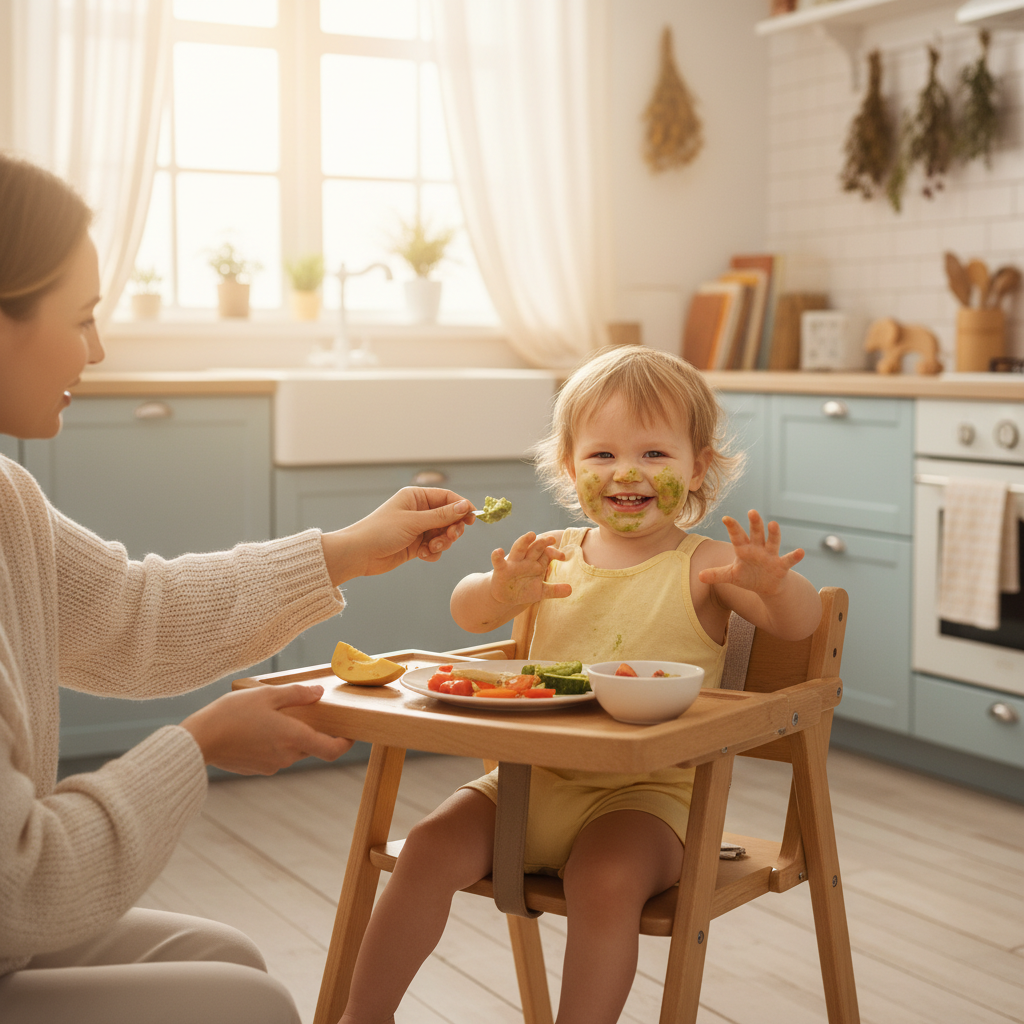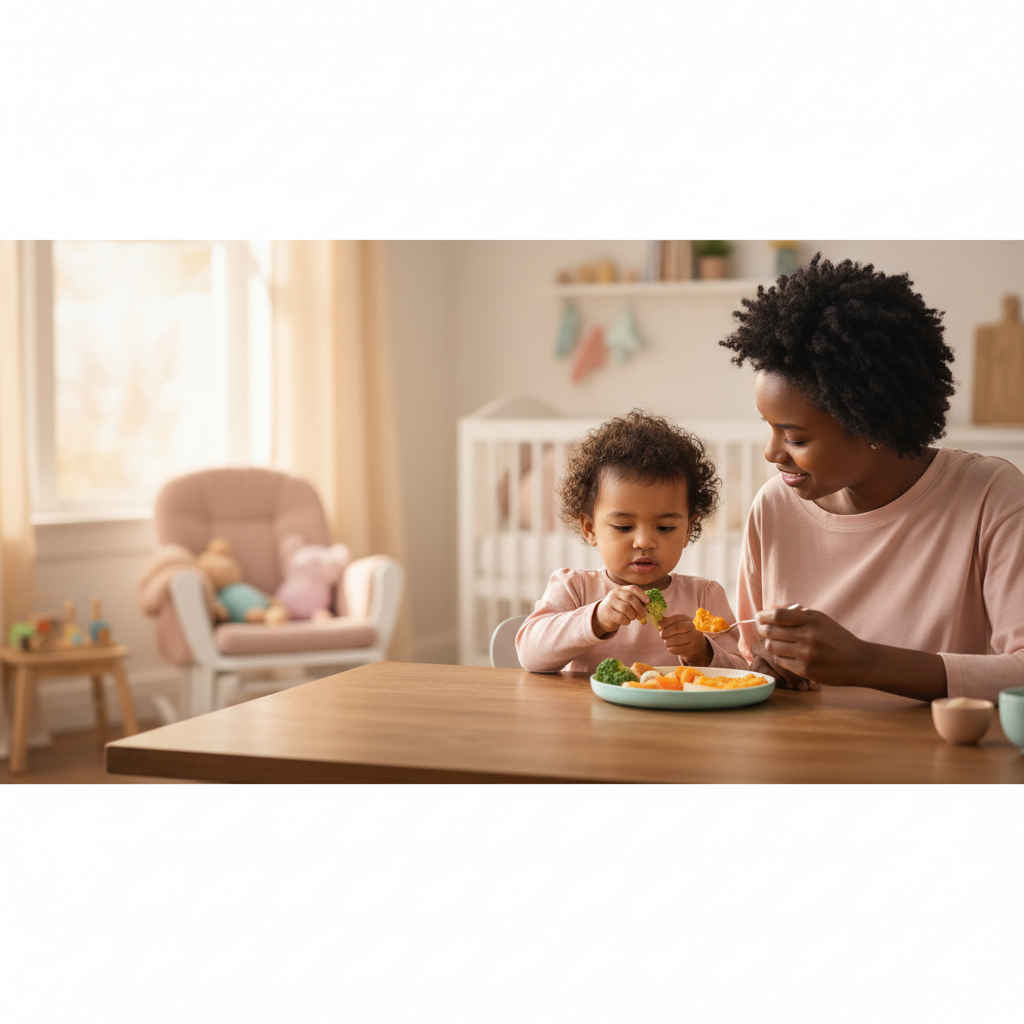
Key Takeaways
- Mealtime battles are completely normal between ages 2-5 — it's a developmental phase, not a parenting failure
- Tracking food acceptance reveals what actually works for YOUR child, not generic advice
- Pressure backfires every time — forcing, bribing, and begging make picky eating worse
- The Division of Responsibility (Ellyn Satter) gives parents and children clear roles at meals
- ParAI's food tracking shows patterns over weeks, not single meals — revealing progress you can't see day-to-day
Your toddler loved broccoli last week. Today they act like it's poison. Yesterday they ate three bites of dinner. Today they refuse to sit down. Sound familiar?
Mealtime battles are one of the most stressful parts of parenting a toddler — but they're also one of the most misunderstood. The good news: data changes everything. When you track what's actually happening (not what it feels like), patterns emerge that transform how you approach feeding.
Why Toddlers Refuse Food
Your toddler isn't refusing food to annoy you. There are real developmental reasons behind mealtime battles:
- Autonomy — Between 2-5, children are developing independence. Saying "no" to food is one of the few areas where they have real control.
- Neophobia — Fear of new foods is hardwired. It peaks between ages 2-6 and is an evolutionary survival mechanism. Your child's brain is literally telling them unfamiliar foods might be dangerous.
- Sensory sensitivity — Textures, colors, temperatures, and smells that adults barely notice can be overwhelming for toddlers whose sensory systems are still developing.
- Control — When parents push food, children push back harder. The more pressure you apply, the more they resist — it's basic toddler psychology.
Understanding the WHY helps you stop taking it personally. This isn't about your cooking or your parenting. It's about normal brain development.
The Division of Responsibility
Developed by feeding expert Ellyn Satter, the Division of Responsibility (sDOR) is the gold standard approach recommended by pediatric dietitians worldwide:
- Parents decide: what food is served, when meals happen, and where eating takes place
- Children decide: whether they eat and how much
That's it. No bargaining ("three more bites"), no bribing ("eat your peas and you can have dessert"), no short-order cooking. You provide the options. They decide what goes in their mouth.
This feels terrifying at first. But research consistently shows that children who are allowed to self-regulate their intake develop healthier eating patterns long-term than children who are pressured.
The hardest part
The Division of Responsibility requires you to trust your child's appetite signals — even when they eat almost nothing at a meal. Remember: toddlers regulate intake over days and weeks, not individual meals. One "bad" meal means nothing.
How Tracking Changes Everything
Here's what most parents experience: you FEEL like your child eats nothing. Every meal feels like a battle. You're convinced they survive on air and crackers.
Then you start tracking. And the data tells a different story:
- They actually ate 15 different foods this week — you just forgot about the ones they accepted without drama
- They eat more variety at lunch than dinner — a pattern you never noticed
- New food acceptance happens over 2-4 weeks, not single meals — you were giving up too early
- Their "picky" phase is actually improving month over month — you just can't see it day-to-day
Data removes the emotion from feeding. Instead of "they never eat anything," you can see "they accepted 4 out of 7 new foods offered this month after 8-12 exposures each." That's progress.
What to Track in ParAI
ParAI's food tracking for toddlers goes beyond simple meal logging:
- Meal type — breakfast, lunch, dinner, snacks
- Foods offered — everything you put on the plate
- Foods accepted — what they actually ate (even a bite counts)
- Foods refused — what they rejected today
- New foods tried — first-time exposures, even if just a lick or touch
- Food group coverage — proteins, grains, fruits, vegetables, dairy across the week
- Picky eating score — acceptance ratio tracked over time
ParAI's picky eating score
The picky eating score tracks acceptance over time, not single meals. It measures the ratio of foods accepted vs offered across rolling 2-week windows — so you see real trends, not daily noise. A score that's slowly climbing means your approach is working, even when individual meals feel like failures.
Patterns You'll Discover
After 2-3 weeks of tracking, patterns emerge that you'd never notice otherwise:
- "Accepts new foods better at lunch than dinner" — many toddlers are more adventurous earlier in the day when they're less tired
- "Eats more variety at daycare" — peer influence is powerful; they'll try foods at school they refuse at home
- "Refuses everything when overtired" — connecting sleep data with food acceptance reveals timing matters more than the food itself
- "Accepts foods after 12-15 exposures" — your child's specific threshold for new food acceptance
- "Eats better when involved in prep" — participation increases willingness to try
These patterns are unique to YOUR child. Generic advice says "offer 15-20 times." Your data might show your child needs 8 exposures for fruits but 20 for vegetables. That's actionable information.
Strategies That Work
Evidence-based approaches that research supports:
- No pressure — Don't comment on what they eat or don't eat. Serve the food and move on. "You don't have to eat it" is more powerful than "just try one bite."
- Repeated exposure (15-20 times) — Keep offering rejected foods without pressure. Seeing food on the plate counts as an exposure, even if they don't touch it.
- Family meals — Eat the same food together. Modeling is the strongest predictor of food acceptance in children.
- Involve them in prep — Washing vegetables, stirring, choosing between two options. Ownership increases willingness.
- Food play — Let them touch, smell, squish, and explore food without any expectation of eating. Sensory familiarity precedes acceptance.
- Tiny portions of new foods alongside safe foods — Always include at least one food you know they'll eat. New foods are less threatening when they're not the only option.
The key insight: none of these strategies show results in a single meal. They work over weeks. That's why tracking matters — it shows you the progress that's invisible day-to-day.
When to Worry
Most picky eating is normal. But see a feeding therapist if your child:
- Is losing weight or falling off their growth curve
- Accepts fewer than 10 foods total — this is beyond typical picky eating
- Gags or vomits on textures consistently — may indicate oral motor or sensory processing issues
- Shows extreme anxiety around food — crying, panic, or meltdowns at the sight of certain foods
- Only eats one food group — e.g., only carbs, refusing all proteins and produce
A pediatric feeding therapist (usually an occupational therapist or speech-language pathologist) can assess whether your child's eating falls within normal variation or needs intervention. Early help makes a big difference.
FAQ
How many times should I offer a food before giving up?
Research suggests 15-20 exposures before a child accepts a new food — but some children need more. "Exposure" includes seeing it on the plate, watching you eat it, touching it, or smelling it. Don't give up after 5 tries. Track exposures in ParAI and you'll see the gradual progression from refusal to tolerance to acceptance.
Should I make separate meals for my toddler?
No. Serve the same meal for everyone, but always include at least one component you know your child will eat (bread, rice, fruit). This follows the Division of Responsibility — you decide what's served, they decide what to eat from what's available. Short-order cooking teaches children that refusing food gets them something "better."
Is it OK to hide vegetables in food?
It's fine as a nutrition strategy, but it doesn't teach your child to eat vegetables. Hidden veggies in a smoothie or sauce add nutrients, but they don't build the exposure and familiarity needed for long-term acceptance. Do both: hide some for nutrition AND offer visible vegetables without pressure for learning.
When does picky eating end?
Food neophobia typically peaks between ages 2-6 and gradually improves. Most children significantly expand their diet by age 7-8. However, the strategies you use NOW matter: pressure and force can extend picky eating into later childhood, while the Division of Responsibility approach helps it resolve naturally. Track progress in ParAI — you'll likely see steady improvement over months even when individual meals feel hopeless.
For more on toddler feeding challenges, see our guides on when your toddler won't eat, picky eating strategies, meal planning for 2-3 year olds, and meal ideas for picky eaters.
Track Feedings in Seconds with Natural Language
Just type "150ml bottle at 3pm" and ParAI logs it instantly. No forms, no tapping through menus. Plus AI insights on feeding patterns and schedules.